15 Moscow Landmarks

Luzhniki Stadium, Moscow 2012 by Leslie Hossack

Luzhniki Stadium, Moscow 2012

© Leslie Hossack

This is the first in a series of posts featuring 15 iconic landmarks in Moscow.

The Grand Sports Arena shown above was officially opened in July 1956. It was the signature stadium during the 1980 Moscow Olympics, hosting the opening and closing ceremonies. In a 1996 renovation, the roof was added.

Recently, the 2018 FIFA World Cup was awarded to Russia, and Luzhniki Stadium will host the final match. It will then join Rome’s Stadio Olimpico, Munich’s Olympiastadion and London’s Wembley Stadium as the only stadia to have hosted the finals of the FIFA World Cup, UEFA’s FIFA World Cup and also featured as a main stadium of the Summer Olympic Games.

The Moscow Photographs, a collection of limited edition fine art prints by Leslie Hossack, examine Joseph Stalin’s architectural legacy in Russia’s capital. The structures presented are linked to Stalin by era, architect and anecdote. Hossack painstakingly deconstructs these historic landmarks, revealing them as they appeared when the architects first put their designs on paper.

The Moscow Photographs include: Luzhniki Stadium, Moscow’s 1980 Olympic Stadium; the Small Arena and Swimming Stadium also located at the Luzhniki Olympic Sports Complex; Lenin’s Tomb and Saint Basil’s Cathedral in Red Square; Bolshoi Theatre and Red Army Theatre; Moscow City Hall and Dinamo Metro Station; Gorky Park and Ukraine Pavilion; Lubyanka Building and Moskva Hotel; Russian White House and Kotelnicheskaya Apartment Building, one of Stalin’s high-rises known as the Seven Sisters.

These images are part of Leslie Hossack’s larger body of work that explores Nazi architecture in Berlin, sacred sites in Jerusalem and a Cold War bunker in Ottawa. To view more images, please visit her website.  lesliehossack.com

THE MOSCOW PHOTOGRAPHS

MOSCOW EVIDENCE

LESLIE HOSSACK     THE MOSCOW PHOTOGRAPHS

MOSCOW EVIDENCE
an exhibition of photographs by
Barbara Bolton, Abigail Gossage,
Leslie Hossack and Patricia Wallace

Vernissage:  Friday December 14th, 6:00 – 9:00 PM

Artist Talk:  Sunday December 16th, 2:00 PM with moderator

Ann Thomas, Curator of Photographs, National Gallery of Canada

On View: December 13, 20132 – January 14, 2013

Michael Gennis Gallery, 416 Richmond Road, Ottawa

613.728.0922

The Cuban Missile Crisis – 50 Years Later

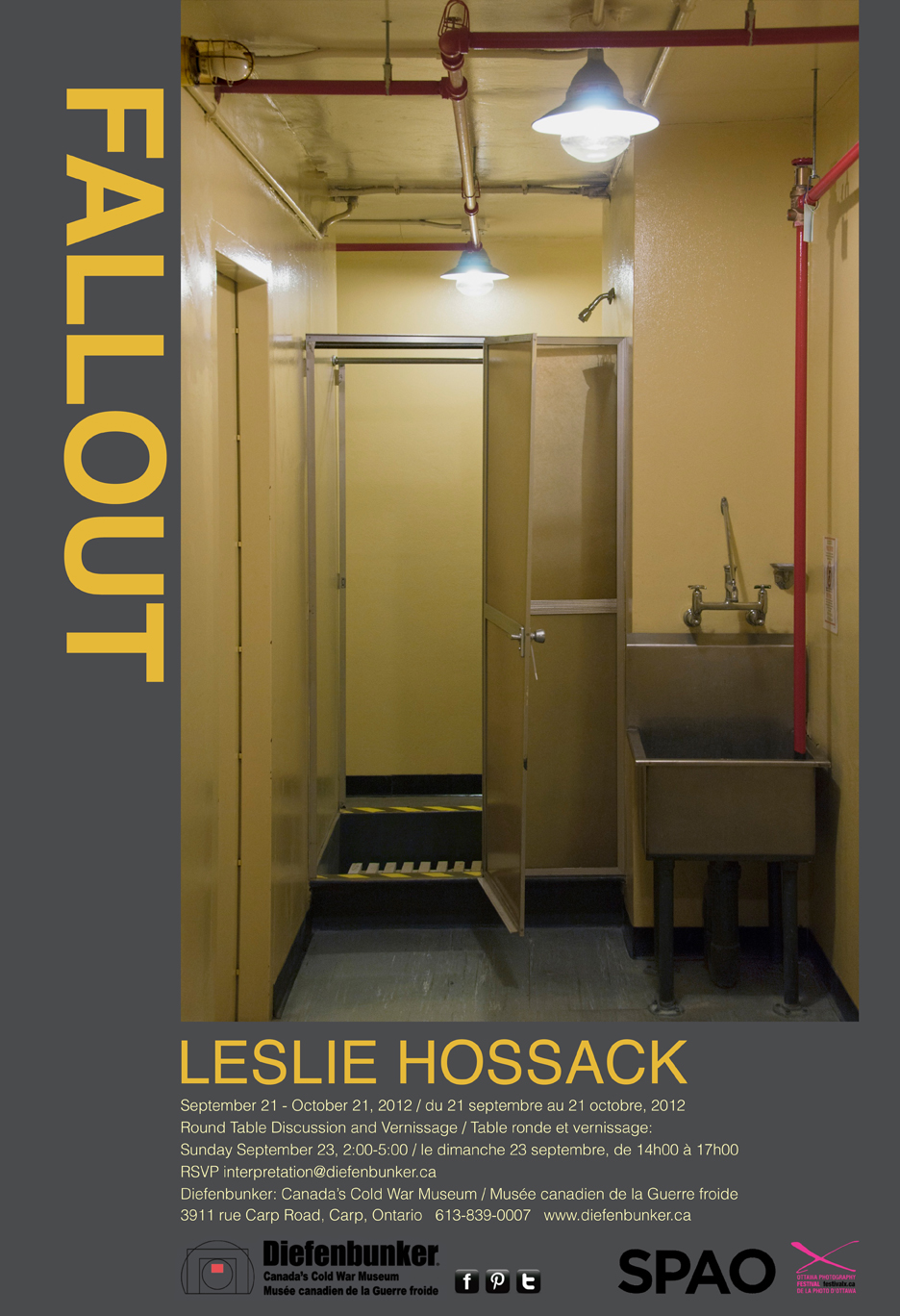
FALLOUT, an exhibition of The Diefenbunker Photographs by Leslie Hossack currently on view at The Diefenbunker: Canada’s Cold War Museum, has been extended until 31 December 2012.

The Diefenbunker was Canada’s Central Emergency Government Headquarters throughout the Cold War. During the Cuban Missile Crisis exactly 50 years ago, the federal government made plans to move there, but never did.

FALLOUT is a collection of interpretative photographs of the Diefenbunker which became operational in 1961. It was designed to shelter 535 designated officials charged with maintaining a thin thread of government in the event of nuclear attack. And the world did come very close to the brink during the Cuban Missile Crisis of October 1962.

Leslie Hossack’s photographs explore the singular question of simple human survival. Her images are haunted by her childhood memories of the Cold War, and by her preoccupation with issues of inclusion and exclusion, change and continuity, longing and loss.

When I first visited the Diefenbunker, I felt a visceral connection. I felt strangely at home in Canada’s Cold War Museum. I have always been attracted to locations linked to the monumental events of the 20th century: Stalinist buildings in Moscow, Nazi architecture in Berlin, sacred sites in Jerusalem.  – L. H.

Let the games begin!

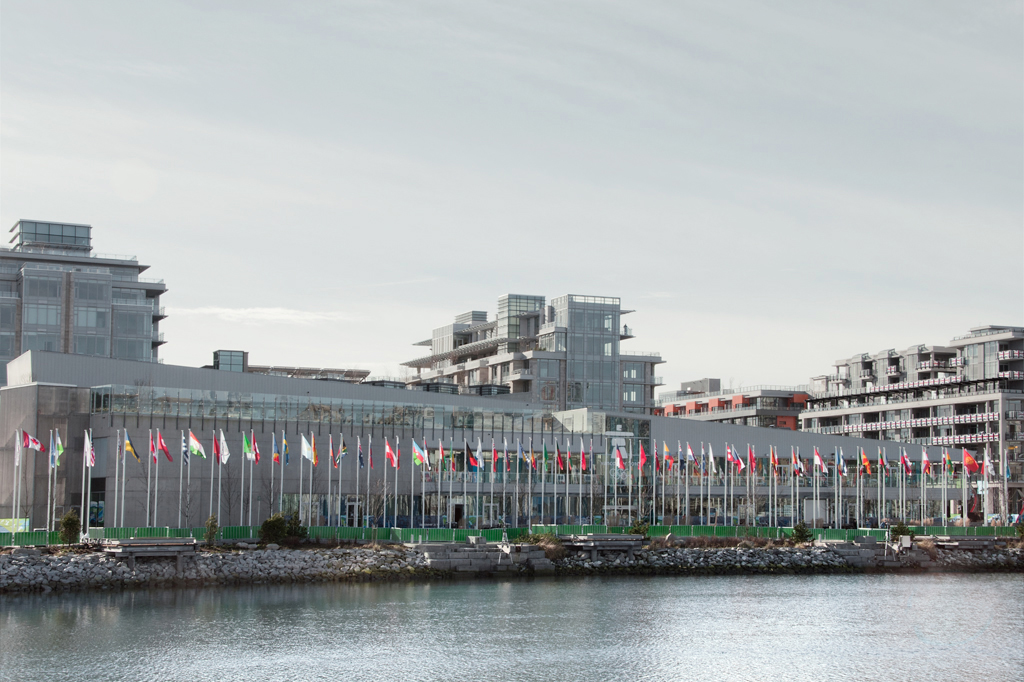
Olympic Village, Seen from Science World, Vancouver 2010

© Leslie Hossack

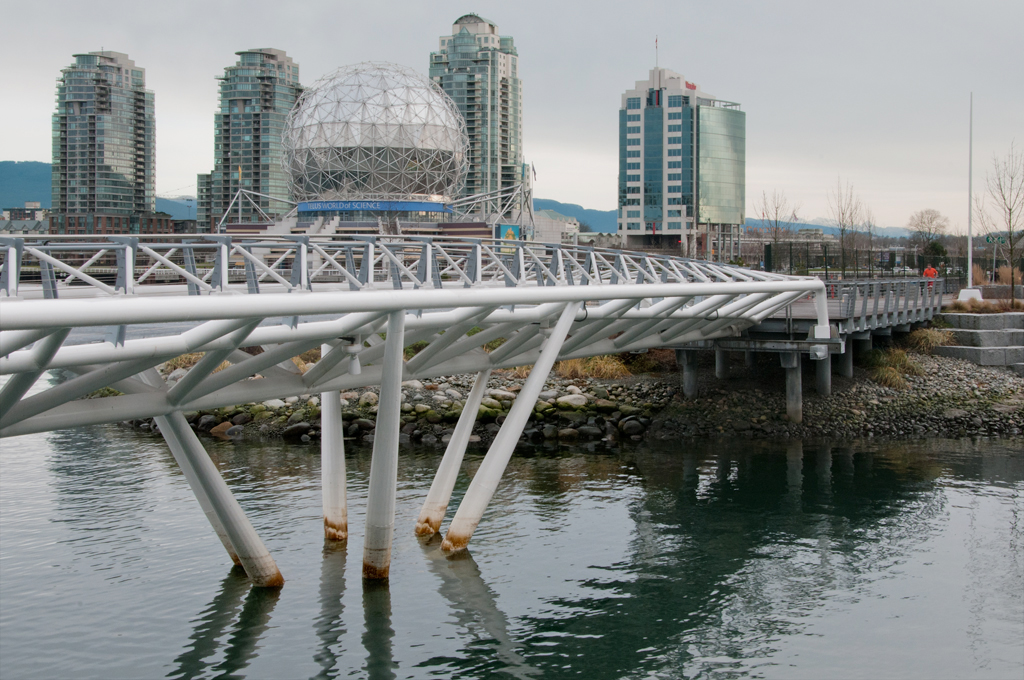
Pedestrian Bridge, Olympic Village Looking East, Vancouver 2010

© Leslie Hossack

Today marks the official opening of the Games of the XXX Olympiad in London. Over 200 nations are expected to participate, with over 10,000 competing athletes. By contrast, 82 countries participated in the XXI Olympic Winter Games in 2010 in Vancouver, with approximately 2,600 athletes taking part.

These two photographs were taken at the time of the Winter Games. The 2010 Athletes’ Village in the heart of Vancouver and the 2012 Olympic Village in East London have much in common. These are no ordinary communities. Normally, we create purpose-built structures, but Olympic city planning is not the norm. Initially these villages would operate as the world’s most exclusive communities for elite athletes from around the globe.

During the 2010 games, the Olympic Village in Vancouver accommodated over 2,800 athletes and officials. The area, now called the Village on False Creek, consists of over 1,000 residential units. Some of the condos are still for sale today.

The London Olympic Village contains 11 residential areas, each made up of five to seven blocks. There are apartments for approximately 17,000 athletes and officials during the 2012 games. After, the village will be transformed into 2,818 housing units in this new residential neighbourhood known as East Village.

To see my photographs of the 1936 Berlin Olympic Village, please visit my website: lesliehossack.com. My images of the London Olympic site will be posted here on Haute Vitrine in the future, along with photographs of the 1980 Moscow Olympic Stadium which I documented in June 2012.

Olympic Villages – Past and Present

Model Building, Millennium Water Presentation Centre, Vancouver 2009

© Leslie Hossack

Presentation Suite, Millennium Water Presentation Centre, Vancouver 2009

© Leslie Hossack

The two photographs above were taken a year before the opening of the Vancouver Games. The 2010 Athletes’ Village in the heart of Vancouver and the 2012 Olympic Village in East London have much in common. Both projects involved the rejuvenation of largely forgotten urban areas. These are no ordinary communities. Normally, we create purpose-built structures, but Olympic city planning is not the norm. Vancouver and London saw the construction of a group of buildings to serve as transient Athletes’ Villages and, subsequently, ongoing urban communities. Initially these villages would operate as the world’s most exclusive communities for elite athletes from around the globe.

During the 2010 winter games, the Olympic Village in Vancouver accommodated over 2,800 athletes and officials. The area, now called the Village on False Creek, consists of over 1,000 residential units. Some of the condos are still for sale today. These photographs show the sales centre as it looked in 2009.

The London Olympic Village contains 11 residential areas, each made up of five to seven blocks. There are apartments for approximately 17,000 athletes and officials during the 2012 summer games. After, the village will be transformed into 2,818 housing units. This new residential neighbourhood is to be known as East Village.

To see my photographs of the 1936 Berlin Olympic Village, please visit my website: lesliehossack.com. My images of the London Olympic site will be posted here on Haute Vitrine in the future, along with photographs of the 1980 Moscow Olympic Stadium which I documented in June 2012.

Berlin, Moscow, Vancouver, London

Construction Debris, Olympic Village Site Looking East, Vancouver 2009

© Leslie Hossack

Empty Lot, Olympic Village Site Looking East, Vancouver 2009

© Leslie Hossack

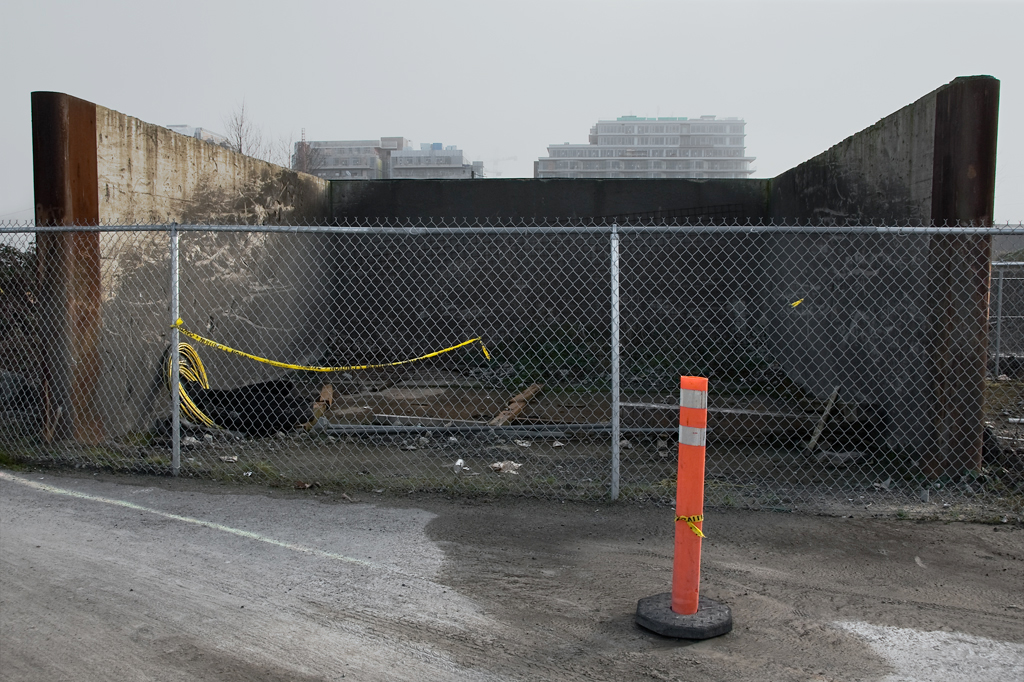
The two photographs shown above were taken a full year before the opening of the 2010 Vancouver Winter Games, and the clutter of construction is clearly evident. With the opening ceremonies of the 2012 Olympic Games in London only 10 days away, final preparations will have reached a fevered pitch.

The site of the 2010 Athletes’ Village in the heart of Vancouver and the main venue of the 2012 Olympics in East London have much in common. Both projects involve the rejuvenation of largely forgotten urban areas.

My own love affair with the Olympics started in 2008. I walked past the Vancouver Olympic Village construction site, and I was a goner. Two years later, a visit to the 1936 Berlin Olympic Stadium and Athletes’ Village sealed the deal.

From that very first glance in 2008, I felt compelled to return again and again to photograph the site of Vancouver’s Village. It was a rare opportunity to witness the construction of a village, and the creation of a community, from the ground up. I quickly realized that I had to visit the London Olympic site to follow its development from 2010 to 2012. I plan to return again in 2014 to explore the impact on East London – a massive example of accelerated urban evolution.

To see my photographs of the 1936 Berlin Olympic Stadium and Village, please visit my website: lesliehossack.com. My images of the London Olympic site will be posted here on Haute Vitrine in the future, along with photographs of the 1980 Moscow Olympic Stadium which I documented in June 2012.

Olympic sites: from wasteland to condo-land

1st Avenue, Olympic Village Site Looking North, Vancouver 2009

© Leslie Hossack


Habitat Island, Olympic Village Site Looking West, Vancouver 2009

© Leslie Hossack

The site of the 2010 Athletes’ Village in the heart of Vancouver and the main venue of the 2012 Olympics in East London have much in common. In particular, both projects involve the rejuvenation of largely forgotten urban areas. Yuri Artibise talks about the Olympic transformation of Vancouver’s Southeast False Creek from “wasteland to condo-land” in Spacing Vancouver.

My own love affair with the Olympics started in January 2008. When I walked past the 2010 Vancouver Olympic Village construction site, I was a goner. Photographing the 1936 Berlin Olympic Stadium and Athletes’ Village in 2010 sealed the deal. My next stop was London.

From that very first glance in 2008, I felt compelled to return to Southeast False Creek again and again to photograph the massive construction site of Vancouver’s Village. I knew from the beginning that I had to document the area over a four-year period: 2008, 2009, 2010, 2011. It was a rare opportunity to witness the construction of a village, and the creation of a community, from the ground up. I also knew that I had to visit the London Olympic site to document its evolution from 2010 to 2012. I plan to return again in 2014 to explore the ongoing impact of the XXXth Olympiad on East London – a massive example of accelerated urban evolution.

To see my photographs of the 1936 Berlin Olympic Stadium and Athletes’ Village, please visit my website: lesliehossack.com. My images from the London Olympics will be posted here on Haute Vitrine in the future.

Olympic construction in downtown Vancouver

“Like many Olympic cities that are largely built-out, much of London’s Games will actually happen on the outskirts of the city – Vancouver was one of the few Games in the modern era where Games-related construction and events were scattered across an established city pattern, including Vancouver’s densely developed downtown.” – Brent Toderian in Spacing Vancouver


Truck Entrance, Olympic Village Site Looking North, Vancouver 2008

© Leslie Hossack


Road Construction, Olympic Village Site Looking North, Vancouver 2008

© Leslie Hossack

My own love affair with the Olympics started in January 2008. When I walked past the 2010 Vancouver Olympic Village construction site, I was a goner. Photographing the 1936 Berlin Olympic Stadium and Athletes’ Village in 2010 sealed the deal. My next stop was London 2012.

From that very first glance in 2008, I felt compelled to return to Southeast False Creek again and again to photograph the massive construction site of the Vancouver Athletes’ Village.

I knew from the beginning that I had to document the area over a four-year period: 2008, 2009, 2010, 2011. It was a rare opportunity to witness the construction of a village, and the creation of a community, from the ground up.

Initially, the village on Vancouver’s Southeast False Creek would be one of the world’s most exclusive gated communities. It would be home to elite athletes from around the globe in the winter of 2010. The Olympic motto Citius, Altius, Fortius means: “Faster, Higher, Stronger.” I often thought that this motto applied not only to the athletes, but also to the construction of the village. It was a fascinating example of project management and coordination.

To see my photographs of the 1936 Berlin Olympic Stadium and Athletes’ Village, please visit my website: lesliehossack.com.

the world’s most exclusive gated community

My love affair with the Olympics started over four years ago, in January 2008. When I walked past the 2010 Vancouver Olympic Village construction site, I was a goner. Photographing the 1936 Berlin Olympic Stadium and Athletes’ Village in 2010 sealed the deal. My next stop was London 2012.

Old Salt Building, Olympic Village Site Looking West, Vancouver 2008

© Leslie Hossack

Eleven Cranes, Olympic Village Site Looking East, Vancouver 2008

© Leslie Hossack

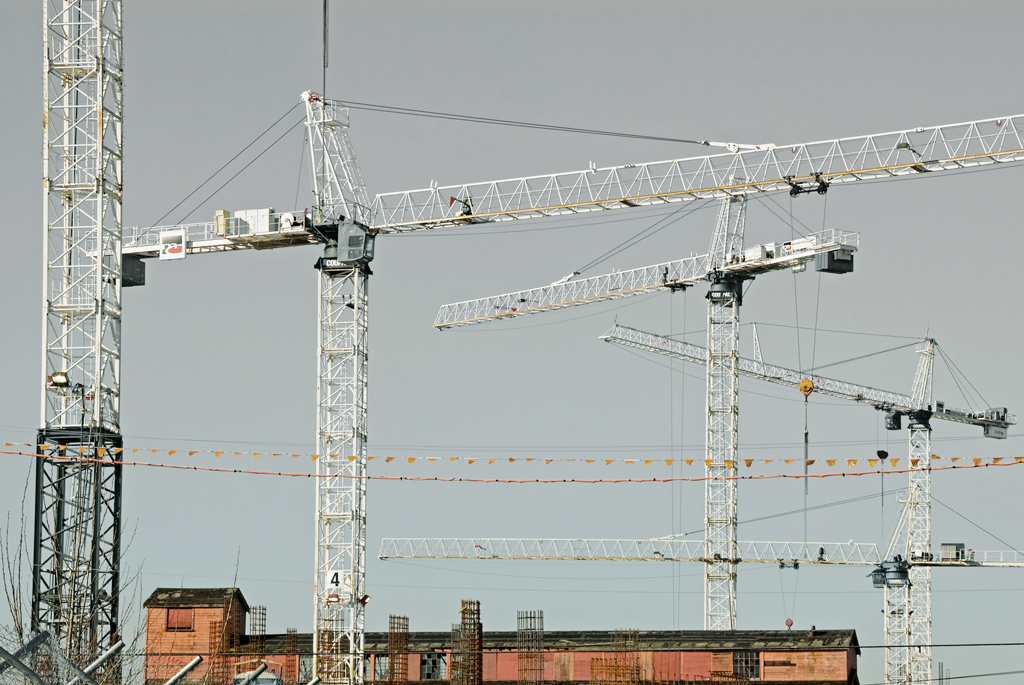
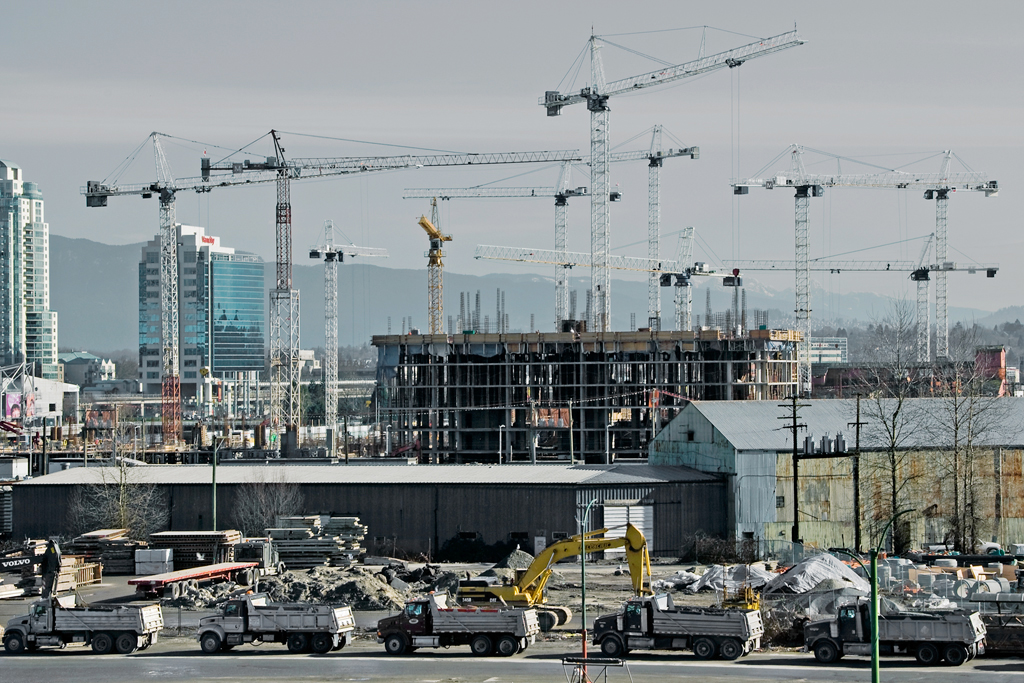
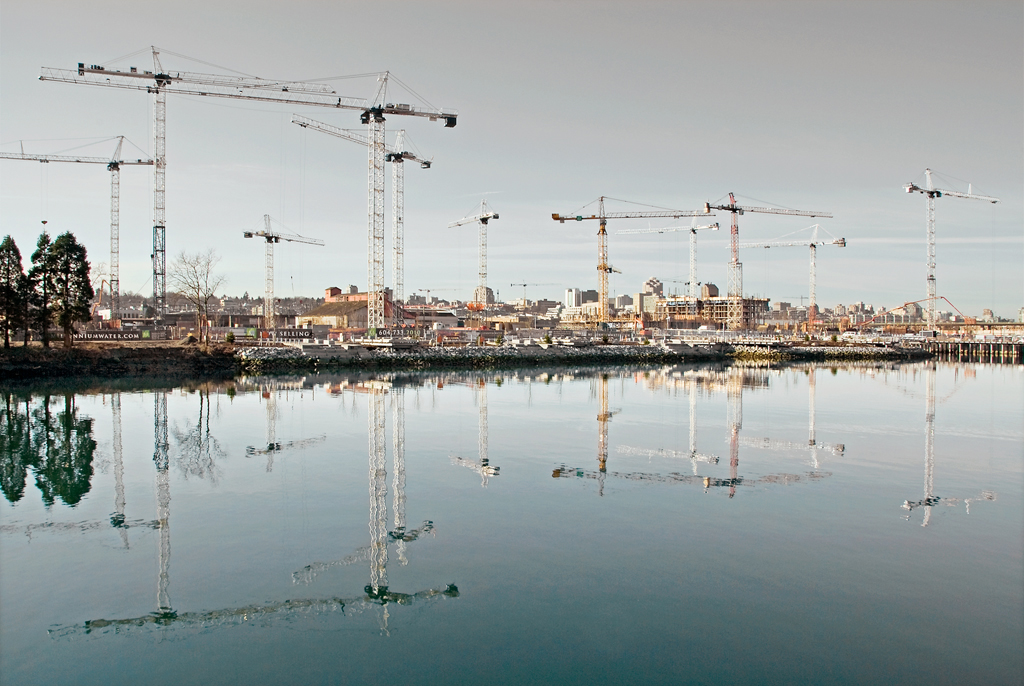
In Vancouver, I was captivated by the vision of a dozen tower cranes moving gracefully together. Sometimes they reminded me of a finely tuned orchestra; sometimes they looked like a beautifully choreographed ballet. From that very first glance, I felt compelled to return to Southeast False Creek again and again to photograph the massive construction site of the Vancouver Athletes’ Village.

I knew from the beginning that I had to document the area over a four-year period: 2008, 2009, 2010, 2011. It was a rare opportunity to witness the construction of a village, and the creation of a community, from the ground up.

Initially, the village on Vancouver’s Southeast False Creek would be one of the world’s most exclusive gated communities. It would be home to elite athletes from around the globe in the winter of 2010. The Olympic motto Citius, Altius, Fortius means: “Faster, Higher, Stronger.” I often thought that this motto applied not only to the athletes, but also to the construction of the village. It was a fascinating example of project management and coordination.

To see my photographs of the 1936 Berlin Olympic Stadium and Athletes’ Village, please visit my website: lesliehossack.com.

Citius, Altius, Fortius

Three months from today, on the 27th of July, the opening ceremony of the 2012 London Olympic Games will mark the beginning of the XXXth Olympiad.

But my love affair with the Olympics started over four years ago, in January 2008. I walked past the 2010 Vancouver Olympic Village construction project, and I was a goner.

Southeast False Creek, Seen from Cambie Bridge, Vancouver 2008

© Leslie Hossack

Olympic Village Site, Seen from Science World, Vancouver 2008

© Leslie Hossack

I was captivated by the vision of a dozen tower cranes moving gracefully together. Sometimes they reminded me of a finely tuned orchestra; sometimes they looked like a beautifully choreographed ballet. From that very first glance, I felt compelled to return to Southeast False Creek again and again to photograph the massive construction site of the Vancouver Athletes’ Village.

I knew from the beginning that I had to document the area over a four-year period: 2008, 2009, 2010, 2011. It was a rare opportunity to witness the construction of a village, and the creation of a community, from the ground up.

And this was no ordinary community. Normally, we create purpose-built structures; we build a condo to be a condo. But this was different; this was the construction of a group of buildings to serve as a transient Athletes’ Village and, subsequently, an ongoing urban community.

Initially, the village on Vancouver’s Southeast False Creek would be one of the world’s most exclusive gated communities. It would be home to elite athletes from around the globe in the winter of 2010. The Olympic motto Citius, Altius, Fortius means: “Faster, Higher, Stronger.” I often thought that this motto applied not only to the athletes, but also to the construction of the village. It was a fascinating example of project management and coordination.