Charting Churchill: Sundial at Chartwell, Westerham

Sundial at Chartwell, Westerham 2014 by Leslie Hossack

Sundial at Chartwell, Westerham 2014

© Leslie Hossack

Winston Churchill spent a great deal of time at Chartwell, his country home, during the 1930s. By 1933, it had become his base for gathering intelligence about German rearmament and about Britain’s lack of preparation for war. Many senior individuals, both British and foreign, came to Chartwell to share information with Churchill, often at great risk to their careers and reputations.

Adolf Hitler and his National Socialist Party came to power in January 1933. In March, Churchill made his first speech in Parliament warning of the need to build up air defences in Britain. That same spring, Albert Einstein visited Chartwell to ask Churchill for assistance moving Jewish scientists from Germany to Britain. Einstein visited Chartwell again in 1939, and posed for a picture with Churchill in the garden, not far from the sundial shown above.

In the 1930’s, Clementine Churchill had gone without Winston on a lengthy trip aboard Lord Moyne’s yacht to several exotic islands. She brought back a dove from Bali, and when it died she buried it under the sundial in the garden. The inscription on the base of the sundial reads: HERE LIES THE BALI DOVE.

The image featured above is part of the limited edition collector’s portfolio created by Leslie Hossack. She presents locations that chart Sir Winston Churchill’s personal and political life, from his birth at Blenheim Palace in 1874 until his death in London in 1965. THE CHURCHILL PHOTOGRAPHS are part of Hossack’s larger body of work that explores Nazi architecture in Berlin, Stalinist structures in Moscow, contested sites in Jerusalem, a Cold War bunker in Ottawa, NATO’s Headquarter Camp in Kosovo, and buildings linked to the Japanese Canadian internment during World War II.

To view more photographs, please visit Leslie’s website.  lesliehossack.com
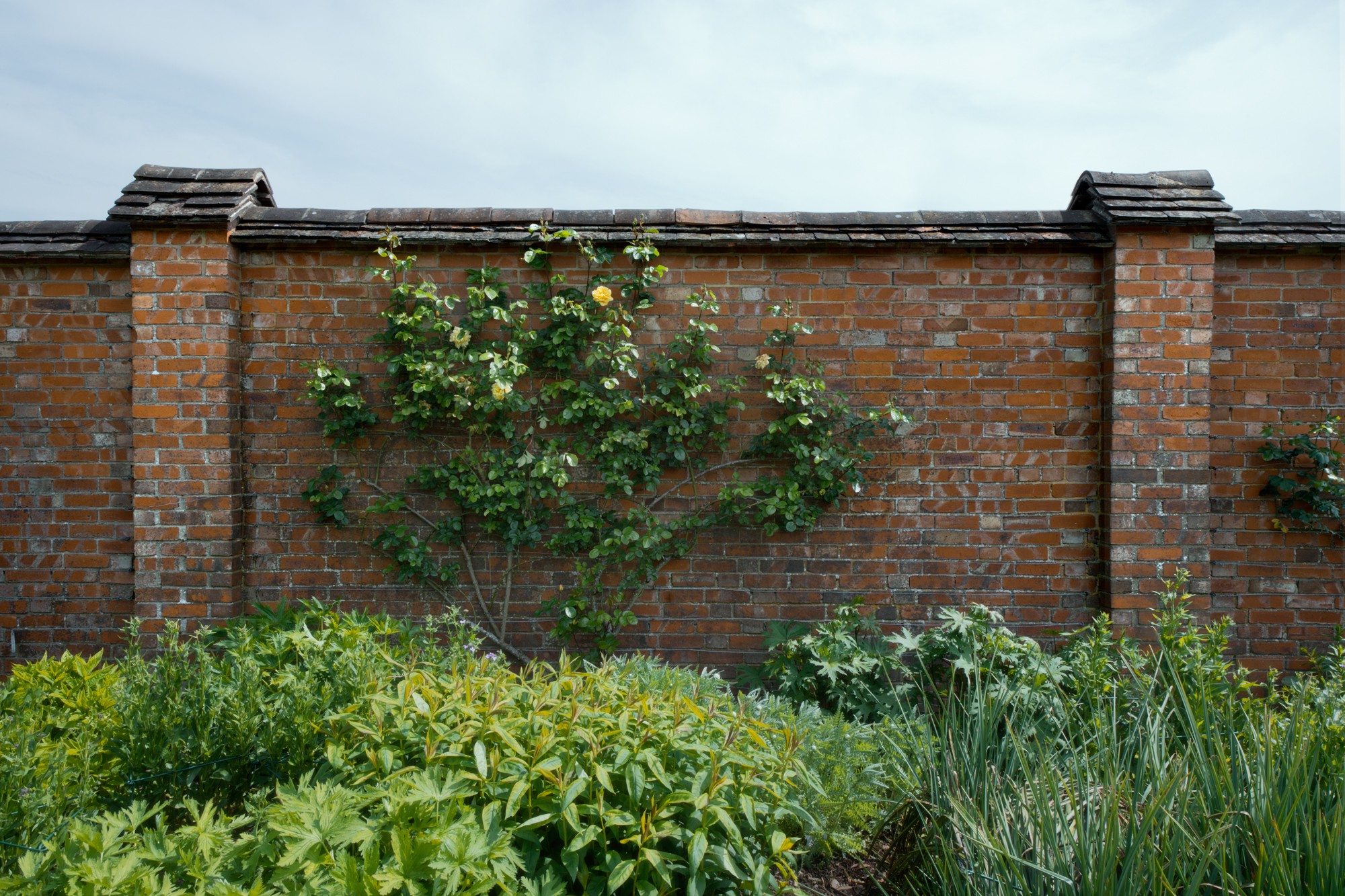
Charting Churchill: Garden Wall at Chartwell, Westerham

Garden Wall at Chartwell, Westerham 2014 by Leslie Hossack

Garden Wall at Chartwell, Westerham 2014

© Leslie Hossack

During the 1930s, Winston Churchill spent a great deal of time at his country home Chartwell where he wrote a number of articles and books. In 1929, he hired Maurice Ashley as his research assistant. For four years Ashley worked with Churchill, focusing on the Duke of Marlborough. The first volume of Marlborough: His Life and Times was published in 1933.

Years later, at the 1989 Churchill Society International Convention in London, Dr. Maurice Ashley gave an address called As I Knew Him: Churchill in the Wilderness. Ashley remarked: “A typical day when Churchill was working at Chartwell began with his taking breakfast in bed. There he read his newspapers and letters and would dictate answers and directions to one of his secretaries (two were usually on duty during the day). Then he went into the garden to engage in building and other activities. He came in around twelve o’clock and I was called in to help with work on his book on Marlborough… As I have already mentioned, when I was with him he would spend as much as five hours a day in the garden at Chartwell building wall after wall, occasionally painting, feeding the ducks, walking around the estate, supervising the work done there.”

After dinner, Churchill would go upstairs at about 10:00 pm to work again on his book, assisted by his secretary, Mrs. Violet Pearman, and Maurice Ashley. Ashley would later recall that when he left at about 3:00 am, Churchill would read in bed, getting about four hours steep. At the end of a day he would often say: “I laid about 200 bricks and have written 2,000 words.”

A tablet on one of the Chartwell garden walls reads: THE GREATER PART OF THIS WALL WAS BUILT BETWEEN THE YEARS 1925 AND 1932 BY WINSTON WITH HIS OWN HANDS.

The image featured above is part of the limited edition collector’s portfolio created by Leslie Hossack. She presents locations that chart Sir Winston Churchill’s personal and political life, from his birth at Blenheim Palace in 1874 until his death in London in 1965. THE CHURCHILL PHOTOGRAPHS are part of Hossack’s larger body of work that explores Nazi architecture in Berlin, Stalinist structures in Moscow, contested sites in Jerusalem, a Cold War bunker in Ottawa, NATO’s Headquarter Camp in Kosovo, and buildings linked to the Japanese Canadian internment during World War II.

To view more photographs, please visit Leslie’s website.  lesliehossack.com

Charting Churchill: Berry Bros. & Rudd, Wine Merchants, 3 St. James’s Street, London

Berry Bros. & Rudd, 3 St. James's Street, London 2014 by Leslie Hossack

Berry Bros. & Rudd, Wine Merchants, 3 St. James’s Street, London 2014

© Leslie Hossack

It is well known that Winston Churchill enjoyed the finer things in life, although his taste for luxuries generally exceeded his budget. He was particularly fond of champagne, preferring Pol Roger. In 1938, he ordered 108 bottles of the 1921 vintage from John Fenton & Co. Wine Merchant.

Shown above is Berry Bros. & Rudd Wine Merchants, located at 3 St. James’s Street. Although Churchill would have known about this establishment, he did not patronize them. However, in their archives is a telegram, dated December 2nd 1950, that was sent from Winston to Pug (Lord Ismay, Churchill’s chief military assistant during World War II). It reads: LORD ISMAY WORMINGTON GRANGE BORADWAY WORCS; THANK YOU SO MUCH MY DEAR PUG FOR YOUR LOVELY ELEPHANT = WINSTON. An elephant was a large refillable bottle of Cognac, which Lord Ismay (Pug) used to get refilled at Berry Bros & Rudd.

At the Churchill Society International Convention in London in August 1989, Dr. Maurice Ashley gave an address called As I Knew Him: Churchill in the Wilderness. Ashley remarked: Much has been written about Churchill’s own drinking habits. When I used to visit him in the morning at a flat he had in Morpeth Mansions near Victoria, he always greeted me with a glass of sherry. He could not stand cocktails. For lunch there was beer, at tea he had whisky. But his whisky and sodas were pretty mild… He is reputed once to have said, “I have taken more out of alcohol than alcohol has taken out of me.” Dr. Ashley also noted that at Chartwell, Churchill had sherry before dinner, followed by champagne, brandy and port.

Referencing a quote by Napoleon, Churchill himself said: “I cannot live without champagne; in victory I deserve it; in defeat I need it.”

The image featured above is part of the limited edition collector’s portfolio created by Leslie Hossack. She presents locations that chart Sir Winston Churchill’s personal and political life, from his birth at Blenheim Palace in 1874 until his death in London in 1965. THE CHURCHILL PHOTOGRAPHS are part of Hossack’s larger body of work that explores Nazi architecture in Berlin, Stalinist structures in Moscow, contested sites in Jerusalem, a Cold War bunker in Ottawa, NATO’s Headquarter Camp in Kosovo, and buildings linked to the Japanese Canadian internment during World War II.

To view more photographs, please visit Leslie’s website.  lesliehossack.com

Charting Churchill: 11 Morpeth Mansions, London

11 Morpeth Mansions, London 2014 by Leslie Hossack

11 Morpeth Mansions, London 2014

© Leslie Hossack

Winston and Clementine Churchill moved their young family from one home to another countless times. In June 1929, when Churchill resigned as Chancellor of the Exchequer, the family moved out of the official residence at 11 Downing Street and lived in a number of London flats and even a hotel. Chartwell, their country home in Kent, was a welcome alternative when Winston’s schedule did not require the family to be in the city.

Late in 1931, the Churchills moved into 11 Morpeth Mansions with their four children: Diana, Randolph, Sarah and Mary. Here they would live until the end of the decade. In 1939, Winston would leave his Wilderness Years behind him when he was once again appointed First Lord of the Admiralty and the family was ensconced in Admiralty House, his official residence.

In December 1931, at about the same time as the family moved into Morpeth Mansions, Churchill set off on a lecture tour of North American. In New York City, his first stop, he was hit by a car on Fifth Avenue and almost died. Winston, Clementine and Diana sailed for Nassau where he spent a month recuperating.

The image featured above is part of the limited edition collector’s portfolio created by Leslie Hossack. She presents locations that chart Sir Winston Churchill’s personal and political life, from his birth at Blenheim Palace in 1874 until his death in London in 1965. THE CHURCHILL PHOTOGRAPHS are part of Hossack’s larger body of work that explores Nazi architecture in Berlin, Stalinist structures in Moscow, contested sites in Jerusalem, a Cold War bunker in Ottawa, NATO’s Headquarter Camp in Kosovo, and buildings linked to the Japanese Canadian internment during World War II.

To view more photographs, please visit Leslie’s website.  lesliehossack.com

Charting Churchill: Royal Albert Hall, London

Royal Albert Hall, London 2014 by Leslie Hossack

Royal Albert Hall, London 2014

© Leslie Hossack

During his Wilderness Years, from 1929 to 1939, Winston Churchill did a great deal of writing; he made a very good living with his pen. His work appeared in many newspapers and magazines, and in 1930 he published My Early Life, an autobiography covering the years from his birth in 1874 to his marriage in 1908. In 1931, he published The Eastern Front, the final volume of The World Crisis, a series examining World War I. Also in 1931, Churchill published a collection of speeches entitled India.

Churchill spoke out against his party’s support for the India Act. On March 18th 1931, he made a speech entitled Our Duty to India at Royal Albert Hall. This was just one of many occasions when Churchill took to the stage at Albert Hall; in fact, he made 16 appearances there between 1911 and 1959. In 1911, when he was Home Secretary, Churchill attended the Shakespeare Memorial Ball along with Prime Minister Herbert Asquith. One of his most famous speeches at Royal Albert Hall was delivered on November 23rd 1944, American Thanksgiving Day, when he stood under a huge image of Abraham Lincoln and gave thanks to the United States for their support in the war effort.

Years later, on November 30th 1954, Royal Albert Hall was the venue for a concert celebrating Churchill’s 80th birthday. To this day, Albert Hall continues to host ‘Churchill Songs’ concerts for students from Harrow School. Shown above as it appeared in 2014, the Royal Albert Hall was opened in 1871 by Queen Victoria and dedicated to her deceased husband Prince Albert. Now it is best known as the venue of the Proms concerts that have been held there every summer since 1941.

The image featured above is part of the limited edition collector’s portfolio created by Leslie Hossack. She presents locations that chart Sir Winston Churchill’s personal and political life, from his birth at Blenheim Palace in 1874 until his death in London in 1965. THE CHURCHILL PHOTOGRAPHS are part of Hossack’s larger body of work that explores Nazi architecture in Berlin, Stalinist structures in Moscow, contested sites in Jerusalem, a Cold War bunker in Ottawa, NATO’s Headquarter Camp in Kosovo, and buildings linked to the Japanese Canadian internment during World War II.

To view more photographs, please visit Leslie’s website.  lesliehossack.com
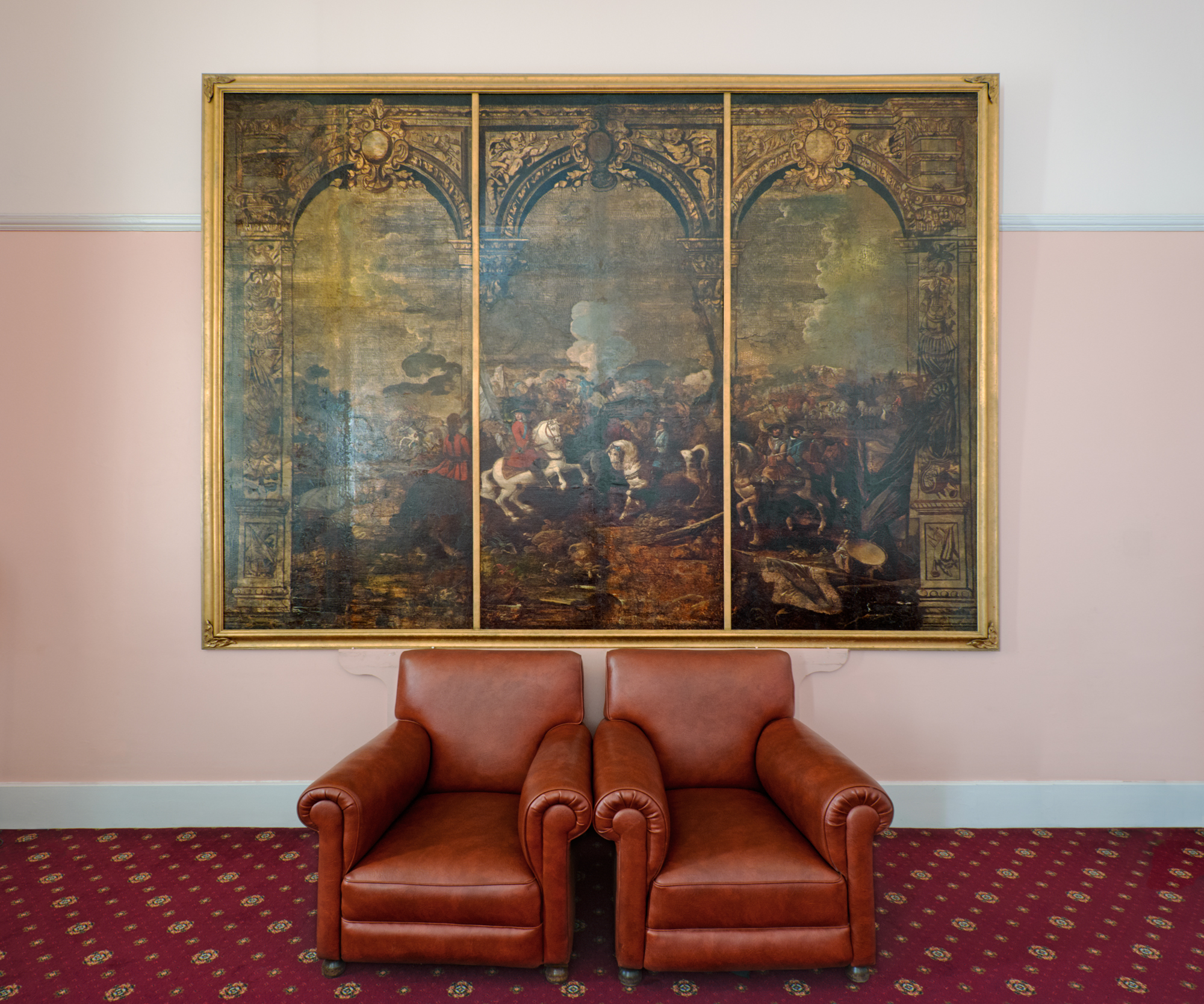
Charting Churchill: The Marlborough Room, Royal Military College, Sandhurst

Marlborough Room, Royal Military College, Sandhurst 2014 by Leslie Hossack

Marlborough Room, Royal Military College, Sandhurst 2014

© Leslie Hossack

At the beginning of 1929, Winston Churchill’s political career appeared to be at its zenith. However, Stanley Baldwin’s government was defeated in May, and Churchill resigned as Chancellor of the Exchequer. Thus began his “Wilderness Years.” Throughout this period, he continued to represent Epping in the House of Commons, but not as a member of the governing party. From the spring of 1929 until the spring of 1939, Churchill would not hold a cabinet post.

In August 1929, Winston set out on a North American tour with his son Randolph, his brother Jack and his nephew Johnnie. The four travelled across Canada by train to Vancouver and Victoria. Churchill enjoyed the scenery en route and painted various sights, including Lake Louise. The group then travelled south to California. By the end of October, Churchill’s party had reached New York City where he observed the Wall Street Crash first hand. He himself lost £17,000, at a time when he could ill afford a financial set back.

Once again, Churchill would turn to writing as his main source of income. He received an advance of £20,000 for Marlborough, a book he wanted to write about his ancestor John Churchill, the 1st Duke of Marlborough. Winston had been born in Blenheim Palace, which was given to the 1st Duke of Marlborough in gratitude for his victory at the Battle of Blenheim in 1705.

Shown above is the Marlborough Room, Royal Military College, Sandhurst. This room, named after the 1st Duke, features a triptych on leather of the Battle of Blenheim, painted by Horensburg. Now the room is used as an officer cadet anteroom where one of the companies of cadets assembles. Winston Churchill was a cavalry cadet at Sandhurst from September 1893 to December 1894.

The image featured above is part of the limited edition collector’s portfolio created by Leslie Hossack to mark the 50th anniversary of the death of Sir Winston Churchill. She presents locations that chart Churchill’s personal and political life, from his birth at Blenheim Palace in 1874 until his death in London in 1965. THE CHURCHILL PHOTOGRAPHS are part of Hossack’s larger body of work that explores Nazi architecture in Berlin, Stalinist structures in Moscow, contested sites in Jerusalem, a Cold War bunker in Ottawa, NATO’s Headquarter Camp in Kosovo, and buildings linked to the Japanese Canadian internment during World War II.

To view more photographs, please visit Leslie’s website.  lesliehossack.com

SIR WINSTON CHURCHILL’S POLITICAL YEARS

CHARTING CHURCHILL, 1874 – 1965

Part 3, The Political Years, 1908 – 1929

On November 30th 2014, Sir Winston Churchill’s 140th birthday, Haute Vitrine started publishing images from the series THE CHURCHILL PHOTOGRAPHS by Leslie Hossack.

Yesterday’s post marked the end of Part 3, The Political Years, 1908 – 1929. During this time, Sir Winston Churchill’s political career was firmly established; he contested eleven elections and won seven; he held nine cabinet offices, including Chancellor of the Exchequer, and delivered five budget speeches. Photographs featured in Part 3, The Political Years can be reviewed below.

To view the photographs from Part 1, The Early Years, 1874 – 1892 and Part 2, The Defining Years, 1892 – 1908, please visit the Haute Vitrine posts of November 30th through December 20th, 2014.

Leslie Hossack’s CHARTING CHURCHILL will continue into January 2015, the month that marks the 50th anniversary of the death of Sir Winston Churchill.


33 Eccleston Square, London 2014 by Leslie Hossack

33 Eccleston Square, London 2014

Old Admiralty Building, Whitehall, London 2014 by Leslie Hossack

Old Admiralty Building, Whitehall, London 2014

Admiralty Arch, The Mall, London 2014 by Leslie Hossack

Admiralty Arch, The Mall, London 2014

The Cenotaph, Whitehall, London 2014 by Leslie Hossack

The Cenotaph, Whitehall, London 2014

State Dining Room, Blenheim Palace, Woodstock 2014 by Leslie Hossack

State Dining Room, Blenheim Palace, Woodstock 2014

The House at Chartwell, Westerham, Kent 2014 by Leslie Hossack

The House at Chartwell, Westerham, Kent 2014

The Lake at Chartwell, Westerham 2014 by Leslie Hossack

The Lake at Chartwell, Westerham, Kent 2014

The Goldfish Pool at Chartwell, Westerham 2014 by Leslie Hossack

The Goldfish Pool at Chartwell, Westerham, Kent 2014

11 Downing Street, London 2014 by Leslie Hossack

11 Downing Street, London 2014

Horse Guards  Parade, London 2014 by Leslie Hossack

Horse Guards Parade, London 2014

© Leslie Hossack

The images featured above are part of the limited edition collector’s portfolio created by Leslie Hossack to mark the 50th anniversary of the death of Sir Winston Churchill. She presents locations that chart Churchill’s personal and political life, from his birth at Blenheim Palace in 1874 until his death in London in 1965. To find out how these images are linked to Churchill, please see the previous posts here on Haute Vitrine.

THE CHURCHILL PHOTOGRAPHS are part of Hossack’s larger body of work that explores Nazi architecture in Berlin, Stalinist structures in Moscow, contested sites in Jerusalem, a Cold War bunker in Ottawa, NATO’s Headquarter Camp in Kosovo, and buildings linked to the Japanese Canadian internment during World War II.

To view more photographs, please visit Leslie’s website.  lesliehossack.com
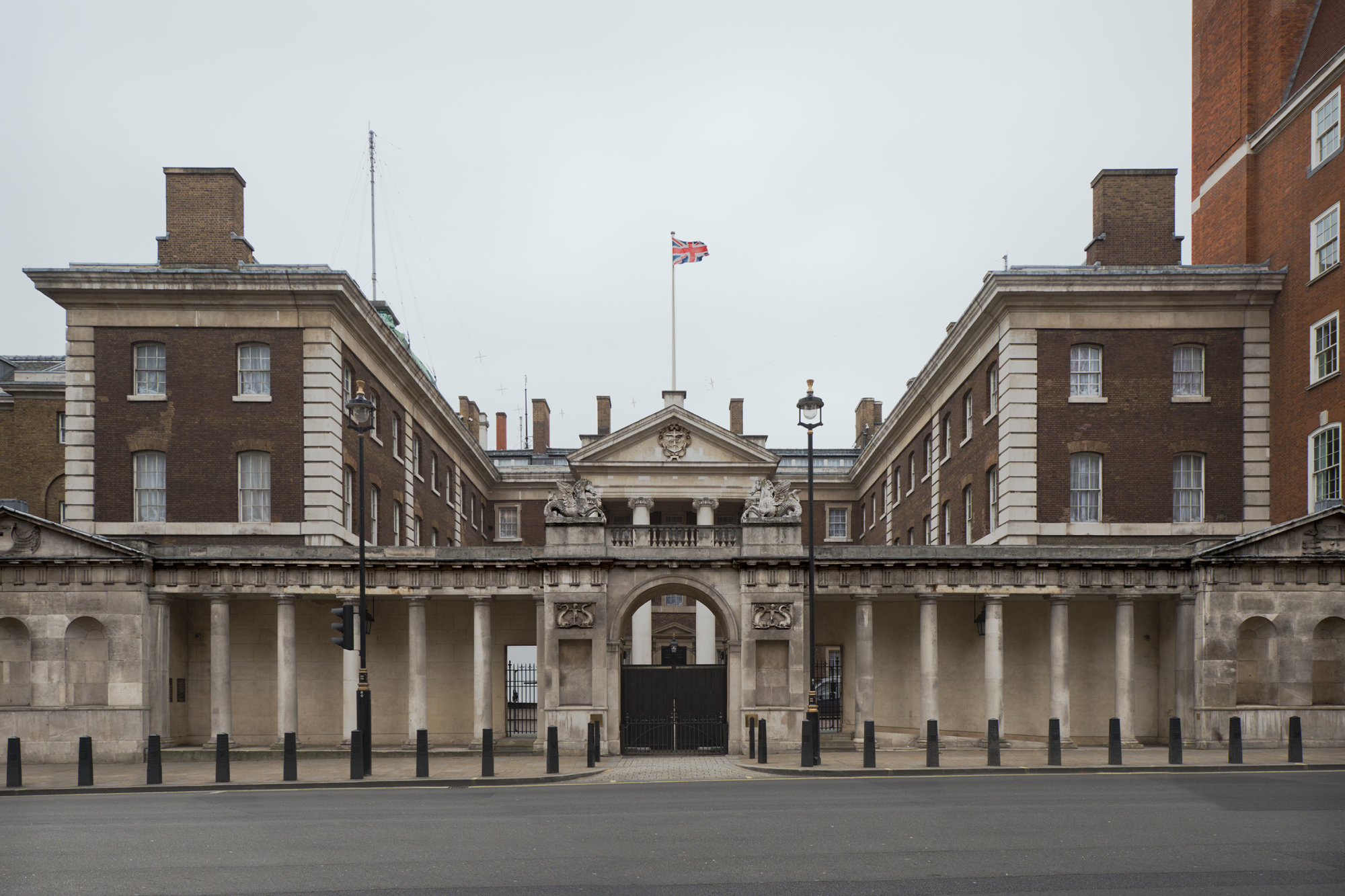
Charting Churchill: Horse Guards Parade, London

Horse Guards  Parade, London 2014 by Leslie Hossack

Horse Guards Parade, London 2014

© Leslie Hossack

On the November 7th 1924, Winston Churchill was appointed Chancellor of the Exchequer in the Conservative government of Stanley Baldwin. In January 1925, his family moved into the official residence of the Chancellor of the Exchequer located at 11 Downing Street. This was the second time in his career that Winston had held a cabinet post with an official residence backing onto Horse Guards Parade. The first time was in 1911 when he was appointed First Lord of the Admiralty. He and his family had lived in Admiralty House from 1913 to 1915, and he later described those years as “the happiest of my life.”

While serving as Chancellor of the Exchequer from 1925 to 1929, Churchill delivered five budget speeches. In addition, in 1927 he found time to visit Mussolini in Rome; to publish The World Crisis, Volume III, 1916-1918; and to take up bricklaying at Chartwell. By the beginning of 1929, Winston’s career appeared to be at its zenith, and in March he published Volume IV of The World Crisis, The Aftermath. However, in May 1929, Mr. Baldwin’s government was defeated and Churchill resigned as Chancellor of the Exchequer. It was time to leave the official residence at 11 Downing Street.

In the photograph above, the back garden walls of No. 10 and No. 11 Downing Street are directly behind the viewer. The red building seen across the parade square is the Old Admiralty Building. Although Churchill was about to enter his “Wilderness Years” at the end of 1929, he would return to both The Admiralty and to Downing Street many years later.

The image featured above is part of the limited edition collector’s portfolio created by Leslie Hossack to mark the 50th anniversary of the death of Sir Winston Churchill. She presents locations that chart Churchill’s personal and political life, from his birth at Blenheim Palace in 1874 until his death in London in 1965. THE CHURCHILL PHOTOGRAPHS are part of Hossack’s larger body of work that explores Nazi architecture in Berlin, Stalinist structures in Moscow, contested sites in Jerusalem, a Cold War bunker in Ottawa, NATO’s Headquarter Camp in Kosovo, and buildings linked to the Japanese Canadian internment during World War II.

To view more photographs, please visit Leslie’s website.  lesliehossack.com

Charting Churchill: 11 Downing Street, London

11 Downing Street, London 2014 by Leslie Hossack

11 Downing Street, London 2014

© Leslie Hossack

For Winston Churchill, 1924 was a milestone year. In 1922, after an appendectomy, he had lost the election in Dundee and found himself “without a seat, without an office, without a party, and without an appendix.” However, in 1924, he was elected in Epping; he was back in the House of Commons and he was back in the cabinet. November 7th 1924, Winston was appointed Chancellor of the Exchequer in the Conservative government of Stanley Baldwin. That same month, he turned 50.

Churchill had not been idle during the two years he was out of Parliament. He had been busy working on his book, The World Crisis, and volumes I and II were published in 1923. He had also been busy renovating his new country home, Chartwell. The family took up residence there in 1924, just months before Winston was appointed to one of Great Britain’s most prestigious cabinet positions. Subsequently, the family moved into the official residence of the Chancellor of the Exchequer at 11 Downing Street. In the photograph above, the dark gray building near the end of the right-hand side of the street houses both No. 10 and No. 11 Downing Street. The residence of the Chancellor of the Exchequer is the further of the two, its dark facade painted white at ground level.

The image featured above is part of the limited edition collector’s portfolio created by Leslie Hossack to mark the 50th anniversary of the death of Sir Winston Churchill. She presents locations that chart Churchill’s personal and political life, from his birth at Blenheim Palace in 1874 until his death in London in 1965. THE CHURCHILL PHOTOGRAPHS are part of Hossack’s larger body of work that explores Nazi architecture in Berlin, Stalinist structures in Moscow, contested sites in Jerusalem, a Cold War bunker in Ottawa, NATO’s Headquarter Camp in Kosovo, and buildings linked to the Japanese Canadian internment during World War II.

To view more photographs, please visit Leslie’s website.  lesliehossack.com

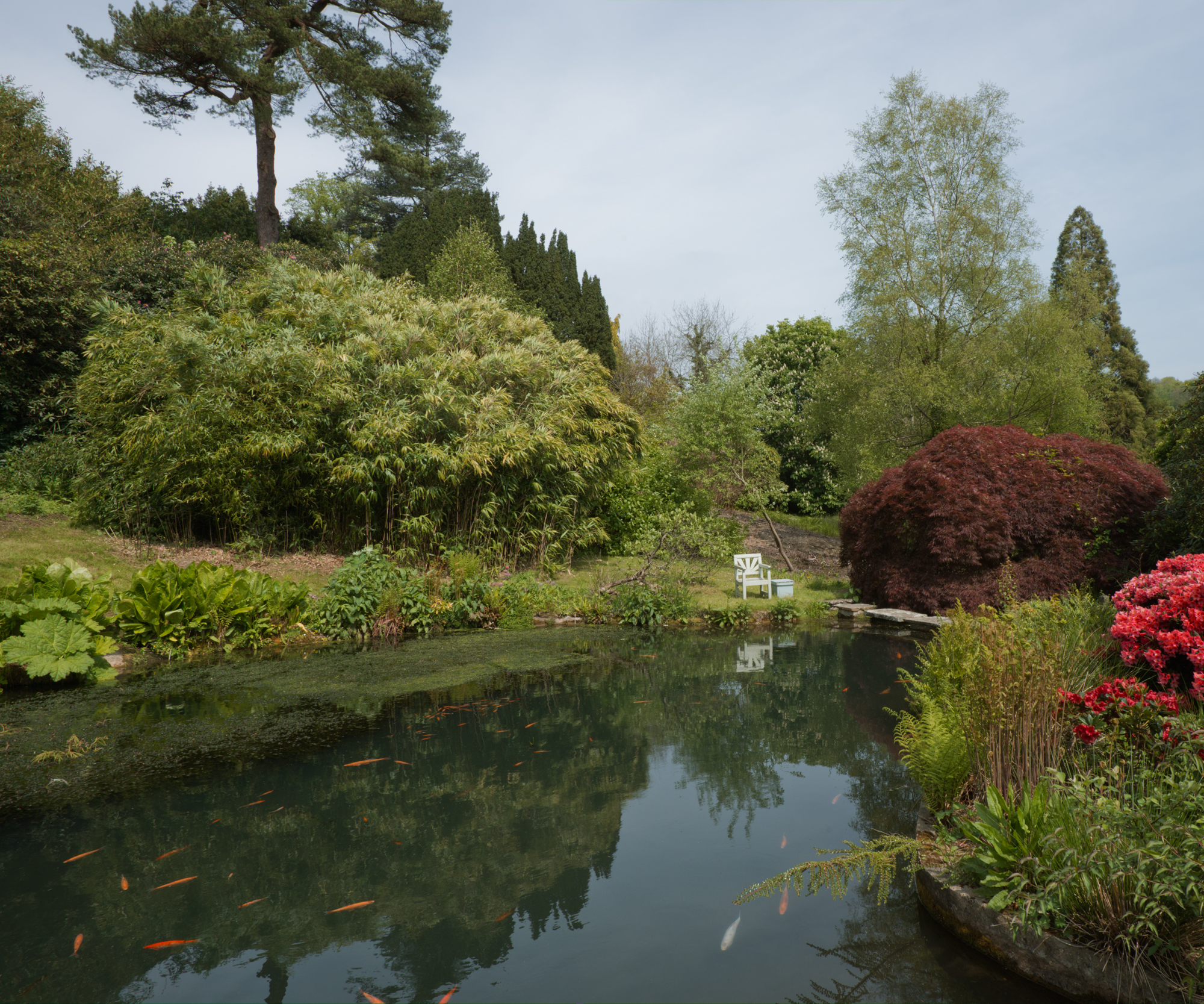
Charting Churchill: The Goldfish Pool at Chartwell

The Goldfish Pool at Chartwell, Westerham 2014 by Leslie Hossack

The Goldfish Pool at Chartwell, Westerham, Kent 2014

© Leslie Hossack

Winston Churchill took up painting in 1915 and it became a life-long passion. Painting relaxed and restored him, and during a period of almost 50 years, he created over 500 pieces. When the family moved into Chartwell in 1924, it became one of Winston’s favourite places to paint. He won his first prize for “Winter Sunshine, Chartwell.” He then sent five paintings to a Paris exhibition in the 1920s. They were shown under the name Charles Morin, and four of them sold for £30 each.

Several of Winston’s paintings remained in the collection of his daughter, Mary. In her book A Daughter’s Tale, The Memoir of Winston Churchill’s Youngest Child (2011), Mary described herself as a Chartwell Child. She went on to play an active role in World War II, and then married Christopher Soames in 1947. Like her mother, Clementine, Mary became a mother of five. Like her father, Winston, Mary became a writer. One of the books he wrote was his father’s biography, Lord Randolph Churchill (1906); one of the books she wrote was her mother’s biography, Clementine Churchill: The Biography of a Marriage (1979).

Mary Soames also wrote Winston Churchill, His Life as a Painter (1990). When Lady Mary Soames, the Churchill’s last surviving child, died in 2014 at the age of 91, some of the paintings from her private collection were auctioned by Sotheby’s. The Goldfish Pool at Chartwell by Winston Churchill sold for almost £1.8m. A photograph of the pool as it appeared in 2014 can be seen above.

The image featured above is part of the limited edition collector’s portfolio created by Leslie Hossack to mark the 50th anniversary of the death of Sir Winston Churchill. She presents locations that chart Churchill’s personal and political life, from his birth at Blenheim Palace in 1874 until his death in London in 1965. THE CHURCHILL PHOTOGRAPHS are part of Hossack’s larger body of work that explores Nazi architecture in Berlin, Stalinist structures in Moscow, contested sites in Jerusalem, a Cold War bunker in Ottawa, NATO’s Headquarter Camp in Kosovo, and buildings linked to the Japanese Canadian internment during World War II.

To view more photographs, please visit Leslie’s website.  lesliehossack.com