Hammershøi: Musée Jacquemart-André, Part 7

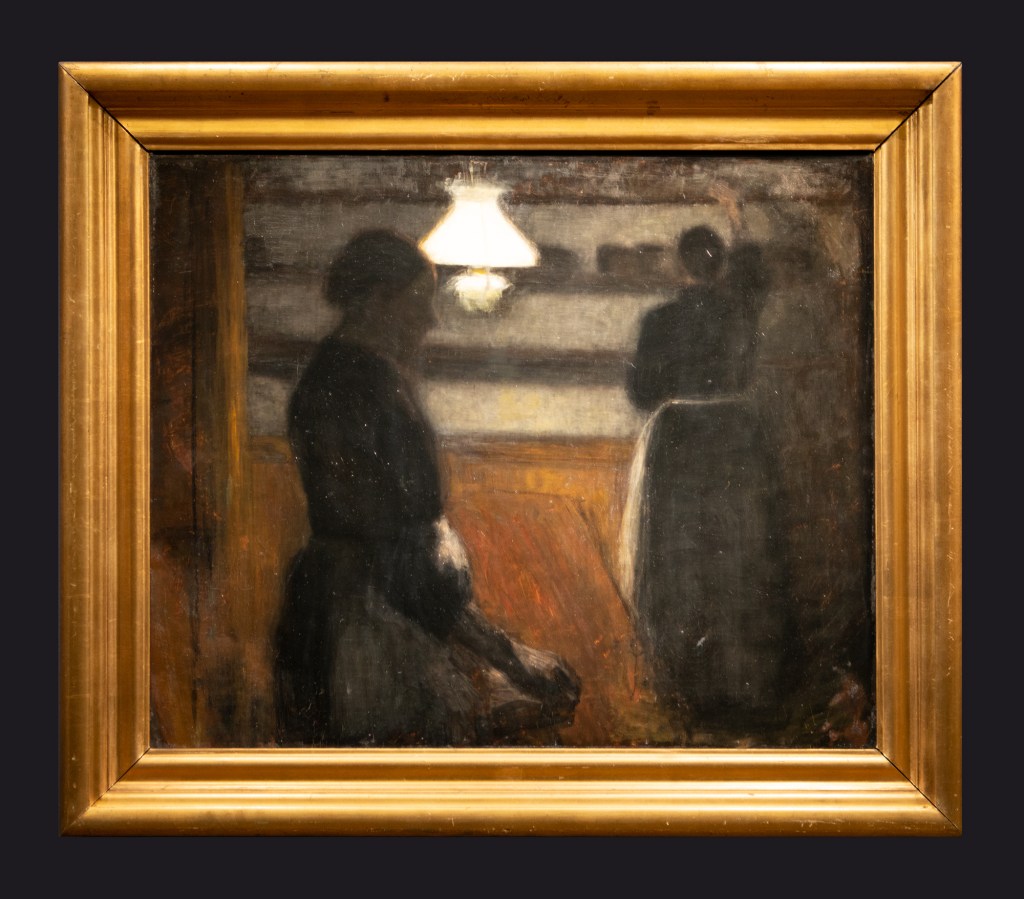
39 1888 The Bakery by Leslie HossackThe Bakery (1888)
Collection: Stiftung Schleswig-Holsteinische Landesmuseen Schloss Gottorf,
Schleswig
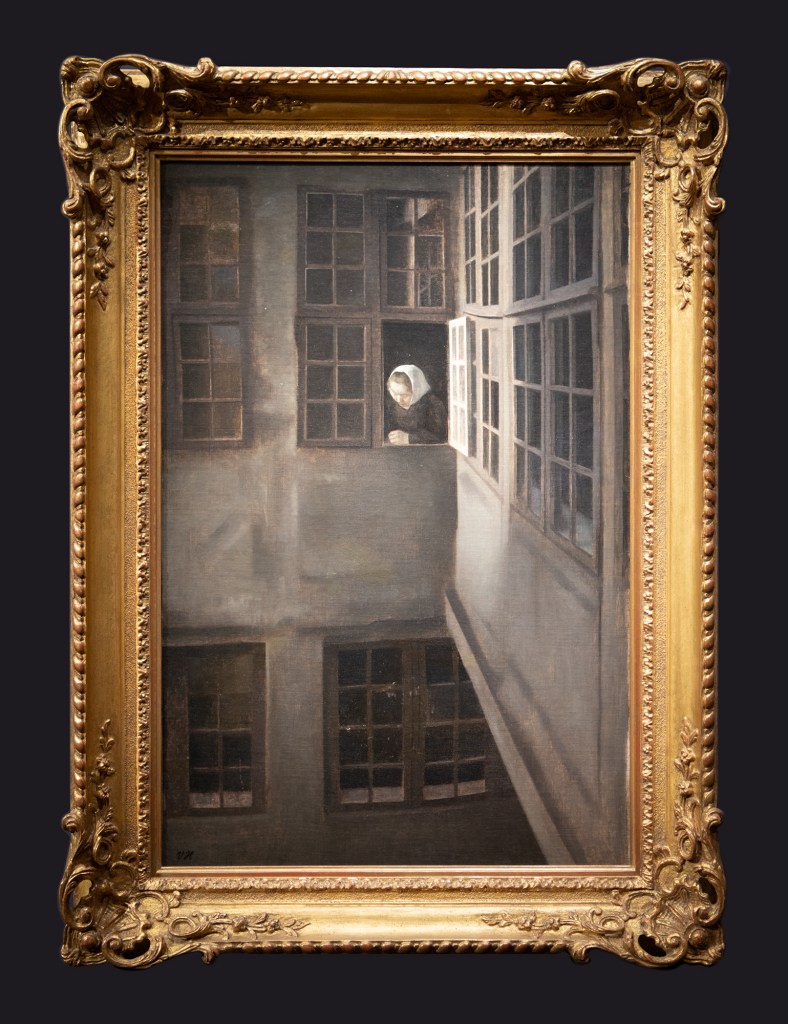
22 1905, Cour, Strandgade 30 by Leslie HossackCourtyard, Strandgade 30 (1905)
Ambassador John L. Loeb Jr. Danish Art Collection

all photographs © 2019 Leslie Hossack

The two paintings by Vilhelm Hammershøi shown above were photographed by Leslie Hossack in 2019, at the exhibition entitled Hammershøi: The Master of Danish Painting, at the Musée Jacquemart-André in Paris.

The Bakery (1888) and Courtyard, Strandgade 30 (1905) are outliers in a way. Rarely did Hammershøi paint the interior of a shop. And although Hammershøi painted dozens of interior views of his Copenhagen apartment located at Strandgade 30, there are only a handful of exterior views of the building’s courtyard – some with a figure and some without. 

Courtyard, Strandgade 30 (1905) was one of nine Hammershøi works from the Ambassador John L. Loeb Jr. Danish Art Collection on view at the Musée Jacquemart-André in the 2019 Paris exhibition entitled Hammershøi: The Master of Danish Painting. John L. Loeb Jr. served as American Ambassador to Denmark from July 1981 until September 1983. While ambassador, Loeb started collecting Danish art and he now has the largest Danish art collection outside of Denmark.

Apparently some Danish museums were somewhat reluctant to lend their Hammershøi paintings to the exhibition at the Musée Jacquemart-André. So curator Jean-Loup Champion headed off to New York to ask John L. Loeb Jr. about the possibility of  borrowing  paintings from the Ambassador John L. Loeb Jr. Danish Art Collection. According to Champion, Loeb replied, “Take whatever you want.” Champion added, “It made it possible for me to organise the exhibition that I wanted. I took 11 paintings.”

“I have had such pleasure in this collection that one of my lifetime goals has become to make the world – especially Americans – aware of the impressive quality of Danish art which has not achieved the recognition it deserves. Whenever we have been able to advance it, I leap at the chance.”
John L. Loeb Jr.:Reflections, Memories, and Confessions (2018)

Leslie Hossack has a similar goal: to make the world more aware of the art of Vilhelm Hammershøi. One step toward achieving this goal is to publish, here on Haute Vitrine, her photographs of 100 works by Hammershøi as seen in situ in art galleries in Ottawa, Toronto, Copenhagen and Paris. The generosity of Ambassador Loeb’s loan of nine Hammershøi works to the Musée Jacquemart-André exhibition in 2019 is greatly appreciated. 

Hammershøi’s oeuvre consists of architecture, nudes, landscapes, portraits and interiors. However, it was his interiors that were the most popular in his lifetime (1864-1916) and continue to draw the strongest response today. Hammershøi painted over 100 interiors in the various apartments he shared with his wife Ida in Copenhagen. Their home was both his studio and a major motif in his work.

Over a century ago, Danish painter Vilhelm Hammershøi elevated
“Stay At Home. Work At Home.” to an art form.

Leslie Hossack’s Hammershøi Photographs are part of a larger body of work that explores Hitler’s Berlin, Stalin’s Moscow, Mussolini’s Rome, Churchill’s London, contested sites in Jerusalem, the NATO Headquarter Camp in Kosovo, buildings linked to the Japanese Canadian internment during WWII, the D-Day landing beaches of Normandy, the Nazi-occupied Channel Islands, Scotland’s Freemasons and Sigmund Freud’s Vienna.

To view more photographs by Leslie Hossack, please visit lesliehossack.com

Hammershøi: Musée Jacquemart-André, Part 8

23 1888, La Porte blanche (interior avec au vieux poele) by Leslie HossackThe White Door (1888)
Private Collection

30 1899, Intérieur, Strandgade 30 by Leslie HossackInterior, Strandgade 30 (1899)
Ambassador John L. Loeb Jr. Danish Art Collection

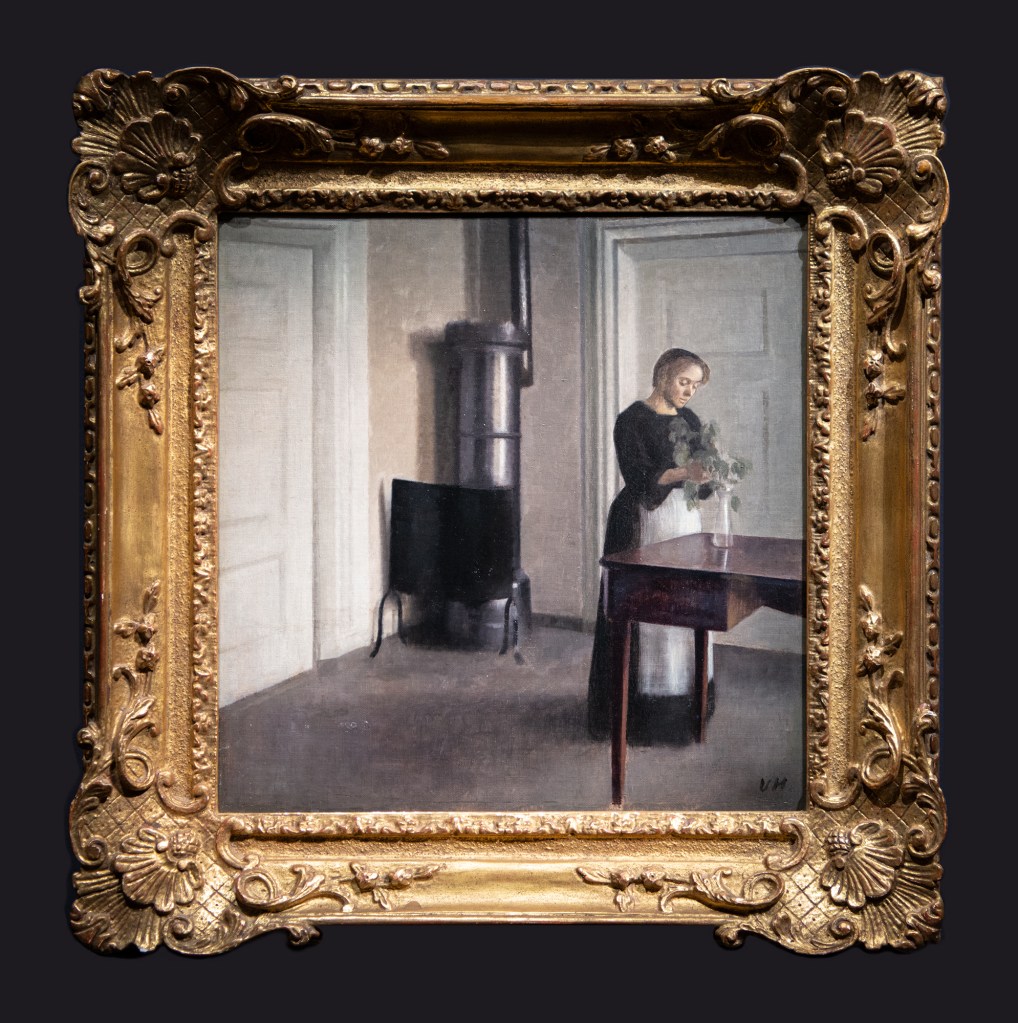
20 1900, Intérieur avec une femme arrangeant des fleurs dans un vase by Leslie HossackInterior with a Woman Arranging Flowers in a Vase (1900)
Ambassador John L. Loeb Jr. Danish Art Collection

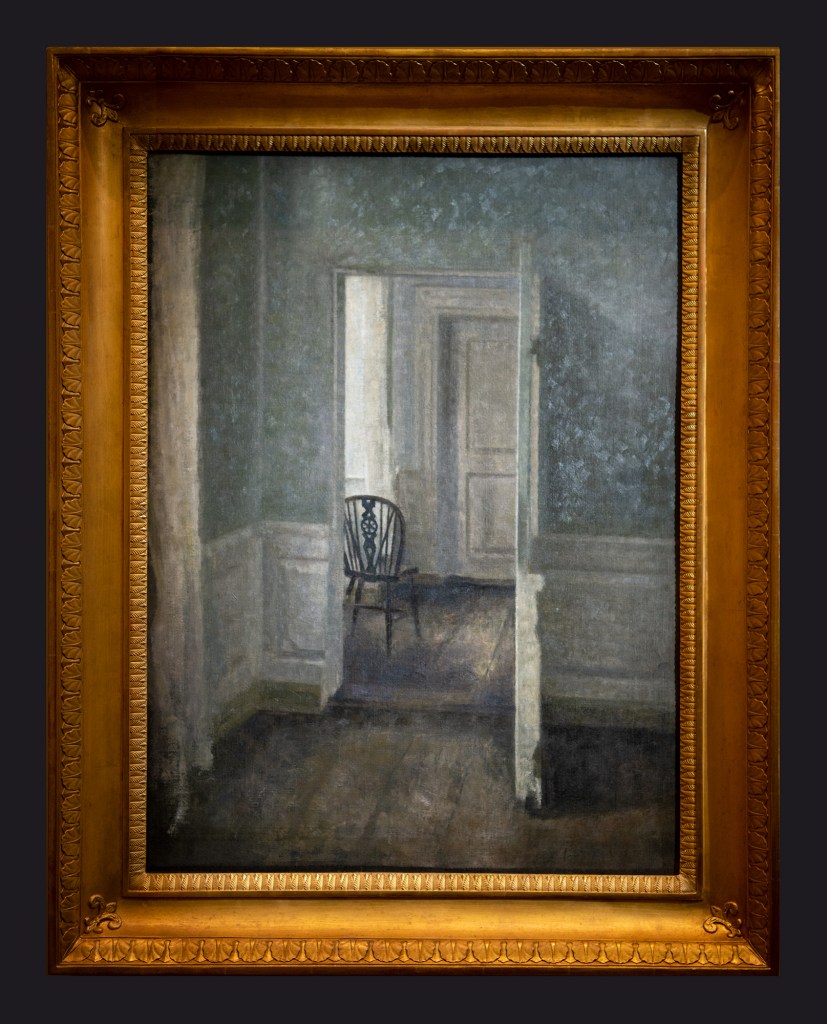
31 1913, Intérieur avec une chaise Windsor by Leslie HossackInterior with a Windsor Chair (1913)
Ambassador John L. Loeb Jr. Danish Art Collection

19 n.d., Intérieur avec une femme debout by Leslie HossackInterior with a Woman Standing (no date)
Ambassador John L. Loeb Jr. Danish Art Collection

all photographs © 2019 Leslie Hossack

Shown above are five of several interior paintings by Vilhelm Hammershøi that were photographed by Leslie Hossack at the exhibition entitled Hammershøi: The Master of Danish Painting, Musée Jacquemart-André, Paris, 2019. All five are from private collections, the last four from the Ambassador John L. Loeb Jr. Danish Art Collection which was described in the previous post here on Haute Vitrine.

With the first painting above, The White Door (1888), Hammershøi had found his signature motif.

“Hammershøi painted his first empty interior in 1888 in the apartment of his friend Karl Madsen, a painter, art historian, and future director of the Statens Museum for Kunst in Copenhagen. The first thing one notices is the wood stove standing in a corner, which was one of the artist’s recurrent motifs. In this experimental picture, which is held in a private collection, it is The White Door (the title of the work) that provides all the light. The contrast with the dark room is starker than in later works, in which the play of light is rendered with far greater subtlety via a highly detailed technique.”
Press Kit, Hammershøi: The Master of Danish Painting, Musée Jacquemart-André and Culturespaces (2019)

Hammershøi painted the interiors of the apartments that he lived in with his wife Ida, from their first home which they moved to in 1892, until their last where they lived from 1913 until his death in 1916. However, it was their apartment located at Strandgade 30 (1898-1909) that features in the majority of Hammershøi’s interiors; about 60 of his 100 interiors were painted there. His home was his studio, his wife was his model, and his famous interiors were staged versions of their private living quarters.

“Tables and chairs are shuffled around, pictures are rehung, just as door hinges and handles are manipulated in and out of the pictures – all to simplify and tighten motifs, which all then appear as clear geometric structures, and to study the effect of doing so…
Hammershøi was, after all, a master of light, and in his new apartment he found a series of rooms with different light conditions and an inter-connecting succession of rooms that afforded him the opportunity to explore the dynamics of the light.”
Anne-Birgitte Fonsmark & Jacob Bach Riis, At Home With Hammershøi, Ordrupgaard (2018)

Hammershøi’s oeuvre consists of interiors, architecture, nudes, landscapes and portraits. However, it was his interiors that were the most popular in his lifetime (1864-1916) and continue to draw the strongest response today. Hammershøi painted over 100 interiors in the various apartments he shared with his wife Ida in Copenhagen. Their home was both his studio and a major motif in his work.

Over a century ago, Danish painter Vilhelm Hammershøi elevated
“Stay At Home. Work At Home.” to an art form.

Leslie Hossack’s Hammershøi Photographs are part of a larger body of work that explores Hitler’s Berlin, Stalin’s Moscow, Mussolini’s Rome, Churchill’s London, contested sites in Jerusalem, the NATO Headquarter Camp in Kosovo, buildings linked to the Japanese Canadian internment during WWII, the D-Day landing beaches of Normandy, the Nazi-occupied Channel Islands, Scotland’s Freemasons and Sigmund Freud’s Vienna.

To view more photographs by Leslie Hossack, please visit lesliehossack.com

Hammershøi: Musée Jacquemart-André, Part 9

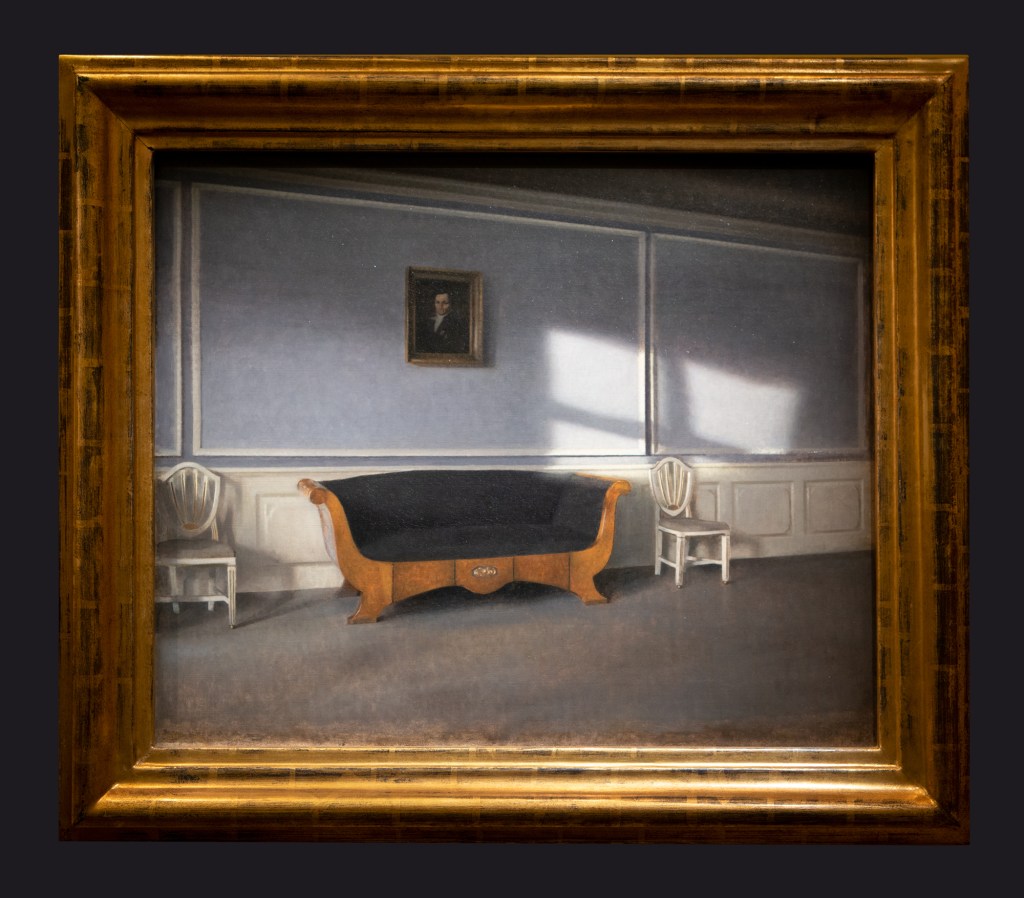
24 1903, Rayon de soleil dans le salon, III, Strandgade 30 by Leslie HossackSunshine in the Drawing Room, III, Strandgade 30 (1903)
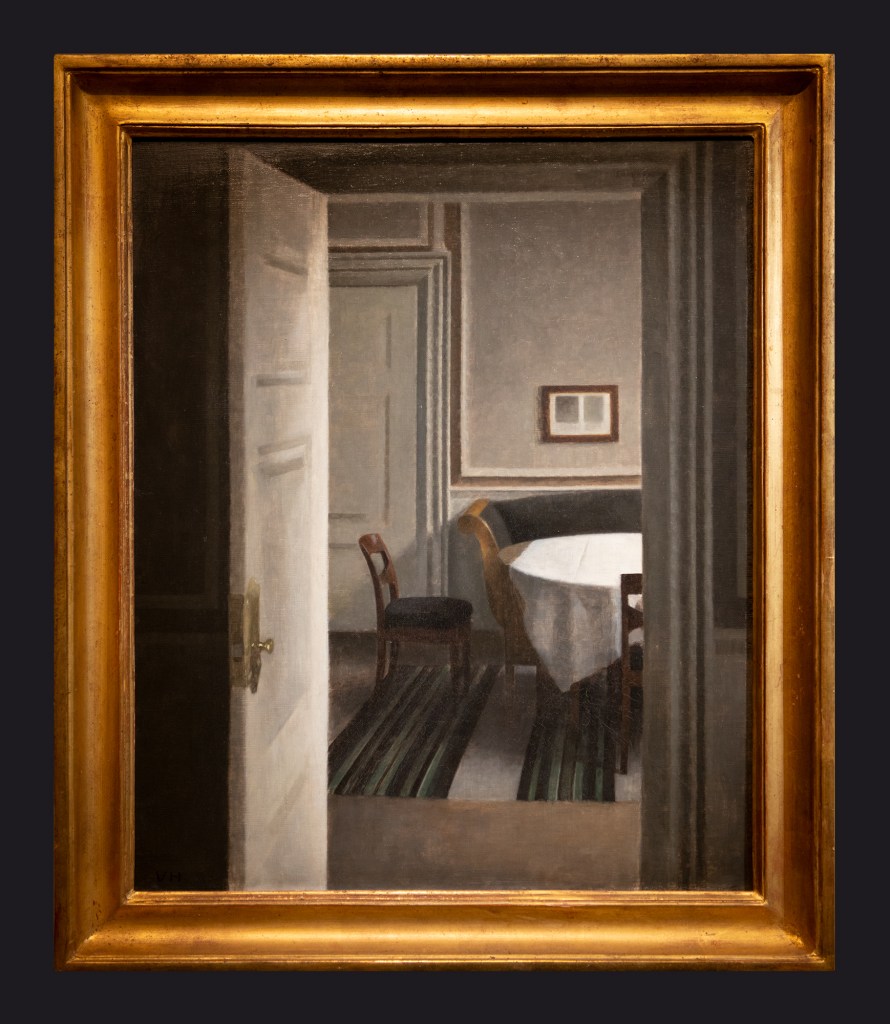
Collection: Nationalmuseum, Stockholm

28 1904, Intérieur, Strandgade 30 by Leslie HossackIntérieur, Strandgade 30 (1904)
Collection: Musée d’Orsay, Paris

47 1906, Interieur, rayon de soleil sur le sol by Leslie HossackInterior, Sunlight on the Floor (1906)
Collection: Tate, London

25 1910-1911, Intérieur avec un pot de fleurs, Bredgade 25 by Leslie HossackInterior with Potted Plant, Bredgade 25 (1910-1911)
Collection: Konstmuseum, Malmö

all photographs © 2019 Leslie Hossack

Shown above are four interior paintings by Vilhelm Hammershøi that were photographed by Leslie Hossack at the exhibition entitled Hammershøi: The Master of Danish Painting, Musée Jacquemart-André, Paris, 2019. Of the 46 Hammershøi interiors Hossack photographed in museums in Ottawa, Toronto, Copenhagen and Paris, 30 contained a female figure and 16 did not. The woman was always Vilhelm’s wife Ida, but she is absent from each the paintings above.

Hammershøi’s signature motif was the interior of the various Copenhagen apartments he shared with Ida, particularly Strandgade 30. Before moving in, they had the mouldings and woodwork painted white, the walls and ceilings painted grey, and the floor stained a dark colour. 

“I’ve mostly painted interiors… How did I get involved in that?… It’s difficult to say. It came entirely by itself. And then it is modern now, everybody wants interiors, nowadays they almost won’t have anything else…”
Hammershøi, quoted by Carl Christian Clausen, 1907, cited by Felix Krämer in “Vilhelm Hammershoi, Interior, Strandgade 30,” At Home with Hammershøi, Ordrupgaard (2018)

After viewing 46 Hammershoi interiors, Leslie Hossack described them as: muted, poetic, haunting, charged, empty, silent, still, quiet, disquieting, calm, monochromatic, unsettling, soothing, subdued, tranquil, seductive, subversive, intimate, psychological, complex, allegorical, visceral, sparse, spartan, staged, disturbing, melancholic, captivating, distilled, gray, uncluttered, introverted, narcissistic, enchanting, engaging, nostalgic and contemporary.

Hammershøi’s oeuvre consists of interiors, architecture, nudes, landscapes and portraits. However, it was his interiors that were the most popular in his lifetime (1864-1916) and continue to draw the strongest response today. Hammershøi painted over 100 interiors in the various apartments he shared with his wife Ida in Copenhagen. Their home was both his studio and a major motif in his work.

Over a century ago, Danish painter Vilhelm Hammershøi elevated
“Stay At Home. Work At Home.” to an art form.

Leslie Hossack’s Hammershøi Photographs are part of a larger body of work that explores Hitler’s Berlin, Stalin’s Moscow, Mussolini’s Rome, Churchill’s London, contested sites in Jerusalem, the NATO Headquarter Camp in Kosovo, buildings linked to the Japanese Canadian internment during WWII, the D-Day landing beaches of Normandy, the Nazi-occupied Channel Islands, Scotland’s Freemasons and Sigmund Freud’s Vienna.

To view more photographs by Leslie Hossack, please visit lesliehossack.com

Hammershøi: Musée Jacquemart-André, Part 10

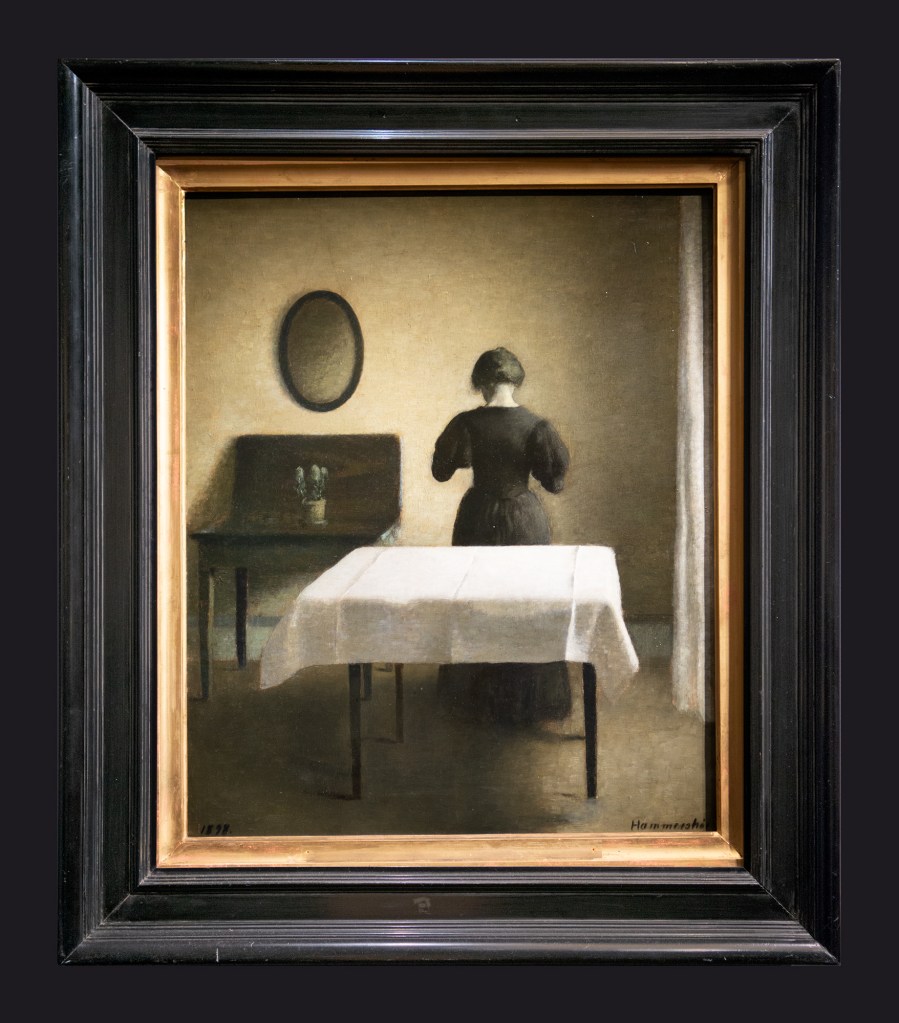
21 1898, Intérieur avec une femme de dos by Leslie HossackInterior with a Woman Seen from the Back (1898)
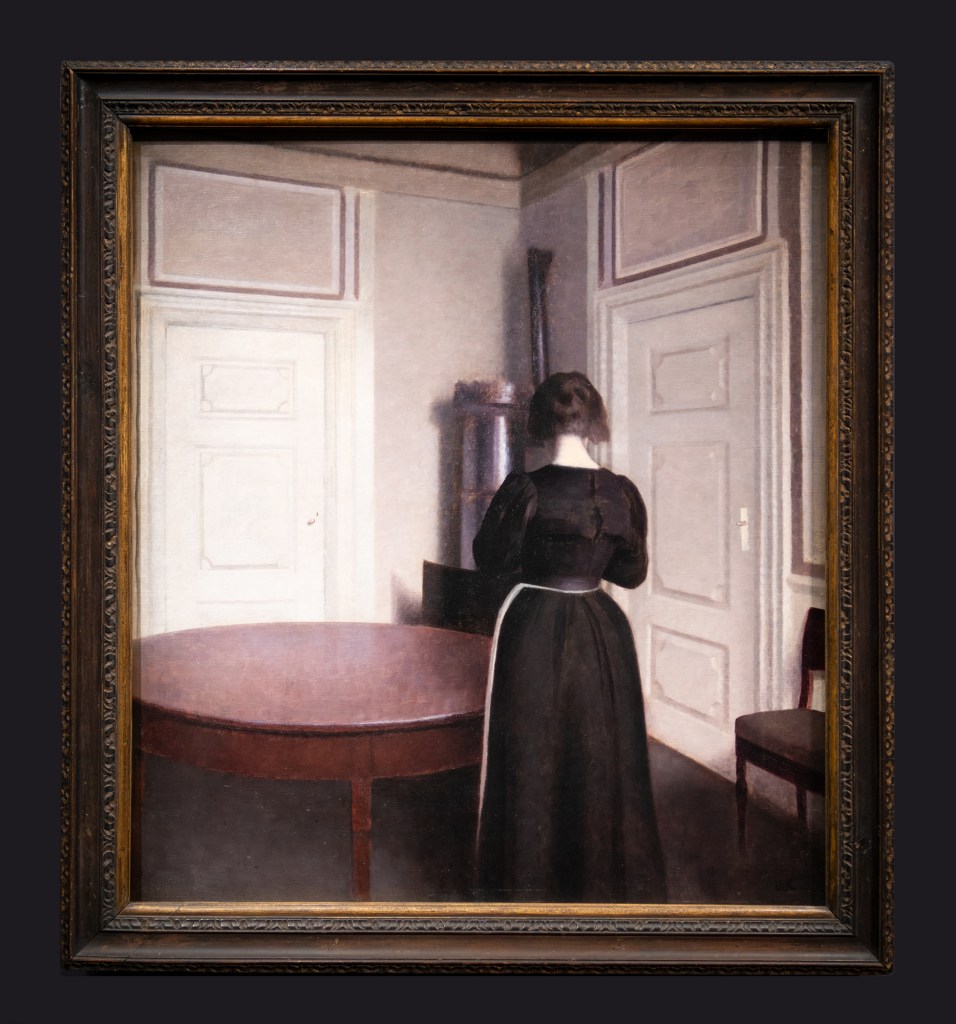
Collection: Nationalmuseum, Stockholm

29 1899, Intérieur, Coin de salle a manger, Strandgade 30 by Leslie HossackInterior (1899)
Collection: Tate, London

09 1901 Intérieur. Strandgade 30 by Leslie HossackInterior, Strandgade 30 (1901)
Collection: Städel Museum, Francfort-sur-le-Main 

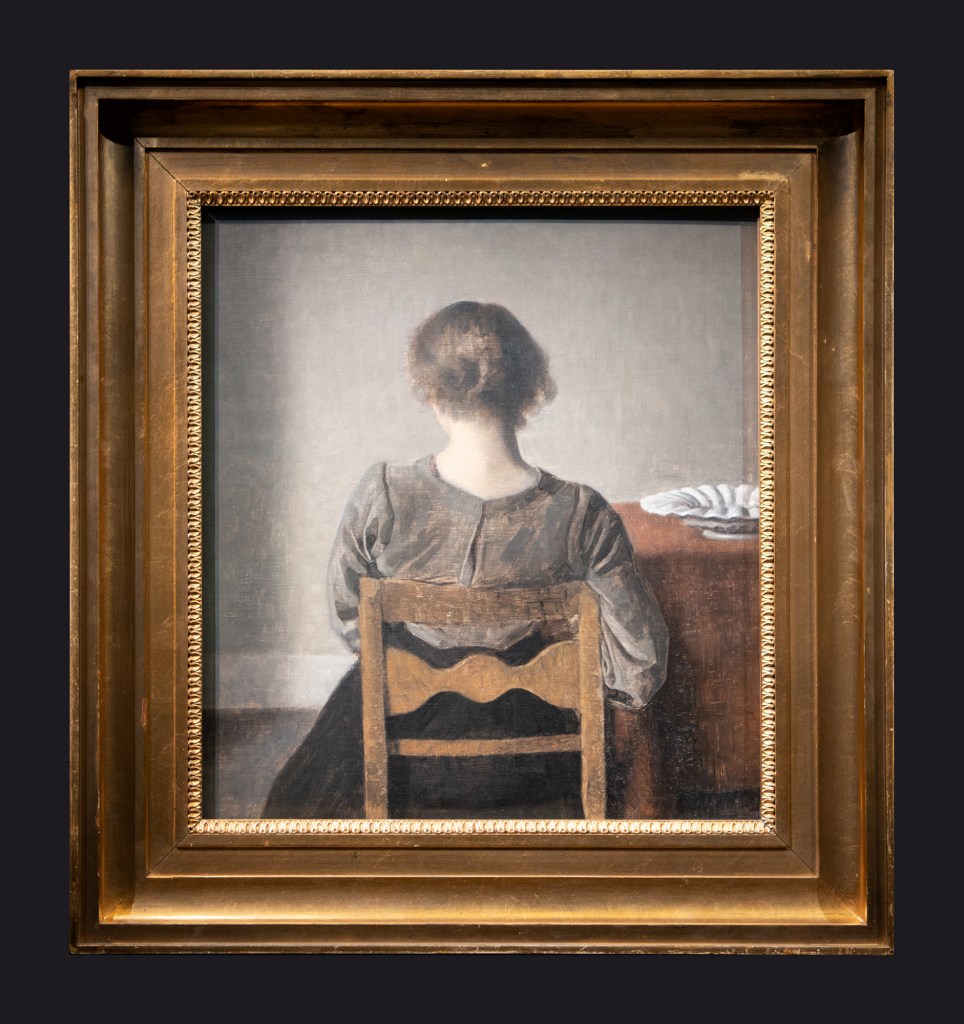
27 1905, Hvile dit aussi Repos. Resting by Leslie HossackResting (1905)
Collection: Musée d’Orsay, Paris

all photographs © 2019 Leslie Hossack

These four interior paintings by Vilhelm Hammershøi were photographed by Leslie Hossack at the exhibition entitled Hammershøi: The Master of Danish Painting, Musée Jacquemart-André, Paris, 2019. Vilhelm’s wife Ida features in 30 of the 46 Hammershøi interiors that Hossack photographed in museums in Ottawa, Toronto, Copenhagen and Paris. Although we occasionally see Ida’s face, she is usually portrayed from behind.

With the exception of the last image above, Resting (1905), Ida is seen standing in a long black dress, with only the nape of her neck exposed. However, in Resting, it seems she was allowed to change her costume and relax in a chair. In every one of the many interiors where Ida is pictured from behind, Vilhelm’s treatment of the nape of his wife’s neck reveals an exquisite vulnerability.

The images above are quintessential Vilhelm Hammershøi. They commemorate his creative partnership with his wife Ida, and they celebrate the extraordinary interiors that the couple fashioned together.

Haute Vitrine will continue to publish work from Leslie Hossack’s series The Hammershøi Photographs. Upcoming posts will present her images of locations in Copenhagen that featured in Hammershøi’s life and in his paintings.

In addition, Hossack’s photographs of reproductions found in the book Vilhelm Hammershøi, The Artist and His Work, by Sophus Michaëlis and Alfred Bramsen (1918), will be posted on Haute Vitrine. This limited-edition book features 66 tipped in plates. Leslie Hossack wrote: “In keeping with my obsession, I photographed each of these monochromatic reproductions of Hammershøi’s paintings.”

This post on Haute Vitrine marks the last in the current series of Vilhelm Hammershoi’s paintings, as photographed in situ by Leslie Hossack. These photographs are designed to give the experience of viewing his work in a gallery setting. They have not been corrected for any colour cast caused by museum lighting or the reflection of the colour of the paint on the gallery walls. Nor have reflections off the oil paint itself or off the protective glass been corrected, nor shadows on the canvas caused by the frames.

Hammershøi’s oeuvre consists of interiors, architecture, nudes, landscapes and portraits. However, it was his interiors that were the most popular in his lifetime (1864-1916) and continue to draw the strongest response today. Hammershøi painted over 100 interiors in the various apartments he shared with his wife Ida in Copenhagen. Their home was both his studio and a major motif in his work.

Over a century ago, Danish painter Vilhelm Hammershøi elevated
“Stay At Home. Work At Home.” to an art form.

Leslie Hossack’s Hammershøi Photographs are part of a larger body of work that explores Hitler’s Berlin, Stalin’s Moscow, Mussolini’s Rome, Churchill’s London, contested sites in Jerusalem, the NATO Headquarter Camp in Kosovo, buildings linked to the Japanese Canadian internment during WWII, the D-Day landing beaches of Normandy, the Nazi-occupied Channel Islands, Scotland’s Freemasons and Sigmund Freud’s Vienna.

To view more photographs by Leslie Hossack, please visit lesliehossack.com

25th Anniversary of the Fall of the Wall

The Berlin Wall, Detail 5, from The Wall, Niederkirchner Strasse, Berlin 2010 by Leslie Hossacl

The Berlin Wall, Detail #5 from The Wall, Niederkirchner Strasse

The Berlin Wall, Detail 6, from The Wall, Niederkirchner Strasse, Berlin 2010 by Leslie Hossack

The Berlin Wall, Detail #6 from The Wall, Niederkirchner Strasse

© Leslie Hossack

Today marks the 25th anniversary of the fall of the wall. For almost thirty years the Berlin Wall divided a city and defined a generation around the world. This photograph surveys one of the last remnants of the wall, an iconic relic of the Cold War, protected for posterity behind a fence. The wall was badly damaged in 1989/90 by “wall-peckers” who attacked it with hammers during the nights after the border was opened on November 9th, 1989.

At 2 a.m. on August 13th, 1961, East German soldiers began building the wall with barbed wire. Soon, West Berlin was enclosed by a fortified frontier 160 km long. Officially known as the Anti-Fascist Protective Rampart, the wall was really put up to prevent East Germans from fleeing to the West. Eventually, the barbed wire was replaced with a concrete wall measuring 3.6 metres high. There were up to 14 border crossings, including Checkpoint Charlie.

In 1962, a second barrier was added approximately 100 metres behind the original wall, thereby creating a “no man’s land” between the two walls. The two images above show a strip of the border or outer wall that was built in the style known as the Grenzmauer 75. This was the “fourth generation” of the Berlin Wall and it began replacing earlier versions in the mid-1970s. It consists of L-shaped pre-cast concrete sections topped by an asbestos-concrete pipe 40 centimetres in diameter.

In Berlin today, little evidence of the wall remains. This 200-metre section runs along the south side of Niederkirchner Strasse. Leslie Hossack’s photographic installation entitled The Wall, Niederkirchner Strasse meassures over 18 feet long. It is on view at the 25 BERLIN exhibit at The Diefenbunker: Canada’s Cold War Museum until March 31st, 2015.

25 Berlin at the Diefenbunker 2014/15

The Wall, Niederkirchner Strasse is part of Hossack’s larger body of work that includes Nazi architecture in Berlin, Stalinist structures in Moscow, contested sites in Jerusalem, a Cold War bunker in Ottawa, NATO’s Headquarter Camp in Kosovo, and Sir Winston Churchill’s London. To view more images, please visit her website.  lesliehossack.com

LONDON TIMES Artist Talk with Special Presenter Julian Armour of Music & Beyond

LONDON TIMES Artist Talk with Special Presenter Julian Armour of Music and Beyond

Exposure Gallery, 1255 Wellington Street West, Ottawa

Exhibition: 18 September – 5 November, 2014

Artist Talk: 9 October, 6:00-8:00

featuring special presenter Julian Armour, Artistic and Executive Director, Music and Beyond

LONDON TIMES is an exhibition of photographs by Barbara Bolton, Abigail Gossage, Leslie Hossack and Patricia Wallace. Curated by Michael Tardioli, Executive Director, School of the Photographic Arts: Ottawa, this show presents informed and evocative images of defining periods in London’s remarkable history. Bolton presents theatres that stayed open during the bombing of World War II and still stand today; Gossage provides a view of the city through rain-streaked glass with her dreamy visions of London streets; Hossack, who explored Sir Winston Churchill’s London, presents her studies of the bunker complex known as The Churchill War Rooms; and Wallace showcases some distinctive aspects of selected pre-1939 London pubs, a tapestry of interiors that meet rigid criteria of historic authenticity and architectural importance.

For more information about Barbara Bolton, Abigail Gossage, Leslie Hossack and Patricia Wallace, please visit their Studio 255 website.


REGISTERED Artist Panel 14 Sept. 2:00 pm

Large Barn, Site of Tashme Internment Camp, Sunshine Valley British Columbia, 2013  by Leslie Hossack

Large Barn, Site of Tashme Internment Camp, Sunshine Valley © Leslie Hossack

REGISTERED, The Japanese Canadian Experience During World War II, is an exhibition of photographs by Leslie Hossack on view until 23 September 2014 at Trinity Gallery, Shenkman Arts Centre, 245 Centrum Boulevard, Ottawa.

ARTIST PANEL Sunday 14 September 2:00 – 3:30

PANELISTS

Alan Neal, host of All In A Day, CBC Radio One, 91.5 FM, will moderate the artist panel. All In A Day is music, news, current affairs, culture, theatre, movies, politics, history, humour and conversation airing weekdays from 3 to 6 pm.

Tetsuo (Ted) Itani, a third-generation Japanese-Canadian, was interned from 1942 to 1949 before joining the Canadian Army and serving for 37 years, including a number of NATO assignments and UN peacekeeping and humanitarian missions.

Sachiko Okuda is also third generation, and her parents and grandparents were interned. Her community work dates from the 1980s, when she volunteered for the campaign resulting in the 1988 redress agreement between Canada’s federal government and the National Association of Japanese Canadians.

Ann Sunahara is an historian, lawyer, and author of The Politics of Racism: The Uprooting of Japanese Canadians During the Second World War (1981). The book documents how Canadian officials abused the human and civil rights of Japanese Canadians for political ends.

Leslie Hossack is a photographer whose exhibition REGISTERED explores the experience of Japanese Canadians in British Columbia during World War II when they were registered, rounded up and removed. This exhibition looks at the people, the places and the press. Hossack’s interpretative work includes photographs of places of power and persecution, and reproductions of public and private documents.

To view images by Leslie Hossack, please visit her website.  lesliehossack.com

REGISTERED

REGISTERED by Leslie Hossack

Trinity Art Gallery, Shenkman Arts Centre, 245 Centrum Blvd. in Orleans

Ottawa, 2014

Exhibition: 21 August – 23 September

Vernissage: 24 August from 1:00 – 3:00

Artist Panel: 14 September at 2:00

REGISTERED, an exhibition of photographs by Leslie Hossack, explores the story of Japanese Canadians in British Columbia during World War II when they were registered, rounded up and removed. Hossack’s interpretative work includes photographs of places of power and persecution, and reproductions of public and private documents.

To view images by Leslie Hossack, please visit her website.  lesliehossack.com

the last letterpress ampersand

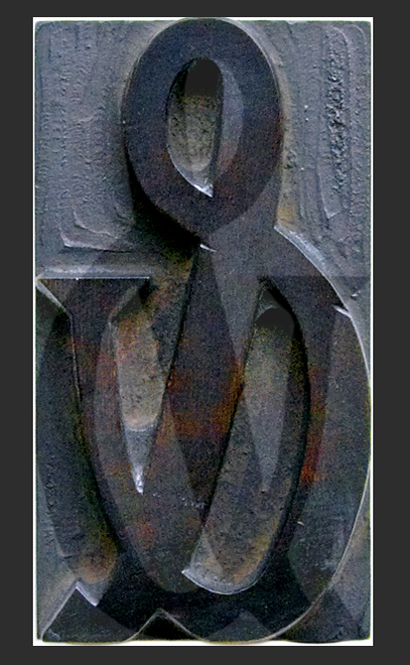
Ampersand Abstract #8, Vancouver 2010


This is the last post in my series of Ampersand Abstracts. Letterpress prints made with handcrafted wooden type blocks hold great appeal for me. In fact, I am always attracted to everyday objects from the past, be they vintage Israeli posters, old Airstream trailers, or nostalgic Canadian diners – the subject of my new series starting tomorrow.


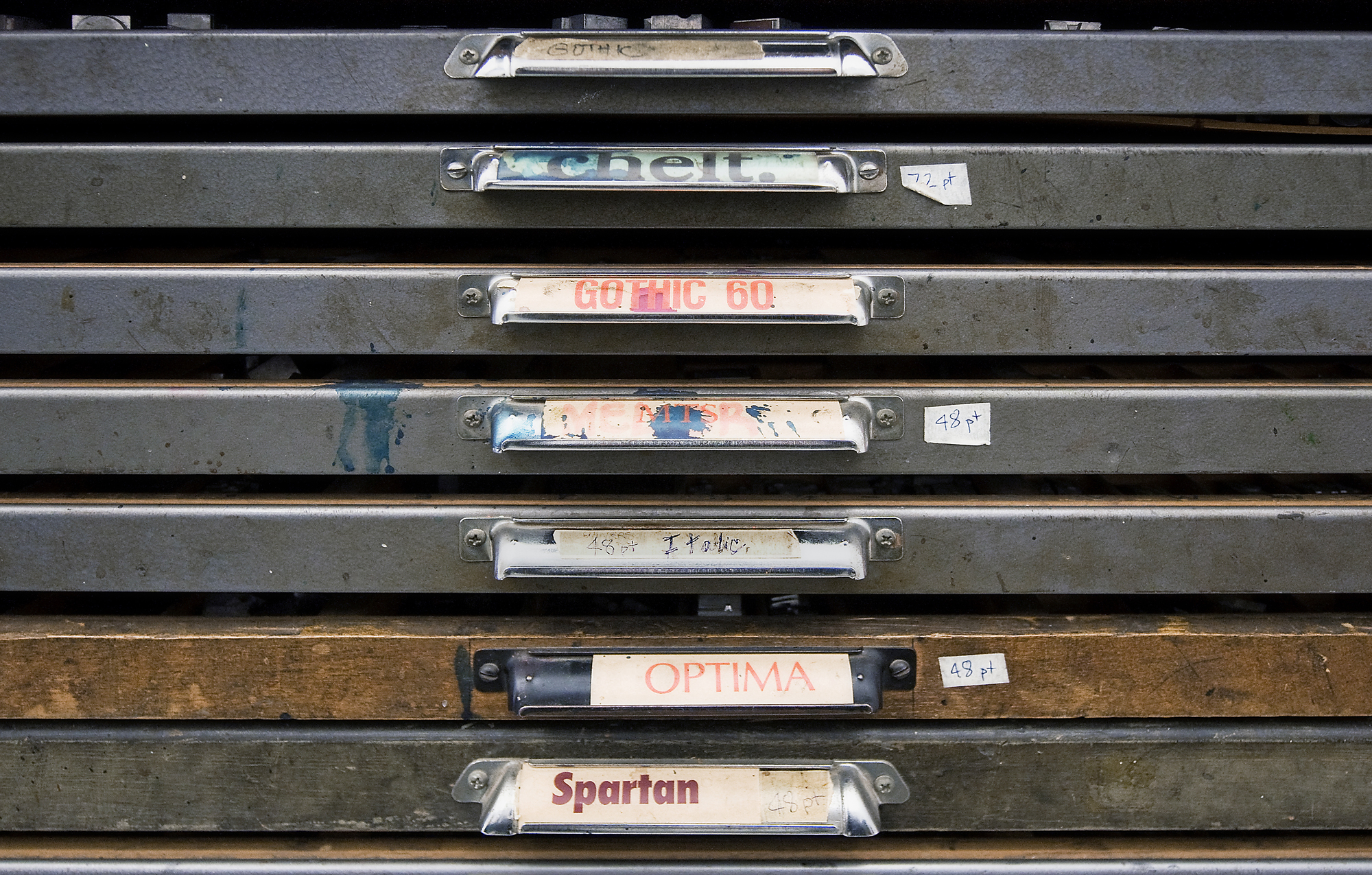
Metal Type Drawers, Vancouver 2010

© Leslie Hossack

I love the mystery of what’s in these drawers. In the letterpress printing room, scores of drawers hold dozens of fonts. Each heavy type case houses intriguing treasures, from the largest wooden blocks lying in stately fashion in their own compartments, to the tiniest metal characters sorted into containers by letter. In 2010 when I took a letterpress printing workshop at the Emily Carr University of Art + Design in Vancouver, I became fascinated with wooden type. I spent more time in the letterpress room photographing the beautifully handcrafted blocks than typesetting.

With the abstract photographs presented here, I set out to explore the intricate relationship between contemporary photography and traditional printing. Letterpress images are printed by hand, one colour at a time, when a raised inked surface is pressed into paper. Today in the digital darkroom, photographs are still crafted one image at a time and then printed using an inkjet printer.

Of all the typographical characters that I encountered in the type drawers, the ampersand was my favourite. I photographed every ampersand wooden type block that I could find; I also printed each one by hand on a table top printer in the letterpress room. The ampersand abstracts in this series were then created in my digital darkroom by combining the original photograph of the wooden type face and a representation of what that character would look like when printed.

I love the mystery of what’s in the drawers.

Ampersand Abstract #7, Vancouver 2010


All the Ampersand Abstracts in this series were created from my photographs of large wood type blocks. For letterpress relief printing, metal type could not be cast much larger than an inch and still retain the flat surface required. There were a number of additional negative factors inherent in large metal type: it was expensive, it required a large amount of storage space, and it was extremely heavy. So wood type was widely used for broadsides and posters which needed large letters that could be read at a distance. For more interesting reading about wooden type, see History of Graphic Design, Poster History, which also includes over 30 examples of vintage posters with annotations.


Mixed Type Drawers, Vancouver 2010

© Leslie Hossack

I love the mystery of what’s in the drawers. In the letterpress printing room, scores of drawers hold dozens of fonts. Each heavy type case houses intriguing treasures, from the largest wooden blocks lying in stately fashion in their own compartments, to the tiniest metal characters sorted into containers by letter. In 2010 when I took a letterpress printing workshop at the Emily Carr University of Art + Design in Vancouver, I became fascinated with wooden type. I spent more time in the letterpress room photographing the beautifully handcrafted blocks than typesetting.

With the abstract photographs presented here, I set out to explore the intricate relationship between contemporary photography and traditional printing. Letterpress images are printed by hand, one colour at a time, when a raised inked surface is pressed into paper. Today in the digital darkroom, photographs are still crafted one image at a time and then printed using an inkjet printer.

Of all the typographical characters that I encountered in the type drawers, the ampersand was my favourite. I photographed every ampersand wooden type block that I could find; I also printed each one by hand on a table top printer in the letterpress room. The ampersand abstracts in this series were then created in my digital darkroom by combining the original photograph of the wooden type face and a representation of what that character would look like when printed.