Charting Churchill: Saint Martin’s Churchyard, Bladon

Churchill Family Plot, Saint Martin's Churchyard, Bladon 2014 by Leslie Hossack

Churchill Family Plot, Saint Martin’s Churchyard, Bladon 2014

© Leslie Hossack

While a cadet at the Royal Military College Sandhurst, Winston Churchill was called to London in June 1894 to say goodbye to his father who was departing on a trip. Lord Randolph Churchill was in declining health and Winston later wrote that this was the last time he saw his father “except as a swiftly fading shadow.” Randolph Henry Spencer Churchill, who died in London on January 24th, 1895 when Winston was twenty years old, cast a long shadow in life and death. Winston’s own son later wrote that “if Lord Randolph had lived, even in better health, he would have been an obstacle to Winston’s career and prospects” but now “he was free to leave the nest and soar.”

Winston’s relationship with his father was complex and conflicted. He craved his father’s affection and approval, but Lord Randolph remained absent physically and distant emotionally. Lord Randolph was briefly Chancellor of the Exchequer and Leader of the House of Commons, but quickly fell from office. Winston continued to idolize his father, but his father could be harsh. For example, Lord Randolph sent a devastating letter to his son upon learning that he had passed into Sandhurst, but with low marks that relegated him to the cavalry not the infantry. Lord Randolph wrote: “I no longer attach the slightest weight to anything you may say about your own accomplishments & exploits.”

The Churchill family plot pictured above reveals Winston’s father still towering over him. The tall cross to the right is Lord Randolph’s marker, and the cross lying flat in the middle marks Winston’s mother, Jennie Jerome. The graves of Sir Winston Churchill and his wife, Clementine, are jointly marked by one low stone lying beyond Jennie’s grave.

The image featured above is part of the limited edition collector’s portfolio created by Leslie Hossack to mark the 50th anniversary of the death of Sir Winston Churchill. She presents locations that chart Churchill’s personal and political life, from his birth at Blenheim Palace in 1874 until his death in London in 1965. THE CHURCHILL PHOTOGRAPHS are part of Hossack’s larger body of work that explores Nazi architecture in Berlin, Stalinist structures in Moscow, contested sites in Jerusalem, a Cold War bunker in Ottawa, NATO’s Headquarter Camp in Kosovo, and buildings linked to the Japanese Canadian internment during World War II.

To view more photographs, please visit Leslie’s website.  lesliehossack.com

Charting Churchill: Old College, Royal Military College, Sandhurst

Grand Entrance, Old College, Royal Military College, Sandhurst 2014 by Leslie Hossack

Portico, Old College, Royal Military College, Sandhurst 2014

© Leslie Hossack

On September 1st 1893, at the age of eighteen, Winston Churchill entered the Royal Military College at Sandhurst. Having failed on two occasions to pass the Sandhurst entrance examination, Winston had left Harrow School to study with the help of a crammer and passed the exam on his third attempt. In My Early Years, Churchill wrote: “At Sandhurst I had a new start. I was no longer handicapped by past neglect of Latin, French or Mathematics. We now had to learn fresh things and we all started equal. Tactics, Fortifications, Topography (mapmaking), Military Law and Military Administration formed the whole curriculum. In addition were Drill, Gymnastics and Riding.”

Winston thoroughly enjoyed his three terms as a gentleman cadet at Sandhurst, and he made several lasting friendships there. He was eager to participate in his military education, and he particularly enjoyed training at the riding-school.

The building above was completed in 1812. Located inside this massive structure is the cadet dining room where Winston Churchill took his meals. Another room in the Old College building is the Marlborough Room, named after John Churchill, the 1st Duke of Marlborough. He is regarded as one of Britain’s greatest soldiers. In recognition of his victories in Europe in the early 1700s, he was given Blenheim Palace where Winston Churchill was born.

The image featured above is part of the limited edition collector’s portfolio created by Leslie Hossack to mark the 50th anniversary of the death of Sir Winston Churchill. She presents locations that chart Churchill’s personal and political life, from his birth at Blenheim Palace in 1874 until his death in London in 1965. THE CHURCHILL PHOTOGRAPHS are part of Hossack’s larger body of work that explores Nazi architecture in Berlin, Stalinist structures in Moscow, contested sites in Jerusalem, a Cold War bunker in Ottawa, NATO’s Headquarter Camp in Kosovo, and buildings linked to the Japanese Canadian internment during World War II.

To view more photographs, please visit Leslie’s website.  lesliehossack.com
Charting Churchill: The Early Years, 1874 – 1892

Part 1, The Early Years, 1874 – 1892

On November 30th 2014, Sir Winston Churchill’s 140th birthday, Haute Vitrine started publishing images from the series THE CHURCHILL PHOTOGRAPHS by Leslie Hossack.

Yesterday’s post marked the end of Part 1, The Early Years, 1874 – 1892. During this time, Sir Winston Churchill’s boyhood at Blenheim Palace and schooldays at Harrow shaped the adult he would become. Photographs featured in Part 1, The Early Years can be reviewed below.

Leslie Hossack’s CHARTING CHURCHILL will continue into January 2015, the month that marks the 50th anniversary of the death of Sir Winston Churchill.

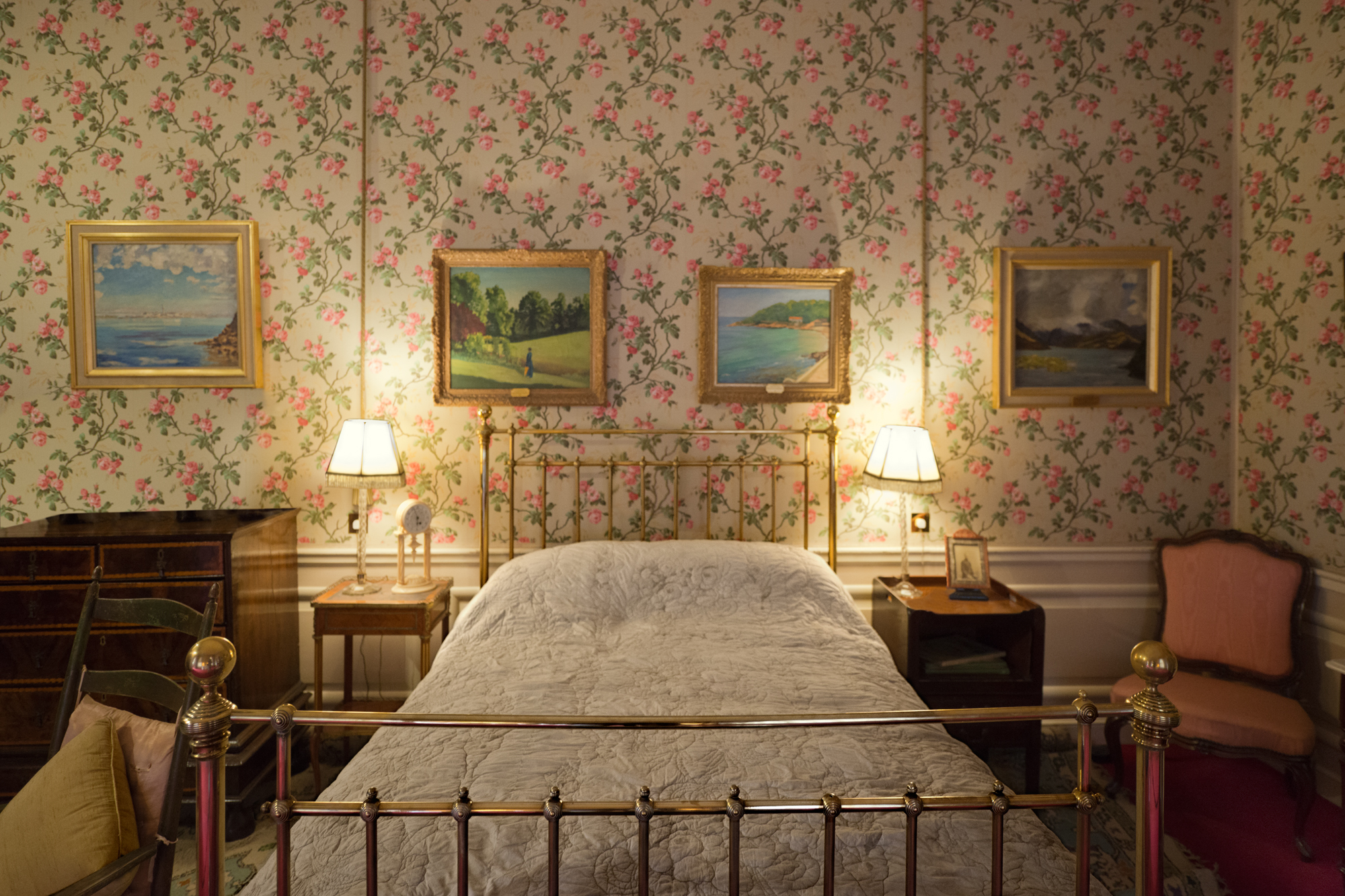
Sir Winston Churchill's Birth Room, Blenheim Palace, Woodstock, 2014 by Leslie HossackSir Winston Churchill’s Birth Room, Blenheim Palace, Woodstock, 2014

02 29 St. James's Place, London 2014 by Leslie Hossack29 St. James’s Place, London 2014

03 South Facade, Blenheim Palace, Woodstock 2014 by Leslie HossackSouth Facade, Blenheim Palace, Woodstock 2014

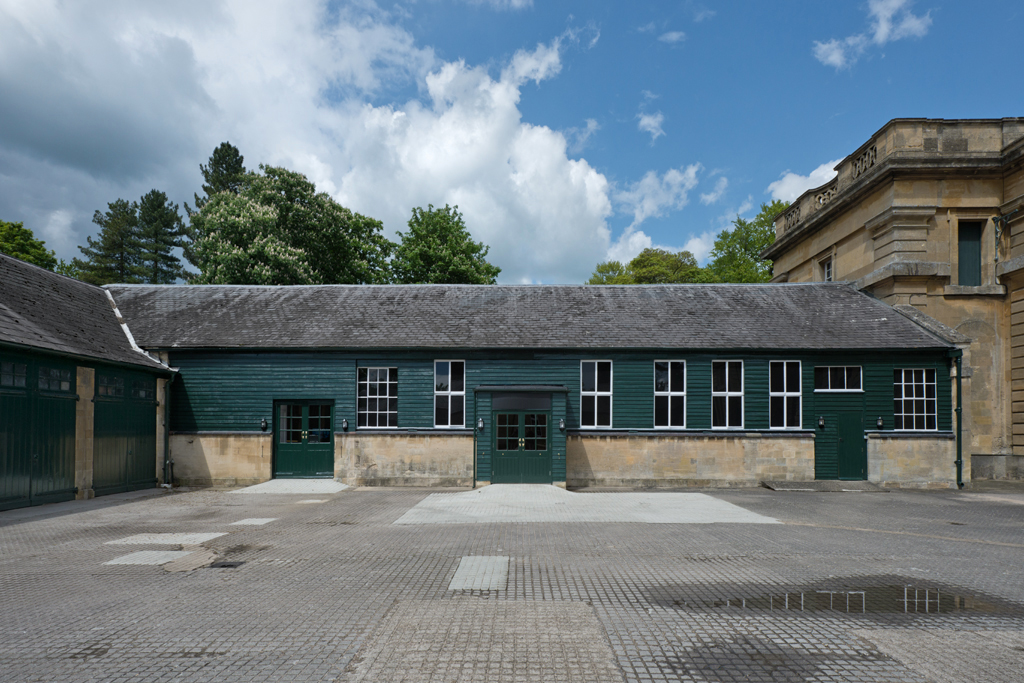
04 Riding School, Blenheim Palace, Woodstock 2014 by Leslie HossackRiding School, Blenheim Palace, Woodstock 2014

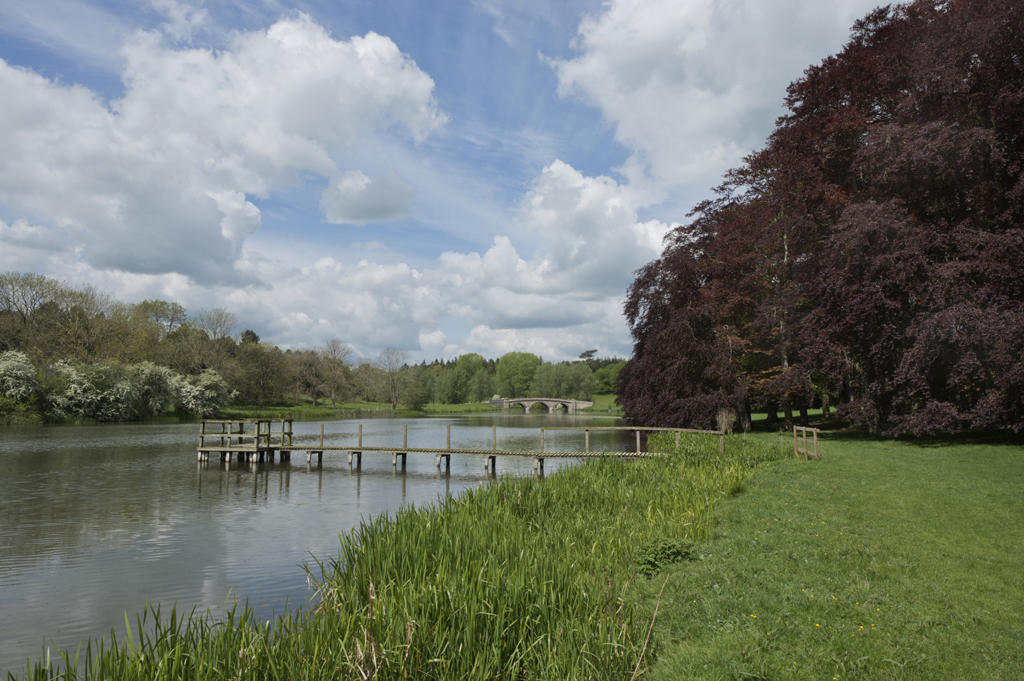
05 River Glyme, Blenheim Palace, Woodstock 2014 by Leslie HossackRiver Glyme, Blenheim Palace, Woodstock 2014

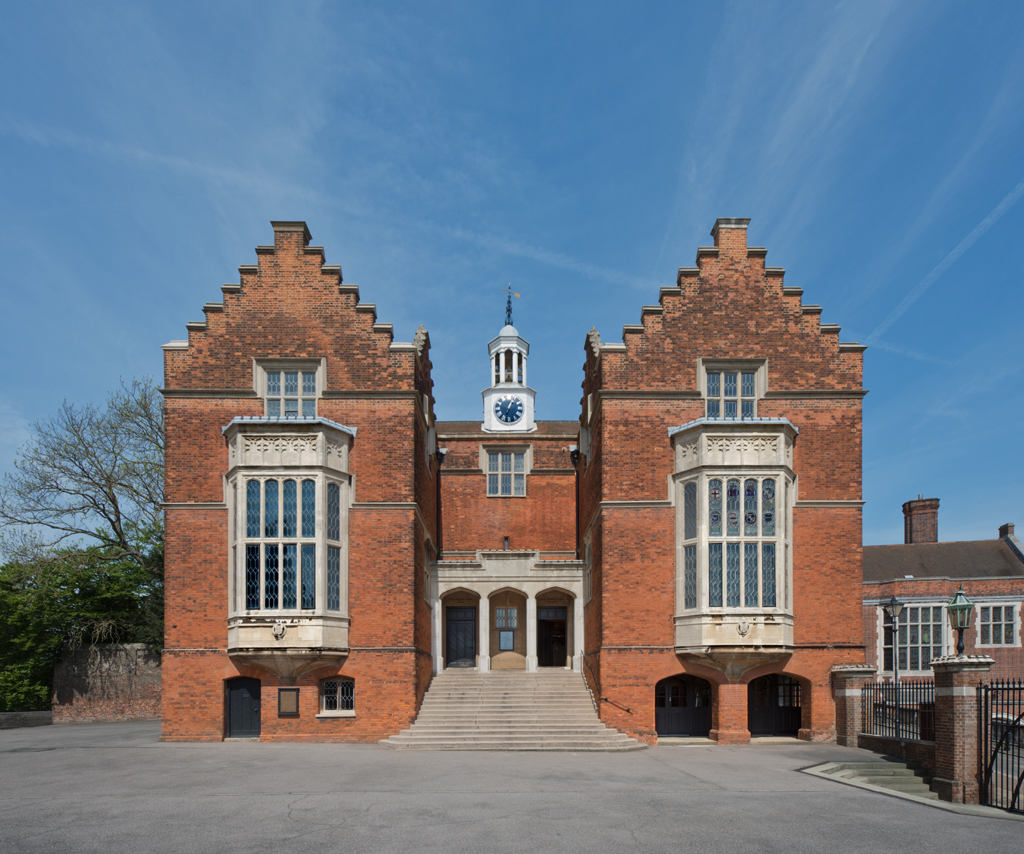
06 The Old Schools, Harrow School, Harrow on the Hill, 2014 by Leslie HossackHarrow School, Harrow on the Hill, 2014

07 The Head Master's, Harrow School, Harrow on the Hill 2014 by Leslie HossackHead Master’s, Harrow School, Harrow on the Hill 2014

08 Speech Room, Harrow School, Harrow on the Hill 2014 by Leslie HossackSpeech Room, Harrow School, Harrow on the Hill 2014

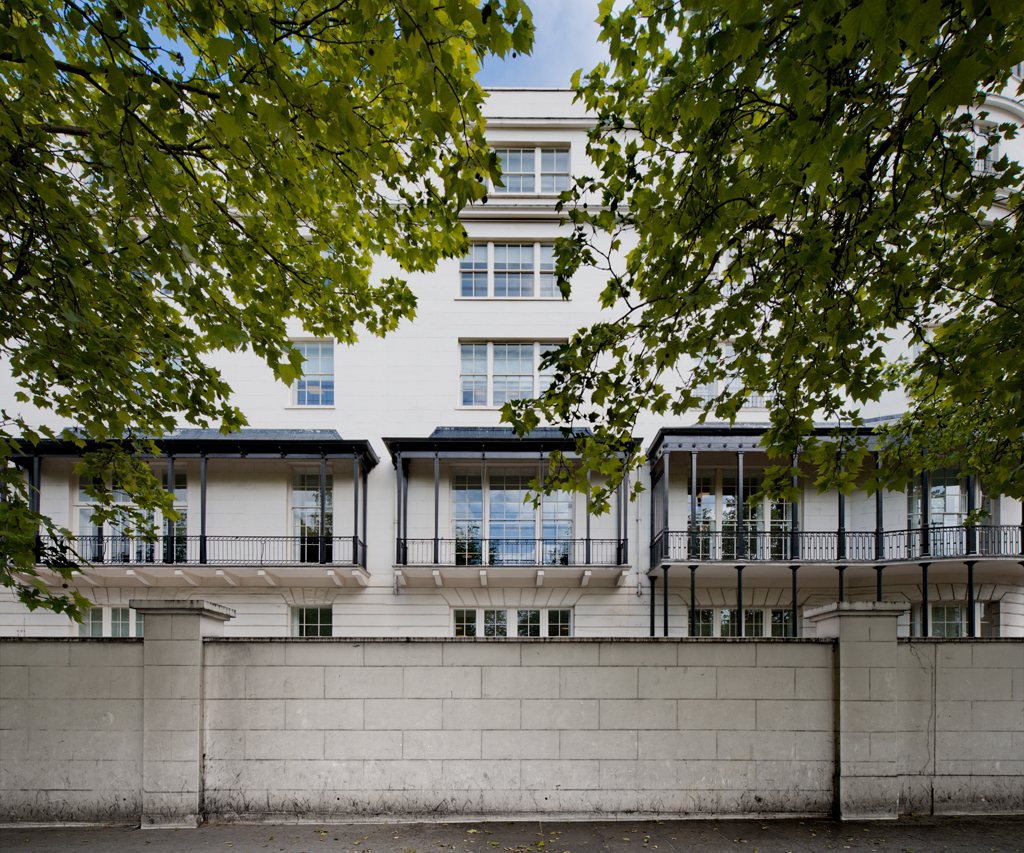
2 Connaught Place, London 2014 by Leslie HossackBack Garden Wall, 2 Connaught Place, London 2014

© Leslie Hossack

The images featured above are part of the limited edition collector’s portfolio created by Leslie Hossack to mark the 50th anniversary of the death of Sir Winston Churchill. She presents locations that chart Churchill’s personal and political life, from his birth at Blenheim Palace in 1874 until his death in London in 1965. To find out how these images are linked to Churchill, please see the previous posts here on Haute Vitrine.

THE CHURCHILL PHOTOGRAPHS  are part of Hossack’s larger body of work that explores Nazi architecture in Berlin, Stalinist structures in Moscow, contested sites in Jerusalem, a Cold War bunker in Ottawa, NATO’s Headquarter Camp in Kosovo, and buildings linked to the Japanese Canadian internment during World War II.

To view more photographs, please visit Leslie’s website.  lesliehossack.com

Charting Churchill: 2 Connaught Place, London

2 Connaught Place, London 2014 by Leslie Hossack

2 Connaught Place, London 2014

© Leslie Hossack

In 1882, at the age of eight, Winston and his younger brother Jack moved with their parents, Lord & Lady Randolph Churchill, to a townhouse at 2 Connaught Place in London. This was to be their family home for ten years. It backed onto Hyde Park, and this photograph shows the rear of those townhouses today. Winston, Jack and their nanny, Mrs. Everest, were ensconced on the top floor and would have looked out over the back garden and wall onto Hyde Park. Winston enjoyed this house, and later wrote to his mother: “I look back with regret to the old days at Connaught Place when fortune smiled.”

While at Connaught Place, Winston’s collection of toy soldiers grew to nearly 1500. In My Early Life, he describes an event that took place while playing with the soldiers. “The day came when my father himself paid a formal visit of inspection. All the troops were arranged in the correct formation of attack. He spent twenty minutes studying the scene – which was really impressive – with a keen eye and captivating smile. At the end he asked me if I would like to go into the Army. I thought it would be splendid to command an Army, so I said ‘Yes’ at once: and immediately I was taken at my word… the toy soldiers turned the current of my life. Henceforward all my education was directed to passing into Sandhurst, and afterwards to the technical details of the profession of arms.”

The image featured above is part of the limited edition collector’s portfolio created by Leslie Hossack to mark the 50th anniversary of the death of Sir Winston Churchill. She presents locations that chart Churchill’s personal and political life, from his birth at Blenheim Palace in 1874 until his death in London in 1965. THE CHURCHILL PHOTOGRAPHS are part of Hossack’s larger body of work that explores Nazi architecture in Berlin, Stalinist structures in Moscow, contested sites in Jerusalem, a Cold War bunker in Ottawa, NATO’s Headquarter Camp in Kosovo, and buildings linked to the Japanese Canadian internment during World War II.

To view more photographs, please visit Leslie’s website.  lesliehossack.com

Charting Churchill: Speech Room at Harrow School, Harrow on the Hill

Speech Room, Harrow School, Harrow on the Hill 2014 by Leslie Hossack

Speech Room, Harrow School, Harrow on the Hill 2014

© Leslie Hossack

Winston Churchill left Harrow School in December 1892. While there, he displayed evidence of the attributes and interests that would shape him as an adult. He loved reading history and particularly enjoyed lessons about battles; he studied the English language extensively and developed an enduring passion for words; he sought opportunities to learn about the army and the military.

The Speech Room shown above was completed in 1877. Here Winston would have attended school assemblies, plays, concerts, debates and lectures. He particularly enjoyed presentations by special guests. He was very excited about a lecture by Colonel Gouraud who demonstrated a new invention called the phonograph. Churchill remained intellectually curious about both military and communication technology throughout his life.

The photograph featured here shows the Speech Room in the process of being set up as an Elizabethan theatre. A Shakespearean play has been produced at Harrow almost every year since 1941. Winston developed an abiding interest in Shakespeare as a schoolboy and he frequently quoted from his work later in life.

Another annual event in the Speech Room is a concert called the Churchill Songs. The first one occurred in 1940 when Prime Minister Winston Churchill returned to hear the Harrow Songs that he loved. With the exception of four occasions, Churchill attended this event every year for the rest of his life. Harrow School was indeed his Alma Mater.

The image featured above is part of the limited edition collector’s portfolio created by Leslie Hossack to mark the 50th anniversary of the death of Sir Winston Churchill. She presents locations that chart Churchill’s personal and political life, from his birth at Blenheim Palace in 1874 until his death in London in 1965. THE CHURCHILL PHOTOGRAPHS are part of Hossack’s larger body of work that explores Nazi architecture in Berlin, Stalinist structures in Moscow, contested sites in Jerusalem, a Cold War bunker in Ottawa, NATO’s Headquarter Camp in Kosovo, and buildings linked to the Japanese Canadian internment during World War II.

To view more photographs, please visit Leslie’s website.  lesliehossack.com

Charting Churchill: Head Master’s House, Harrow School

Head Master's House, Harrow School, Harrow on the Hill 2014 by Leslie Hossack

Head Master’s House, Harrow School, Harrow on the Hill 2014

© Leslie Hossack

In 1888, Winston Spencer-Churchill, age 13, entered Harrow School where he studied until 1892, leaving at the age of 18. He won prizes for history, for reciting 1200 lines of poetry, and for a poem he wrote; he took part in debates and joined the Rifle Corps; he competed in swim meets and won the Public Schools’ Fencing Championship; he tobogganed and skated on the lake; he rode his bicycle, collected stamps and shot rounds on the rifle range; he took part in mock battles and signed up for drawing lessons; he played the cello and enjoyed singing; he was reported at various times for unpunctuality, slovenliness, cutting school, disobedience and impertinence; he suffered several illnesses and missed his parents; he collected autographs and sold his own parents’ autographs; he attended lectures by many famous visitors; he took the special Army Class for boys intending to go on to Woolwich or Sandhurst; and in his final term, beginning in September 1892, Winston shared his room at Harrow with his brother Jack.

The photograph above shows the Head Master’s House, one of many at Harrow. Pupils board in one of the houses and it becomes the focus of their school life. Winston was first assigned to Garlands House and then moved to Head Master’s House in May 1889.

The image featured above is part of the limited edition collector’s portfolio created by Leslie Hossack to mark the 50th anniversary of the death of Sir Winston Churchill. She presents locations that chart Churchill’s personal and political life, from his birth at Blenheim Palace in 1874 until his death in London in 1965. THE CHURCHILL PHOTOGRAPHS are part of Hossack’s larger body of work that explores Nazi architecture in Berlin, Stalinist structures in Moscow, contested sites in Jerusalem, a Cold War bunker in Ottawa, NATO’s Headquarter Camp in Kosovo, and buildings linked to the Japanese Canadian internment during World War II.

To view more photographs, please visit Leslie’s website.  lesliehossack.com

Charting Churchill: Harrow School, Harrow on the Hill

Harrow School, Harrow on the Hill, 2014 by Leslie Hossack

Harrow School, Harrow on the Hill, 2014

© Leslie Hossack

Before entering Harrow, Winston Churchill attended two other schools. Just before his eighth birthday, in November 1882, Winston’s parents sent him off to St. George’s School in Ascot. Here flogging with the birch was common. In his book My Early Years, Churchill wrote: “How I hated this school, and what a life of anxiety I lived there for more than two years.”

In 1884, Winston was enrolled in the Misses Thomson’s School in Sussex. Of that experience he wrote: “At this school I was allowed to learn things which interested me: French, History, lots of Poetry by heart, and above all Riding and Swimming. The impression of those years makes a pleasant picture in my mind, in strong contrast to my earlier schoolday memories.”

On April 17th 1888, after a traumatic struggle with the entrance examination, Winston was registered at Harrow as Winston Spencer-Churchill. He was now 13 years old and he matured greatly during his years at Harrow. However, he continued to crave the company, attention and approval of his parents. Winston’s father, Lord Randolph, had attended Eton like generations of Marlborough men before him, and he made little effort to visit his son at Harrow.

The photograph above shows the original 1615 Form Room (now known as the Fourth Form Room) on the left, and the 1820 Speech Room addition on the right. Upon leaving the school, students traditionally carve their names on the form room wall, and one of the surviving names is Winston Churchill.

The image featured above is part of the limited edition collector’s portfolio created by Leslie Hossack to mark the 50th anniversary of the death of Sir Winston Churchill. She presents locations that chart Churchill’s personal and political life, from his birth at Blenheim Palace in 1874 until his death in London in 1965. THE CHURCHILL PHOTOGRAPHS are part of Hossack’s larger body of work that explores Nazi architecture in Berlin, Stalinist structures in Moscow, contested sites in Jerusalem, a Cold War bunker in Ottawa, NATO’s Headquarter Camp in Kosovo, and buildings linked to the Japanese Canadian internment during World War II.

To view more photographs, please visit Leslie’s website.  lesliehossack.com

Charting Churchill: Riding School, Blenheim Palace

Riding School, Blenheim Palace, Woodstock 2014 by Leslie Hossack

Riding School, Blenheim Palace, Woodstock 2014

© Leslie Hossack

Winston Churchill’s grandmother, the Duchess of Marlborough, gave him a pony to ride during his frequent stays with her at Blenheim Palace. The photograph above shows the riding school at Blenheim as it appears today. In May 1882, seven-year-old Winston mentions the riding school and his pony, Robroy, in a letter to his mother.

“My Dear Mama  I hope you are quite well  when are you coming to Blenheim again  Jack and I both want you very much  please do come soon  I rode Robroy to day round the Park and rode him all by myself in the school.  with love and kisses  From your loving Winston.”

The letter quoted here was part of a Library of Congress exhibition entitled: Churchill and The Great Republic. The original letter is housed in the Churchill Archives Centre, Cambridge, U.K.

Young Winston often expressed a longing to spend more time with his mother, Lady Randolph. In his book My Early Years, Churchill wrote of his mother: “She shone for me like the Evening Star. I loved her dearly – but at a distance. My nurse was my confidante. Mrs. Everest it was who looked after me and tended to my wants.” Elizabeth Ann Everest was Winston’s beloved nanny whom he called Woomany. As a little boy, Winston had three significant women in his life: his nanny, his mother and his grandmother.

The image featured above is part of the limited edition collector’s portfolio created by Leslie Hossack to mark the 50th anniversary of the death of Sir Winston Churchill. She presents locations that chart Churchill’s personal and political life, from his birth at Blenheim Palace in 1874 until his death in London in 1965. THE CHURCHILL PHOTOGRAPHS are part of Hossack’s larger body of work that explores Nazi architecture in Berlin, Stalinist structures in Moscow, contested sites in Jerusalem, a Cold War bunker in Ottawa, NATO’s Headquarter Camp in Kosovo, and buildings linked to the Japanese Canadian internment during World War II.

To view more photographs, please visit Leslie’s website.  lesliehossack.com

Charting Churchill: River Glyme, Blenheim Palace

River Glyme, Blenheim Palace, Woodstock 2014 by Leslie Hossack

River Glyme, Blenheim Palace, Woodstock 2014

© Leslie Hossack

Winston Churchill was sent to boarding school at the age of seven, and he missed his parents greatly. Even when he was home in London, Lord & Lady Randolph Churchill were frequently conspicuous in their absence, as they busily pursued their own social and political interests. Young Winston often spent school holidays with his grandparents at Blenheim Palace. There his paternal grandmother, Frances, 7th Duchess of Marlborough, took an active interest in his well-being and played a personal role in his upbringing.

On September 15th, 1883, Winston wrote to his mother from Blenheim. “My dear Mamma I hope you are quite well. I went out fishing today. I caught my first fish by myself. Jack and I are quite well. With love and kisses Winston.” That day, eight-year-old Winston was likely fishing in the Main Lake located just beyond the bend in the River Glyme pictured above. At that time, Winston was on holiday at Blenheim with his younger brother Jack and his twelve-year-old cousin Sunny. “Sunny” Marlborough was known as the Earl of Sunderland until 1883, the year this letter was written. Born Charles Richard John Spencer-Churchill, Sunny went on to become the 9th Duke of Marlborough and he remained a close lifelong friend of Sir Winston Churchill.

The image featured above is part of the limited edition collector’s portfolio created by Leslie Hossack to mark the 50th anniversary of the death of Sir Winston Churchill. She presents locations that chart Churchill’s personal and political life, from his birth at Blenheim Palace in 1874 until his death in London in 1965. THE CHURCHILL PHOTOGRAPHS are part of Hossack’s larger body of work that explores Nazi architecture in Berlin, Stalinist structures in Moscow, contested sites in Jerusalem, a Cold War bunker in Ottawa, NATO’s Headquarter Camp in Kosovo, and buildings linked to the Japanese Canadian internment during World War II.

To view more photographs, please visit Leslie’s website.  lesliehossack.com

Charting Churchill: South Facade, Blenheim Palace

South Facade, Blenheim Palace, Woodstock 2014 by Leslie Hossack

South Facade, Blenheim Palace, Woodstock 2014

© Leslie Hossack

As a small boy, Winston Churchill lived with his parents, Lord & Lady Randolph Churchill, and his baby brother Jack, at 29 St. James’s Place in the heart of London. Their townhouse was very close to Green Park, and not far from Hyde Park. These huge public parks provided Winston with expansive green spaces to explore close to home.

Away from home, Winston often visited his grandparents, the Duke & Duchess of Marlborough, at Blenheim Palace. Here was Winston’s preferred playground. Over 2,000 acres of private parks and gardens surrounded the palace. From Blenheim, Winston wrote to his mother: “The gardens and Park are so much nicer to walk in than the Green Park or Hyde Park.”

Winston Leonard Spencer Churchill was born at Blenheim Palace in 1874. Today, Blenheim Palace, a World Heritage Site, is described by UNESCO as follows. “The Palace sits within a large walled landscape park, the structure by Vanbrugh overlaid by the designs of Lancelot “Capability” Brown from 1761 onwards. The design and building of the Palace between 1705 and 1722 represented the beginning of a new style of architecture and its landscaped Park, designed by Lancelot “Capability” Brown, is considered “a naturalistic Versailles.”

The image featured above is part of the limited edition collector’s portfolio created by Leslie Hossack to mark the 50th anniversary of the death of Sir Winston Churchill. She presents locations that chart Churchill’s personal and political life, from his birth at Blenheim Palace in 1874 until his death in London in 1965. THE CHURCHILL PHOTOGRAPHS are part of Hossack’s larger body of work that explores Nazi architecture in Berlin, Stalinist structures in Moscow, contested sites in Jerusalem, a Cold War bunker in Ottawa, NATO’s Headquarter Camp in Kosovo, and buildings linked to the Japanese Canadian internment during World War II.

To view more photographs, please visit Leslie’s website.  lesliehossack.com