Charting Churchill: The Main House, Bletchley Park

The Main House, Bletchley Park 2014 by Leslie Hossack

The Main House, Bletchley Park 2014

© Leslie Hossack

Throughout World War II, Prime Minister Winston Churchill understood the value of collecting and using military intelligence. In 1938, the government had purchased Bletchley Park estate, located 50 miles from London, where they installed their most secret codebreaking teams. The task was to break Enigma, the German code which Hitler considered unbreakable.

Initially, the Bletchley operation was centered in the Main House shown above, but soon wooden huts were built to provide work space for the growing number of staff. Later on, large concrete blocks were constructed to house even more workers, numbering almost 9,000 by 1944.

By 1940, the first breaks into Enigma were achieved by the cryptographers at Bletchley Park, also known as Station X. Churchill followed their work very closely and personally received intelligence updates throughout each day. In 1941, “Ultra” was the term adopted by British military to designate intelligence from Bletchley Park; this information was even more important than “Most Secret” – it was “Ultra Secret.” According to Sir Harry Hinsley, official historian of British Intelligence during World War II, Ultra shortened the war by not less than two years.

On September 6th 1941, Churchill visited Bletchley Park. He spoke to staff outside of the Main House and visited Hut 6. He later referred to the Bletchley cryptographers as “the geese that laid the golden eggs but never cackled.” Throughout the war, when asking for the latest Ultra reports, he often said: “Where are my eggs?” And for decades after the war was over, individuals who had worked at Station X said not one word about its existence.

To learn more about events of 1941, please visit the BBC World War II Timeline. This BBC summary, prepared by Bruce Robinson, was last updated in 2011.

The image featured above is part of the limited edition collector’s portfolio created by Leslie Hossack to mark the 50th anniversary of the death of Sir Winston Churchill. She presents locations that chart Churchill’s personal and political life, from his birth at Blenheim Palace in 1874 until his death in London in 1965. THE CHURCHILL PHOTOGRAPHS are part of Hossack’s larger body of work that explores Nazi architecture in Berlin, Stalinist structures in Moscow, contested sites in Jerusalem, a Cold War bunker in Ottawa, NATO’s Headquarter Camp in Kosovo, and buildings linked to the Japanese Canadian internment during World War II.

To view more photographs, please visit Leslie’s website.  lesliehossack.com

Charting Churchill: 10 Downing Street, London

10 Downing Street, London 2014 by Leslie Hossack

10 Downing Street, London 2014

© Leslie Hossack

Eight months after Britain and France declared war on Germany, Hitler invaded France, Belgium and Holland on May 10th 1040. That same day, Winston Leonard Spencer Churchill was summoned to Buckingham Palace by King George VI who asked him to form the new government. Churchill was now Prime Minister of Great Britain. Of that day, Churchill would later write: “I was conscious of a profound sense of relief. At last I had the authority to give directions over the whole scene. I felt as if I were walking with Destiny, and that all my past life had been but a preparation for this hour and for this trial.”

On May 13th 1940, when Churchill made his first speech as Prime Minister in the House of Commons, he famously said: “I have nothing to offer but blood, toil, tears and sweat.” He would later look back on the war years and remark: “A million Britons died in the First World War. But nothing surpasses 1940.”

To learn more about events of 1940, please visit the BBC World War II Timeline. This BBC summary, prepared by Bruce Robinson, was last updated in 2011.

Prime Minister Churchill moved into his official residence at 10 Downing Street in the summer of 1940. As can be seen in the above photograph, Downing Street is now closed off; however, for most of its history, the street was open to the public. One of the exceptions occurred during World War II, when it was blocked off at Whitehall. In 1941, Stuart Milner-Barry encountered a wooden barrier across the road, staffed by a police officer, when he delivered a letter to Winston Churchill at 10 Downing Street. The letter was signed by Alan Turing, Gordon Welchman, Hugh Alexander and Stuart Milner-Barry, all of whom were working on breaking the German Enigma codes at top-secret Bletchley Park. Their story has recently been dramatized in the movie The Imitation Game.

The image featured above is part of the limited edition collector’s portfolio created by Leslie Hossack to mark the 50th anniversary of the death of Sir Winston Churchill. She presents locations that chart Churchill’s personal and political life, from his birth at Blenheim Palace in 1874 until his death in London in 1965. THE CHURCHILL PHOTOGRAPHS are part of Hossack’s larger body of work that explores Nazi architecture in Berlin, Stalinist structures in Moscow, contested sites in Jerusalem, a Cold War bunker in Ottawa, NATO’s Headquarter Camp in Kosovo, and buildings linked to the Japanese Canadian internment during World War II.

To view more photographs, please visit Leslie’s website.  lesliehossack.com

Charting Churchill: The Cabinet War Rooms, Clive Steps, London

The Cabinet Room, Cabinet War Rooms, Clive Steps, London 2014 by Leslie Hossack

Cabinet Room, The Cabinet War Rooms, Clive Steps, London 2014

Churchill's Office, Cabinet War Rooms, Clive Steps, London 2014 by Leslie Hossack

Churchill’s Office, The Cabinet War Rooms, Clive Steps, London 2014

© Leslie Hossack

After Poland was invaded by Hitler, Britain and France declared war on Germany on September 3rd 1939. That same day, Winston Churchill was appointed First Lord of the Admiralty. One week earlier, the Cabinet War Rooms, London’s secret bunker designed to protect the War Cabinet and Chiefs of Staff, had become fully operational.

In May 1940, when newly appointed Prime Minister Winston Churchill first visited the Cabinet Room (top photograph) he said: “This is the room from which I will direct the war.” Churchill occupied the wooden seat in front of the map of the world and presided over a coalition of ministers from all sides of Parliament. Over 115 Cabinet meetings, approximately one in ten, were held here throughout the war. Cabinet meetings could start at any time of day or night. Churchill called many meetings here during the evening bombing raids of 1940 and 1941, and sometimes brought them to a close long after midnight.

Churchill used his office-bedroom (bottom photograph) for business and to visit the Map Room in the bunker. He delivered four of his wartime speeches from this room, but he only slept there on three occasions.

To learn more about events of 1939, please visit the BBC World War II Timeline. This BBC summary, prepared by Bruce Robinson, was last updated in 2011.

The images featured above are part of the limited edition collector’s portfolio created by Leslie Hossack to mark the 50th anniversary of the death of Sir Winston Churchill. She presents locations that chart Churchill’s personal and political life, from his birth at Blenheim Palace in 1874 until his death in London in 1965. THE CHURCHILL PHOTOGRAPHS are part of Hossack’s larger body of work that explores Nazi architecture in Berlin, Stalinist structures in Moscow, contested sites in Jerusalem, a Cold War bunker in Ottawa, NATO’s Headquarter Camp in Kosovo, and buildings linked to the Japanese Canadian internment during World War II.

To view more photographs, please visit Leslie’s website.  lesliehossack.com

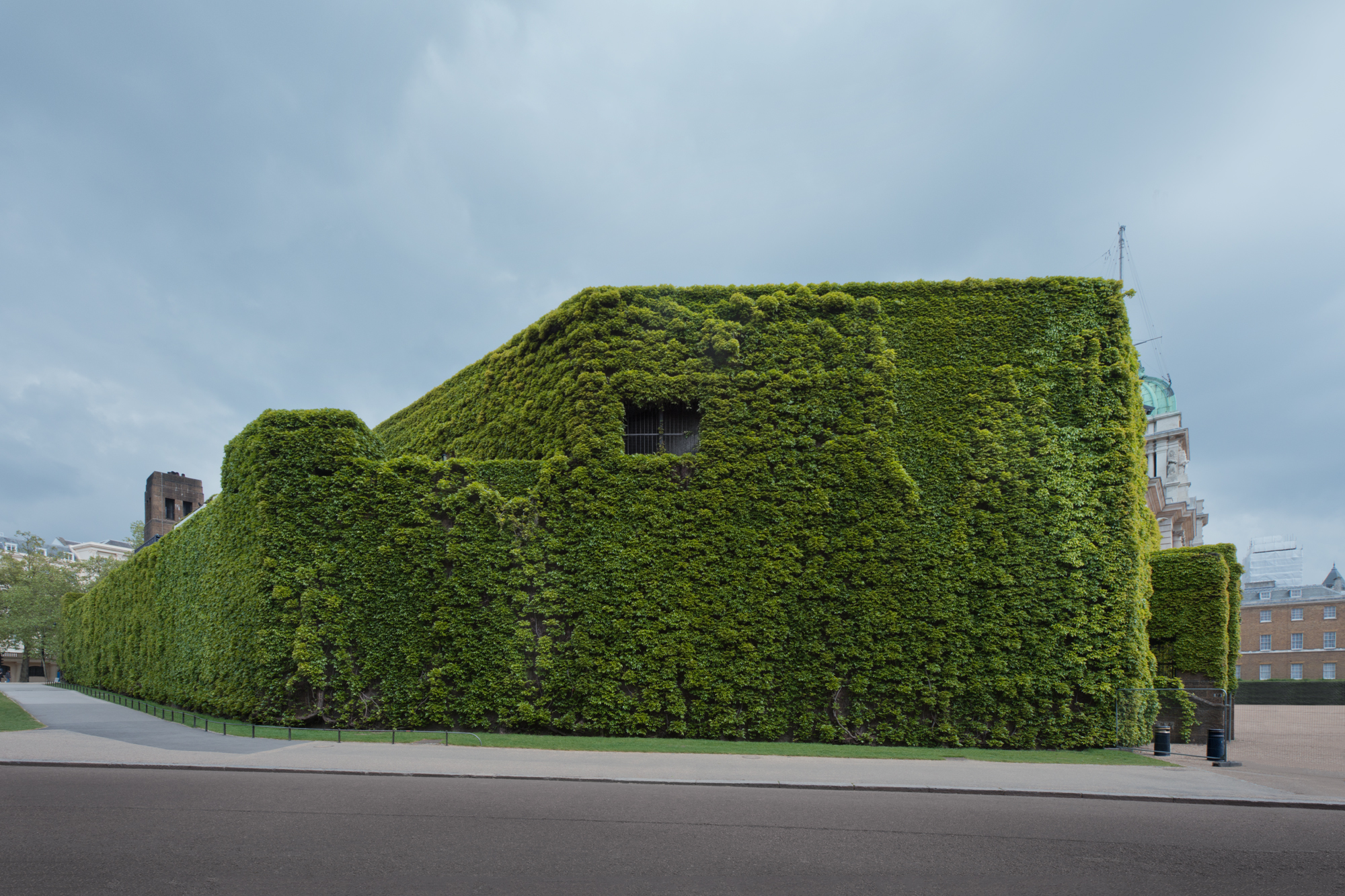
Charting Churchill: Admiralty Citadel, Horse Guards Parade, London

Admiralty Citadel, Horse Guards Parade, London 2014 by Leslie Hossack

Admiralty Citadel, Horse Guards Parade, London 2014

© Leslie Hossack

In 1938, Winston Churchill continued to warn his country and colleagues about the rearmament of Germany; Hitler became even more aggressive on the continent; and Chamberlain replaced Baldwin as Prime Minister in Great Britain. Still, few Members of Parliament heeded Churchill’s warnings. In March 1939, German troops marched into Prague, and Britain pledged to guarantee Poland’s independence. On September 1st 1939, Hitler invaded Poland, and two days later Britain declared war on Germany. That same day, September 3rd 1939, for the second time in his career, Churchill was named First Lord of the Admiralty. His wilderness years were over. A signal was sent out to the British Fleet: “Winston is back.” Churchill held this cabinet post until May 1940.

The photograph above shows the Admiralty Citadel on the edge of Horse Guards Parade. Other Admiralty Buildings can be seen behind it on the right. Preparations for the Citadel started in 1939 when the Royal Naval Division memorial was moved to make way for its construction. Among other actions, the memorial recognized the landing of the Naval Division at Gallipoli. Winston Churchill had unveiled the memorial in 1925. Ironically, in 1939, he could watch its removal from the back windows of Admiralty House, where he lived from September 1939 until July 1940.

The concrete Citadel was designed to provide a safe work environment for Admiralty staff during the bombing of London, and could be retreated to in the event of an actual invasion. It is still used today as a secure government facility. Churchill famously described it as “a vast monstrosity which weighs upon the Horse Guards Parade” and he refused to use it himself. Today, the windowless bunker is covered with ivy.

The image featured above is part of the limited edition collector’s portfolio created by Leslie Hossack. She presents locations that chart Sir Winston Churchill’s personal and political life, from his birth at Blenheim Palace in 1874 until his death in London in 1965. THE CHURCHILL PHOTOGRAPHS are part of Hossack’s larger body of work that explores Nazi architecture in Berlin, Stalinist structures in Moscow, contested sites in Jerusalem, a Cold War bunker in Ottawa, NATO’s Headquarter Camp in Kosovo, and buildings linked to the Japanese Canadian internment during World War II.

To view more photographs, please visit Leslie’s website.  lesliehossack.com
Sir Winston Churchill’s 140th Birthday

Sir Winston Churchill's Birth Room, Blenheim Palace, Woodstock, 2014 by Leslie Hossack

Sir Winston Churchill’s Birth Room, Blenheim Palace, Woodstock, 2014

© Leslie Hossack

Winston Leonard Spencer Churchill was born 140 years ago at Blenheim Palace on the 30th of November 1874. His father, Randolph Henry Spencer Churchill, was the Member of Parliament for Woodstock, and his mother was American Jennie Jerome.

When Winston was born, his parents were visiting his grandparents. Winston’s grandfather was the 7th Duke of Marlborough; Blenheim Palace had been built to honour the 1st Duke of Marlborough’s victory over the French in 1704.

Blenheim Palace had an enormous influence on Sir Winston Churchill during his long and remarkable life. In 1951 he wrote: “I am proud to be born at Blenheim.”

The image above shows Winston Churchill’s birth room at Blenheim Palace. It is the first in a series of photographs by Leslie Hossack that examines the extraordinary life of Winston Leonard Spencer Churchill, from his birth in 1874 until his death in 1965.

Churchill became Prime Minister on May 10th, 1940, and he is widely regarded as the resolute, inspirational leader who saved western civilization from Nazi tyranny. He also achieved fame as a soldier, writer, orator and parliamentarian. In addition, he is known as a man who loved his family and the life of luxury.

The image featured above is part of the limited edition collector’s portfolio created by Leslie Hossack to mark the 50th anniversary of the death of Sir Winston Churchill. She presents locations that chart Churchill’s personal and political life, from his birth at Blenheim Palace in 1874 until his death in London in 1965. THE CHURCHILL PHOTOGRAPHS are part of Hossack’s larger body of work that explores Nazi architecture in Berlin, Stalinist structures in Moscow, contested sites in Jerusalem, a Cold War bunker in Ottawa, NATO’s Headquarter Camp in Kosovo, and buildings linked to the Japanese Canadian internment during World War II.

To view more photographs, please visit Leslie’s website.  lesliehossack.com

LONDON TIMES Artist Talk with Special Presenter Julian Armour of Music & Beyond

LONDON TIMES Artist Talk with Special Presenter Julian Armour of Music and Beyond

Exposure Gallery, 1255 Wellington Street West, Ottawa

Exhibition: 18 September – 5 November, 2014

Artist Talk: 9 October, 6:00-8:00

featuring special presenter Julian Armour, Artistic and Executive Director, Music and Beyond

LONDON TIMES is an exhibition of photographs by Barbara Bolton, Abigail Gossage, Leslie Hossack and Patricia Wallace. Curated by Michael Tardioli, Executive Director, School of the Photographic Arts: Ottawa, this show presents informed and evocative images of defining periods in London’s remarkable history. Bolton presents theatres that stayed open during the bombing of World War II and still stand today; Gossage provides a view of the city through rain-streaked glass with her dreamy visions of London streets; Hossack, who explored Sir Winston Churchill’s London, presents her studies of the bunker complex known as The Churchill War Rooms; and Wallace showcases some distinctive aspects of selected pre-1939 London pubs, a tapestry of interiors that meet rigid criteria of historic authenticity and architectural importance.

For more information about Barbara Bolton, Abigail Gossage, Leslie Hossack and Patricia Wallace, please visit their Studio 255 website.


REGISTERED Artist Panel 14 Sept. 2:00 pm

Large Barn, Site of Tashme Internment Camp, Sunshine Valley British Columbia, 2013  by Leslie Hossack

Large Barn, Site of Tashme Internment Camp, Sunshine Valley © Leslie Hossack

REGISTERED, The Japanese Canadian Experience During World War II, is an exhibition of photographs by Leslie Hossack on view until 23 September 2014 at Trinity Gallery, Shenkman Arts Centre, 245 Centrum Boulevard, Ottawa.

ARTIST PANEL Sunday 14 September 2:00 – 3:30

PANELISTS

Alan Neal, host of All In A Day, CBC Radio One, 91.5 FM, will moderate the artist panel. All In A Day is music, news, current affairs, culture, theatre, movies, politics, history, humour and conversation airing weekdays from 3 to 6 pm.

Tetsuo (Ted) Itani, a third-generation Japanese-Canadian, was interned from 1942 to 1949 before joining the Canadian Army and serving for 37 years, including a number of NATO assignments and UN peacekeeping and humanitarian missions.

Sachiko Okuda is also third generation, and her parents and grandparents were interned. Her community work dates from the 1980s, when she volunteered for the campaign resulting in the 1988 redress agreement between Canada’s federal government and the National Association of Japanese Canadians.

Ann Sunahara is an historian, lawyer, and author of The Politics of Racism: The Uprooting of Japanese Canadians During the Second World War (1981). The book documents how Canadian officials abused the human and civil rights of Japanese Canadians for political ends.

Leslie Hossack is a photographer whose exhibition REGISTERED explores the experience of Japanese Canadians in British Columbia during World War II when they were registered, rounded up and removed. This exhibition looks at the people, the places and the press. Hossack’s interpretative work includes photographs of places of power and persecution, and reproductions of public and private documents.

To view images by Leslie Hossack, please visit her website.  lesliehossack.com

REGISTERED

REGISTERED by Leslie Hossack

Trinity Art Gallery, Shenkman Arts Centre, 245 Centrum Blvd. in Orleans

Ottawa, 2014

Exhibition: 21 August – 23 September

Vernissage: 24 August from 1:00 – 3:00

Artist Panel: 14 September at 2:00

REGISTERED, an exhibition of photographs by Leslie Hossack, explores the story of Japanese Canadians in British Columbia during World War II when they were registered, rounded up and removed. Hossack’s interpretative work includes photographs of places of power and persecution, and reproductions of public and private documents.

To view images by Leslie Hossack, please visit her website.  lesliehossack.com

Remembrance Day, 11/11/11

Unconditional Surrender, Karlshorst, Berlin 2010

© Leslie Hossack

World War I officially ended at the 11th hour of the 11th day of the 11th month of 1918, with the signing of the Armistice. Remembrance Day is still observed at that time, and this year’s ceremonies will take place today, at the 11th hour of the 11th day of the 11th month of 2011.

World War I, The War to End All Wars, was fought from 1914 to 1918. Just over 20 years later in 1939, World War II broke out and lasted almost seven years. Nazi Germany, and the war in Europe, finally came to an end with the signing of an unconditional surrender on May 8th 1945.

This historic event took place in the room shown above. It is located in the Karlshorst district of Berlin, in a building constructed in 1936-1938 by Germany’s National Socialist government. The building initially served as the officers’ mess of the German Armed Forces Pioneer School. After World War II,  it was the seat of the Soviet Military Administration in Germany from 1945-1949. Today it is the German-Russian Museum. www.museum-karlshorst.de


the 11th hour of the 11th day of the 11th month

Karlshorst, Berlin 2010

© Leslie Hossack

World War I officially ended at the 11th hour of the 11th day of the 11th month of 1918, with the signing of the Armistice. Remembrance Day is still observed at that time, and this year’s ceremonies will take place tomorrow at the 11th hour, on 11/11/11.

World War I, The War to End All Wars, was fought from 1914 to 1918. Just over 20 years later in 1939, World War II broke out and lasted almost seven years. Nazi Germany, and the war in Europe, finally came to an end with the signing of an unconditional surrender on May 8th 1945.

This historic event took place in the building shown above, which is located in the Karlshorst district of Berlin. It was built in 1936-1938, and served as the officers’ mess of the German Armed Forces Pioneer School. After WW II,  it was the seat of the Soviet Military Administration in Germany from 1945-1949. Today it is the German-Russian Museum.

This photograph was taken in 2010, 65 years after the signing of the instrument of surrender took place in the large ground floor room at the back of the building.

Shortly before midnight on May 8, a second unconditional surrender was signed in the outskirts of Berlin, Germany. The signing ceremony took place in a villa in an eastern suburb of Berlin called Karlshorst. Representatives of the USSR, Great Britain, France, and the United States arrived shortly before midnight. After Soviet Field Marshal Georgy Zhukov opened the ceremony, the German command representatives headed by General Field Marshal Wilhelm Keitel were invited into the room, where they signed the final German Act of Unconditional Surrender entering into force at 23:01 Central European Time.  www.veday.info