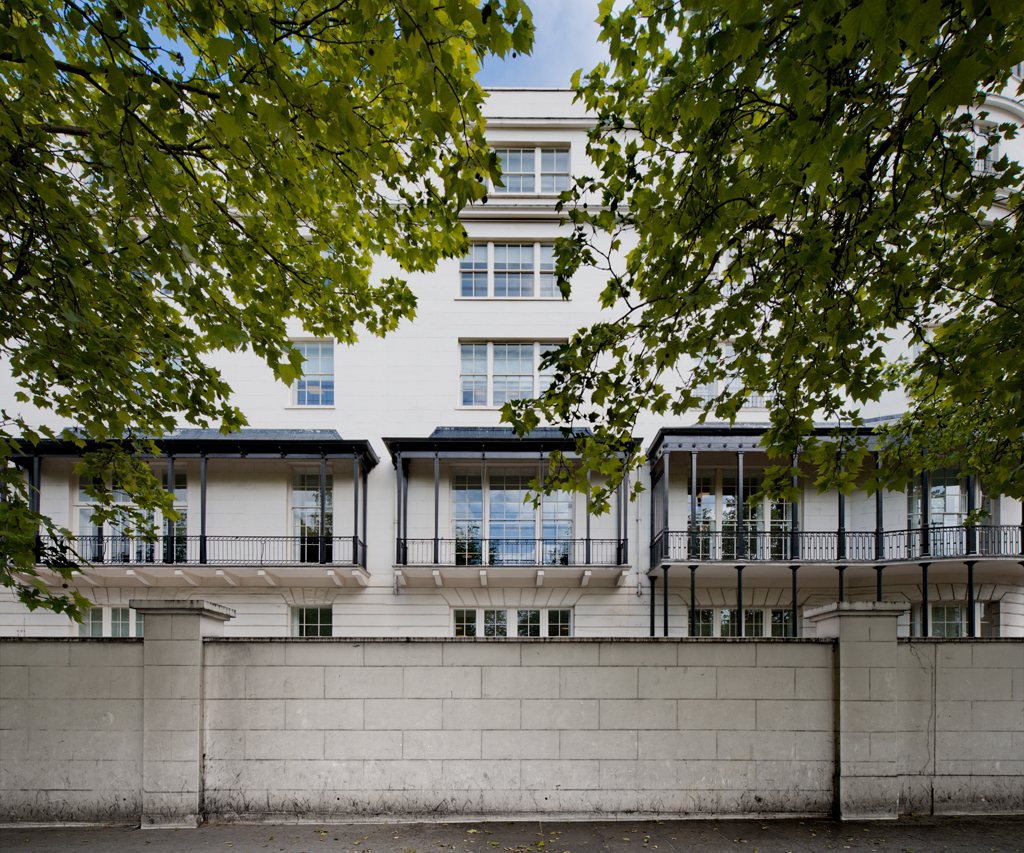
Charting Churchill: Temple of Diana, Blenheim Palace

Temple of Diana, Blenheim Palace, Woodstock 2014 by Leslie Hossack

Temple of Diana, Blenheim Palace, Woodstock 2014

© Leslie Hossack

The years 1901 to 1908 were the foundation years of Winston Churchill’s adult life. These were extremely busy years; he worked hard and made many significant decisions in his professional, political and personal life. As he later reflected: “At Blenheim, I took two important decisions: to be born and to marry. I am happily content with the decisions I took on both occasions.” On August 11th, 1908, Winston proposed to Clementine Hozier in the Temple of Diana at Blenheim Palace, shown above.

That same month in 1908, Churchill was sworn into the Cabinet, as President of the Board of Trade. He had first taken his seat in the House of Commons in February 1901, and had launched his career as a parliamentarian with a maiden speech delivered from the seat his father had occupied when he resigned. Churchill left the Conservative Party in 1904 to join the Liberals, and he was appointed Under-Secretary of State for the Colonies in 1905. In 1906, he was elected Liberal M.P. for Manchester Northwest. He was subsequently defeated there in a 1908 by-election, but was elected M.P. for Dundee that same year.

Throughout all of these political changes and challenges, Winston was still busy writing. He published Mr. Brodrick’s Army (1903), Lord Randolph Churchill (1906), For Free Trade (1906) and My African Journey (1908). And last, but not least, he found time to fall in love with Clementine and win her hand in marriage. What characteristics of Winston eventually won her over? His “dominating charm and brilliancy” according to Churchill Trivia, The Churchill Centre.

The image featured above is part of the limited edition collector’s portfolio created by Leslie Hossack to mark the 50th anniversary of the death of Sir Winston Churchill. She presents locations that chart Churchill’s personal and political life, from his birth at Blenheim Palace in 1874 until his death in London in 1965. THE CHURCHILL PHOTOGRAPHS are part of Hossack’s larger body of work that explores Nazi architecture in Berlin, Stalinist structures in Moscow, contested sites in Jerusalem, a Cold War bunker in Ottawa, NATO’s Headquarter Camp in Kosovo, and buildings linked to the Japanese Canadian internment during World War II.

To view more photographs, please visit Leslie’s website.  lesliehossack.com
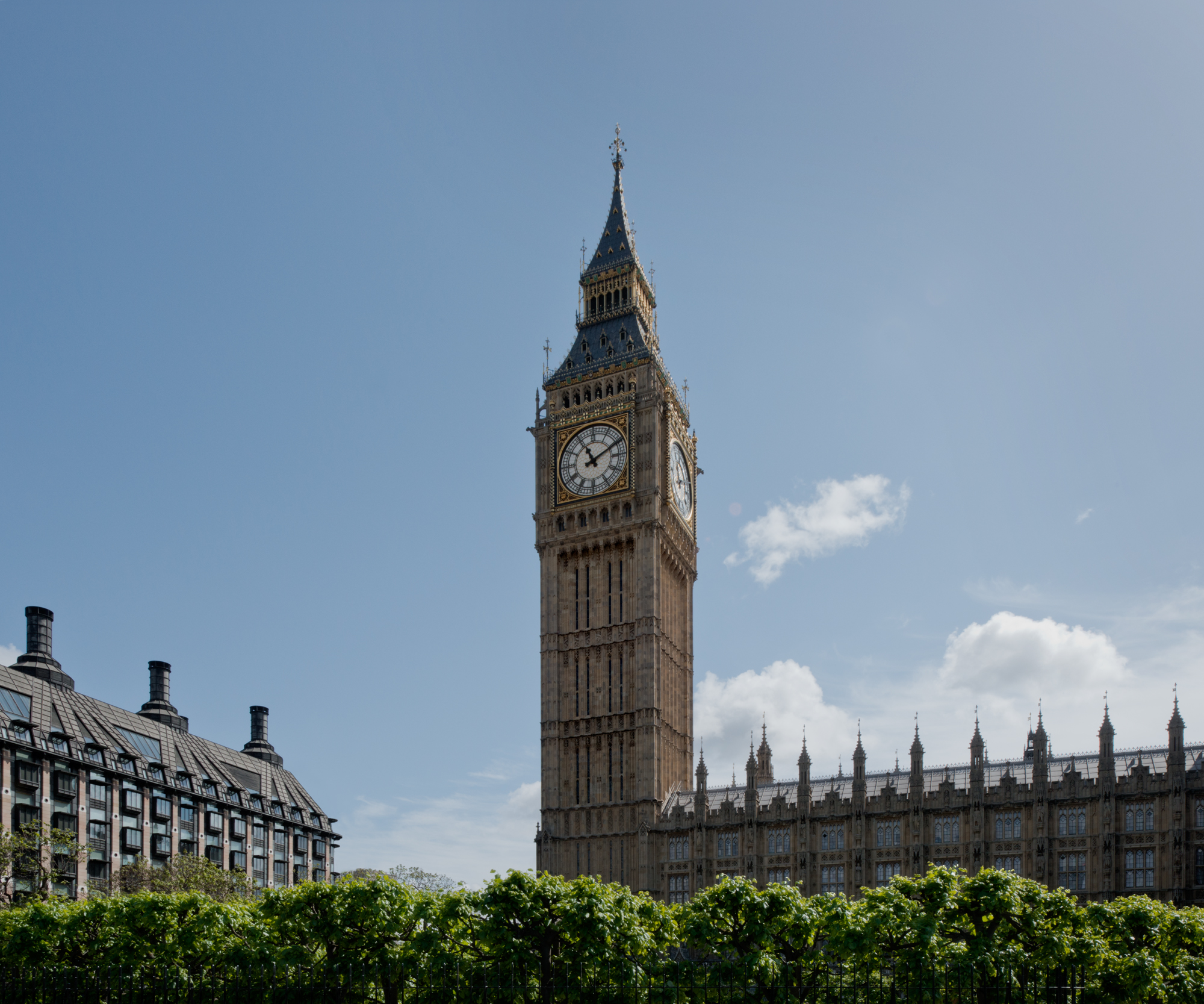
Charting Churchill: Big Ben and House of Commons, London

Big Ben, Elizabeth Tower, House of Commons, Houses of Parliament, London 2014 by Leslie Hossack

Big Ben and House of Commons, Houses of Parliament, London 2014

© Leslie Hossack

In October 1900, Winston Churchill was first elected to the House of Commons as the Conservative Member of Parliament for Oldham. This was the second of twenty-one elections that he contested. He lost in 1899, 1908, 1922, 1923 and 1924 but won the other sixteen elections. Thus Winston was a Member of Parliament for just over 62 years, spanning the time period 1900 – 1964. For further details, please visit The Churchill Centre.

Churchill had been preparing for this role for some time. In his book Churchill Style (2012), Barry Singer describes the self-tutoring program that Winston had embarked upon in India in 1896, when he asked his mother to send him a Parliamentary history of the last 100 years. “Once a set was supplied, the young scholar devised his own unique method for reading the twenty-seven volumes of the Annual Register of parliamentary debates. He did not read a debate until he had written down on paper his own opinion about its subject. After reading the debate, he reexamined his initial written view and then rewrote it.”

Winston’s father would have taken part in several debates recorded in the Annual Register. Lord Randolph Churchill was first elected to Parliament in 1874, the year he turned 25. Winston, who was born that same year, always looked up to his father. In 1900, it appeared Winston was following closely in his father’s footsteps when he was first elected to the House of Commons at the age of 25.

The image featured above is part of the limited edition collector’s portfolio created by Leslie Hossack to mark the 50th anniversary of the death of Sir Winston Churchill. She presents locations that chart Churchill’s personal and political life, from his birth at Blenheim Palace in 1874 until his death in London in 1965. THE CHURCHILL PHOTOGRAPHS are part of Hossack’s larger body of work that explores Nazi architecture in Berlin, Stalinist structures in Moscow, contested sites in Jerusalem, a Cold War bunker in Ottawa, NATO’s Headquarter Camp in Kosovo, and buildings linked to the Japanese Canadian internment during World War II.

To view more photographs, please visit Leslie’s website.  lesliehossack.com
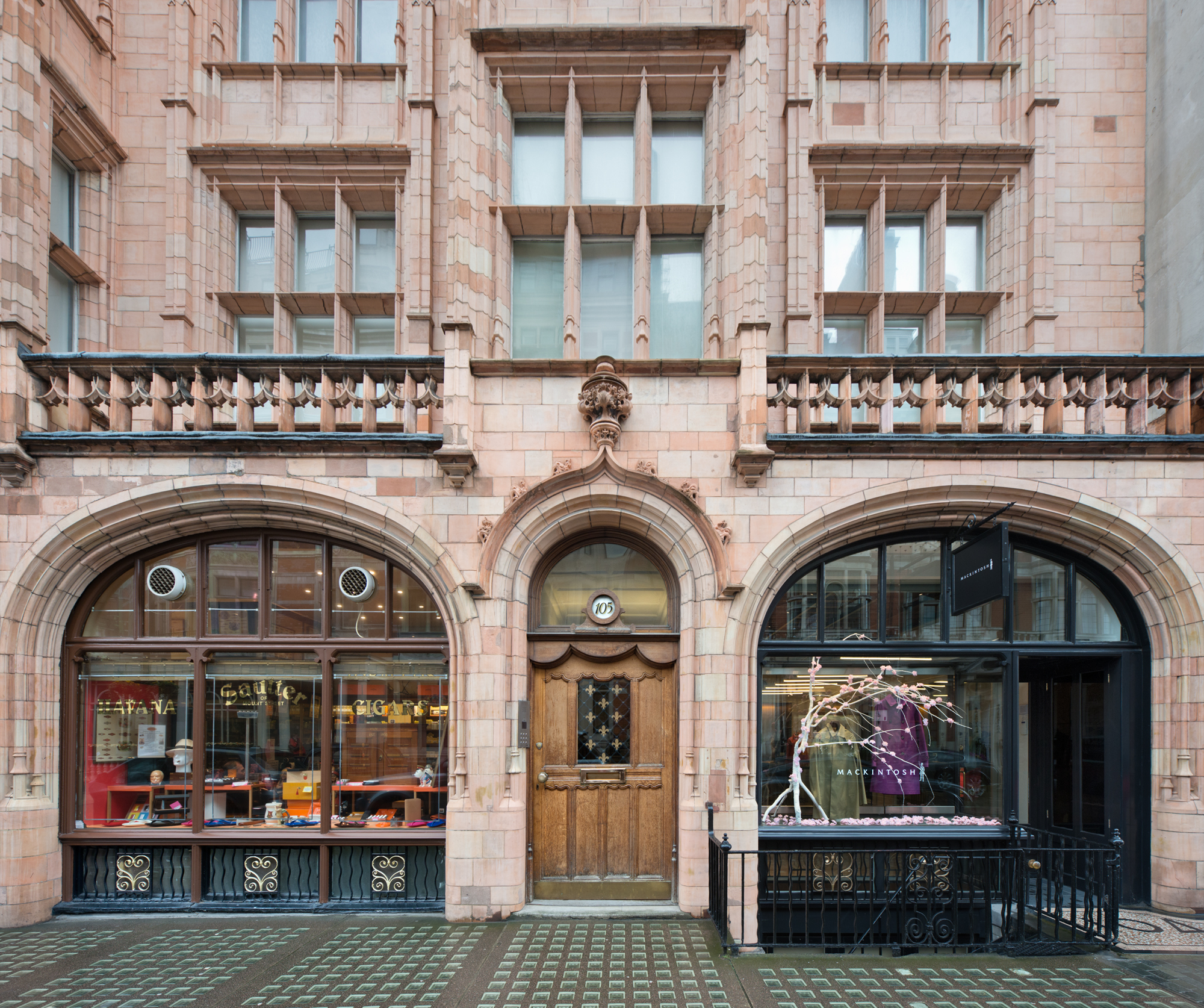
Charting Churchill: 105 Mount Street, London

105 Mount Street, London 2014 by Leslie Hossack

105 Mount Street, London 2014

© Leslie Hossack

The last year of the 19th Century saw Winston Churchill resign from the army and return to England. His first bid for a seat in Parliament was unsuccessful so he headed off to South Africa as a war correspondent. After being captured by the Boers, Winston escaped and made his way back to London. In August 1900, he moved into his first bachelor flat at 105 Mount Street, shown above. Two months later, he was elected to Parliament and began his life of public service.

As the 20th Century dawned, Winston Churchill, a child of Victorian England, was starting to settle down. However, he did not give up travel entirely. After his election in 1900, he sailed to the United States for a lecture tour that lasted through January 1901. The tour was hugely successful and helped to establish his international reputation as an outstanding orator. Winston had left England during the reign of Queen Victoria, and he returned to take up his duties as an elected Member of Parliament during the reign of Edward VII.

By now, Churchill was well known as an adventurer, lecturer, journalist and author. As of 1900, he had published countless newspaper articles and several books. These include: The Story of the Malakand Field Force (1898), The River War (1899), Savrola, his only novel (1900), London to Ladysmith via Pretoria (1900) and Ian Hamilton’s March (1900). To view a complete list of the 43 books written by Sir Winston Churchill, please visit The Churchill Centre.

The image featured above is part of the limited edition collector’s portfolio created by Leslie Hossack to mark the 50th anniversary of the death of Sir Winston Churchill. She presents locations that chart Churchill’s personal and political life, from his birth at Blenheim Palace in 1874 until his death in London in 1965. THE CHURCHILL PHOTOGRAPHS are part of Hossack’s larger body of work that explores Nazi architecture in Berlin, Stalinist structures in Moscow, contested sites in Jerusalem, a Cold War bunker in Ottawa, NATO’s Headquarter Camp in Kosovo, and buildings linked to the Japanese Canadian internment during World War II.

To view more photographs, please visit Leslie’s website.  lesliehossack.com

Charting Churchill: James J. Fox Cigar Merchant, 19 St. James’s Street, London

James J. Fox Cigar Merchant, 19 St. James's Street, London 2014 by Leslie Hossack

James J. Fox Cigar Merchant, 19 St. James’s Street, London 2014

© Leslie Hossack

During his early twenties, Winston Churchill set about defining the man he would become. He quickly discovered that he thrilled to the call of battle, and he sought opportunities to get involved as an officer and as a journalist. His search for action took him to Bangalore, India with the Fourth Queen’s Own Hussars, to India’s NW Frontier with the Malakand Field Force, and to Sudan with the 21st Lancers. As a warrior and as a reporter, he did not hesitate to put himself in harm’s way. In October 1899, he headed to South Africa as a war correspondent; there he was captured by the Boers and then escaped from Pretoria.

These exploits involved a great deal of travel. Winston was always eager to set off, in spite of the rigors and perils of world travel at the turn of the last century. His first trans-Atlantic trip took him to New York in 1895 where he met Bourke Cockran who would become his mentor. He then set sailed for Cuba to report on the fighting between the Spanish and the Cubans

Winston had started smoking as an adolescent and loved cigars. While in Cuba, he arranged to acquire a great number of Havana cigars. Of course, cigars became his trademark. Throughout his life he particularly enjoyed a Havana cigar called Romeo y Julieta. Barry Singer in his book Churchill Style (2012) reveals that Winston made his first cigar purchase under his own name in 1900 at Robert Lewis Tobacconist, 81 St. James’s Street, London. In 1992, this business was acquired by James J. Fox and relocated to 19 St. James’s Street, seen above.

It appears that by 1900 Winston Churchill had defined himself as an intrepid world traveler, an army officer who demonstrated great courage under fire, a journalist who could make a living by his pen, and a man with unique personal style. He achieved celebrity status after his escape from Pretoria and understood the importance of personal charisma. Winston was becoming Churchill.

The image featured above is part of the limited edition collector’s portfolio created by Leslie Hossack to mark the 50th anniversary of the death of Sir Winston Churchill. She presents locations that chart Churchill’s personal and political life, from his birth at Blenheim Palace in 1874 until his death in London in 1965. THE CHURCHILL PHOTOGRAPHS are part of Hossack’s larger body of work that explores Nazi architecture in Berlin, Stalinist structures in Moscow, contested sites in Jerusalem, a Cold War bunker in Ottawa, NATO’s Headquarter Camp in Kosovo, and buildings linked to the Japanese Canadian internment during World War II.

To view more photographs, please visit Leslie’s website.  lesliehossack.com

Charting Churchill: Hatchard’s Bookseller, Piccadilly, London

Hatchard's Bookseller, 187 Piccadilly, London 2014 by Leslie Hossack

Hatchard’s Bookseller, 187 Piccadilly, London 2014

© Leslie Hossack

Beginning in 1896, while serving as a cavalry officer in Bangalore, India, Winston Churchill embarked on an ambitious program of self-education. He ordered books from London on many subjects: literature, history, politics, philosophy, and even science. At the age of 22, he was defining himself as a self-directed, life-long learner. He had an inquiring mind and took a disciplined approach to his personal studies. His later skills as a writer and orator were significantly informed by his prodigious reading and legendary memory.

Throughout his life, Churchill patronized several London booksellers including E. Joseph, James Bain, and Hatchard’s seen above. The author of The Bibliography of the Works of Sir Winston Churchill (2006), Ronald I. Cohen, MBE, is the President of the Sir Winston Society of Ottawa. He very kindly shared these notes re Hatchard’s. “Churchill was a customer for many years. Hatchard’s General Manager, Arthur Humphreys, published two of Churchill’s books, Mr. Brodrick’s Army (1903) and For Free Trade (1906), two of the greatest rarities in the Churchill canon. Humphreys worked with Hatchard’s from 1881 to 1923, and was a part-owner from 1891 on. Churchill occasionally purchased books from many other booksellers, including Maggs Bros., then in the Strand (now at 50 Berkeley Square), and Sotheran’s, then also in the Strand (now at 2-5 Sackville St., in the Piccadilly area).”

The image featured above is part of the limited edition collector’s portfolio created by Leslie Hossack to mark the 50th anniversary of the death of Sir Winston Churchill. She presents locations that chart Churchill’s personal and political life, from his birth at Blenheim Palace in 1874 until his death in London in 1965. THE CHURCHILL PHOTOGRAPHS are part of Hossack’s larger body of work that explores Nazi architecture in Berlin, Stalinist structures in Moscow, contested sites in Jerusalem, a Cold War bunker in Ottawa, NATO’s Headquarter Camp in Kosovo, and buildings linked to the Japanese Canadian internment during World War II.

To view more photographs, please visit Leslie’s website.  lesliehossack.com

Charting Churchill: Stable Court, Blenheim Palace

Stable Court, Blenheim Palace, Woodstock 2014 by Leslie Hossack

Stable Court, Blenheim Palace, Woodstock 2014

© Leslie Hossack

In 1895, the year he celebrated his twenty-first birthday, Winston Churchill completed his training as a cavalry cadet at Sandhurst, buried his father, was commissioned as an officer in the 4th Queen’s Own Hussars, buried his nanny, made his first trip overseas to the United States and Cuba, was posted to India, and fell in love. Winston had embarked upon a series of undertakings and exploits that would define the rest of his life.

Many of Churchill’s decisions were influenced by his love of horses, a love that began when he was a very young child. He first learned to ride while visiting with his grandparents at Blenheim Palace whose Stable Court is pictured above. Later, in his book My Early Life, Churchill described the cavalry training he underwent as a Recruit Officer after leaving Sandhurst: disciplined, demanding drill in the Riding-School, at the Stables and on the Barrack Square.

In the fall of 1896, Second Lieutenant Winston Churchill was posted to India. By now he had discovered his love for polo which he indulged in Bangalore and went on to play for decades. Later in his life, Churchill turned his interest to thoroughbred horses which he bred, bought, sold and raced. But of all his adventures connected with horses, perhaps the most dramatic was his participation in the charge of the 21st Lancers at Omdurman in Sudan, in September 1898. It has since been styled as the last great cavalry charge in history, and when he took part in it, Winston Churchill was only 23 years old.

The image featured above is part of the limited edition collector’s portfolio created by Leslie Hossack to mark the 50th anniversary of the death of Sir Winston Churchill. She presents locations that chart Churchill’s personal and political life, from his birth at Blenheim Palace in 1874 until his death in London in 1965. THE CHURCHILL PHOTOGRAPHS are part of Hossack’s larger body of work that explores Nazi architecture in Berlin, Stalinist structures in Moscow, contested sites in Jerusalem, a Cold War bunker in Ottawa, NATO’s Headquarter Camp in Kosovo, and buildings linked to the Japanese Canadian internment during World War II.

To view more photographs, please visit Leslie’s website.  lesliehossack.com

Charting Churchill: Saint Martin’s Churchyard, Bladon

Churchill Family Plot, Saint Martin's Churchyard, Bladon 2014 by Leslie Hossack

Churchill Family Plot, Saint Martin’s Churchyard, Bladon 2014

© Leslie Hossack

While a cadet at the Royal Military College Sandhurst, Winston Churchill was called to London in June 1894 to say goodbye to his father who was departing on a trip. Lord Randolph Churchill was in declining health and Winston later wrote that this was the last time he saw his father “except as a swiftly fading shadow.” Randolph Henry Spencer Churchill, who died in London on January 24th, 1895 when Winston was twenty years old, cast a long shadow in life and death. Winston’s own son later wrote that “if Lord Randolph had lived, even in better health, he would have been an obstacle to Winston’s career and prospects” but now “he was free to leave the nest and soar.”

Winston’s relationship with his father was complex and conflicted. He craved his father’s affection and approval, but Lord Randolph remained absent physically and distant emotionally. Lord Randolph was briefly Chancellor of the Exchequer and Leader of the House of Commons, but quickly fell from office. Winston continued to idolize his father, but his father could be harsh. For example, Lord Randolph sent a devastating letter to his son upon learning that he had passed into Sandhurst, but with low marks that relegated him to the cavalry not the infantry. Lord Randolph wrote: “I no longer attach the slightest weight to anything you may say about your own accomplishments & exploits.”

The Churchill family plot pictured above reveals Winston’s father still towering over him. The tall cross to the right is Lord Randolph’s marker, and the cross lying flat in the middle marks Winston’s mother, Jennie Jerome. The graves of Sir Winston Churchill and his wife, Clementine, are jointly marked by one low stone lying beyond Jennie’s grave.

The image featured above is part of the limited edition collector’s portfolio created by Leslie Hossack to mark the 50th anniversary of the death of Sir Winston Churchill. She presents locations that chart Churchill’s personal and political life, from his birth at Blenheim Palace in 1874 until his death in London in 1965. THE CHURCHILL PHOTOGRAPHS are part of Hossack’s larger body of work that explores Nazi architecture in Berlin, Stalinist structures in Moscow, contested sites in Jerusalem, a Cold War bunker in Ottawa, NATO’s Headquarter Camp in Kosovo, and buildings linked to the Japanese Canadian internment during World War II.

To view more photographs, please visit Leslie’s website.  lesliehossack.com

Charting Churchill: Old College, Royal Military College, Sandhurst

Grand Entrance, Old College, Royal Military College, Sandhurst 2014 by Leslie Hossack

Portico, Old College, Royal Military College, Sandhurst 2014

© Leslie Hossack

On September 1st 1893, at the age of eighteen, Winston Churchill entered the Royal Military College at Sandhurst. Having failed on two occasions to pass the Sandhurst entrance examination, Winston had left Harrow School to study with the help of a crammer and passed the exam on his third attempt. In My Early Years, Churchill wrote: “At Sandhurst I had a new start. I was no longer handicapped by past neglect of Latin, French or Mathematics. We now had to learn fresh things and we all started equal. Tactics, Fortifications, Topography (mapmaking), Military Law and Military Administration formed the whole curriculum. In addition were Drill, Gymnastics and Riding.”

Winston thoroughly enjoyed his three terms as a gentleman cadet at Sandhurst, and he made several lasting friendships there. He was eager to participate in his military education, and he particularly enjoyed training at the riding-school.

The building above was completed in 1812. Located inside this massive structure is the cadet dining room where Winston Churchill took his meals. Another room in the Old College building is the Marlborough Room, named after John Churchill, the 1st Duke of Marlborough. He is regarded as one of Britain’s greatest soldiers. In recognition of his victories in Europe in the early 1700s, he was given Blenheim Palace where Winston Churchill was born.

The image featured above is part of the limited edition collector’s portfolio created by Leslie Hossack to mark the 50th anniversary of the death of Sir Winston Churchill. She presents locations that chart Churchill’s personal and political life, from his birth at Blenheim Palace in 1874 until his death in London in 1965. THE CHURCHILL PHOTOGRAPHS are part of Hossack’s larger body of work that explores Nazi architecture in Berlin, Stalinist structures in Moscow, contested sites in Jerusalem, a Cold War bunker in Ottawa, NATO’s Headquarter Camp in Kosovo, and buildings linked to the Japanese Canadian internment during World War II.

To view more photographs, please visit Leslie’s website.  lesliehossack.com
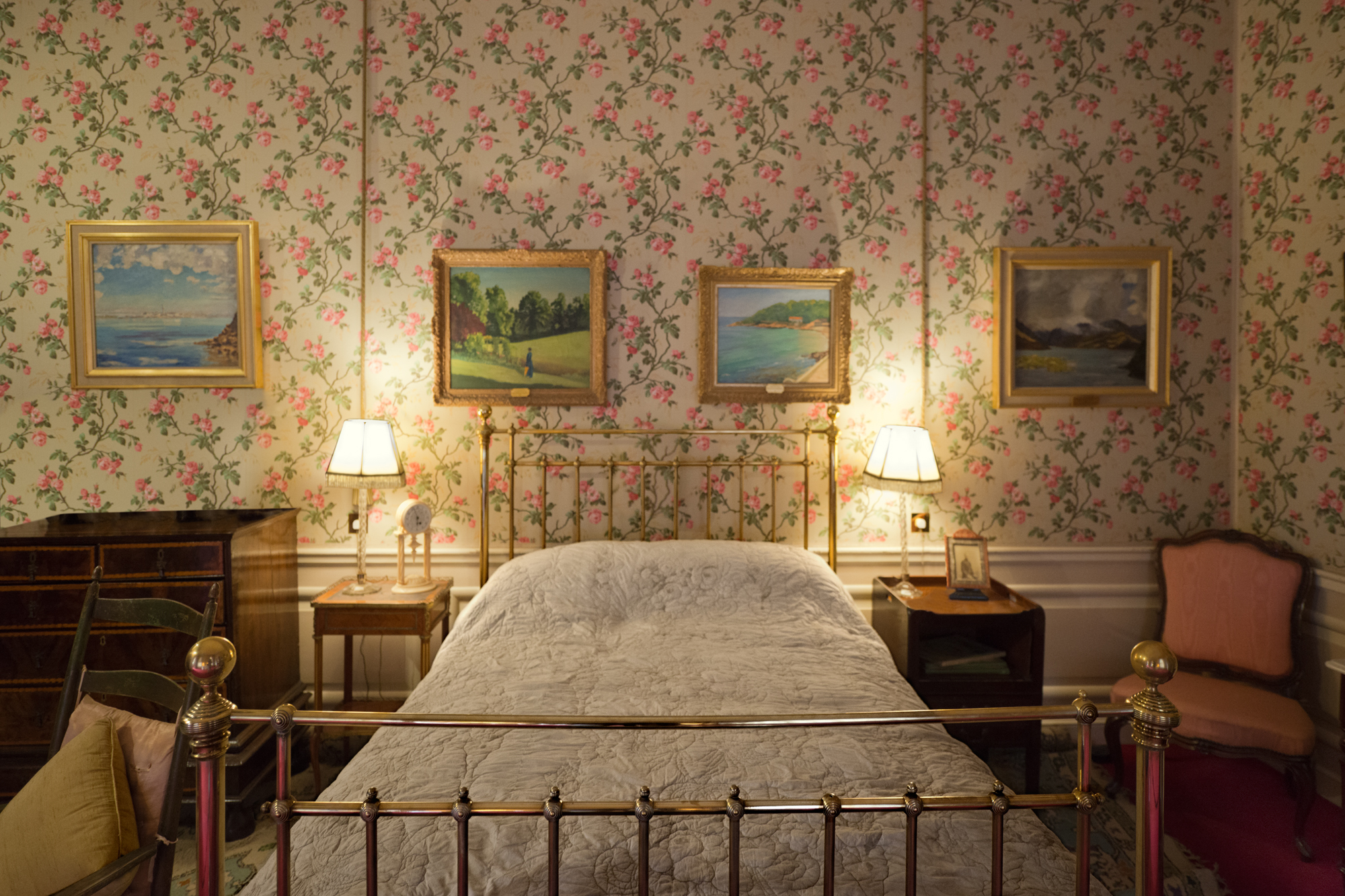
Charting Churchill: The Early Years, 1874 – 1892

Part 1, The Early Years, 1874 – 1892

On November 30th 2014, Sir Winston Churchill’s 140th birthday, Haute Vitrine started publishing images from the series THE CHURCHILL PHOTOGRAPHS by Leslie Hossack.

Yesterday’s post marked the end of Part 1, The Early Years, 1874 – 1892. During this time, Sir Winston Churchill’s boyhood at Blenheim Palace and schooldays at Harrow shaped the adult he would become. Photographs featured in Part 1, The Early Years can be reviewed below.

Leslie Hossack’s CHARTING CHURCHILL will continue into January 2015, the month that marks the 50th anniversary of the death of Sir Winston Churchill.

Sir Winston Churchill's Birth Room, Blenheim Palace, Woodstock, 2014 by Leslie HossackSir Winston Churchill’s Birth Room, Blenheim Palace, Woodstock, 2014

02 29 St. James's Place, London 2014 by Leslie Hossack29 St. James’s Place, London 2014

03 South Facade, Blenheim Palace, Woodstock 2014 by Leslie HossackSouth Facade, Blenheim Palace, Woodstock 2014

04 Riding School, Blenheim Palace, Woodstock 2014 by Leslie HossackRiding School, Blenheim Palace, Woodstock 2014

05 River Glyme, Blenheim Palace, Woodstock 2014 by Leslie HossackRiver Glyme, Blenheim Palace, Woodstock 2014

06 The Old Schools, Harrow School, Harrow on the Hill, 2014 by Leslie HossackHarrow School, Harrow on the Hill, 2014

07 The Head Master's, Harrow School, Harrow on the Hill 2014 by Leslie HossackHead Master’s, Harrow School, Harrow on the Hill 2014

08 Speech Room, Harrow School, Harrow on the Hill 2014 by Leslie HossackSpeech Room, Harrow School, Harrow on the Hill 2014

2 Connaught Place, London 2014 by Leslie HossackBack Garden Wall, 2 Connaught Place, London 2014

© Leslie Hossack

The images featured above are part of the limited edition collector’s portfolio created by Leslie Hossack to mark the 50th anniversary of the death of Sir Winston Churchill. She presents locations that chart Churchill’s personal and political life, from his birth at Blenheim Palace in 1874 until his death in London in 1965. To find out how these images are linked to Churchill, please see the previous posts here on Haute Vitrine.

THE CHURCHILL PHOTOGRAPHS  are part of Hossack’s larger body of work that explores Nazi architecture in Berlin, Stalinist structures in Moscow, contested sites in Jerusalem, a Cold War bunker in Ottawa, NATO’s Headquarter Camp in Kosovo, and buildings linked to the Japanese Canadian internment during World War II.

To view more photographs, please visit Leslie’s website.  lesliehossack.com

Charting Churchill: 2 Connaught Place, London

2 Connaught Place, London 2014 by Leslie Hossack

2 Connaught Place, London 2014

© Leslie Hossack

In 1882, at the age of eight, Winston and his younger brother Jack moved with their parents, Lord & Lady Randolph Churchill, to a townhouse at 2 Connaught Place in London. This was to be their family home for ten years. It backed onto Hyde Park, and this photograph shows the rear of those townhouses today. Winston, Jack and their nanny, Mrs. Everest, were ensconced on the top floor and would have looked out over the back garden and wall onto Hyde Park. Winston enjoyed this house, and later wrote to his mother: “I look back with regret to the old days at Connaught Place when fortune smiled.”

While at Connaught Place, Winston’s collection of toy soldiers grew to nearly 1500. In My Early Life, he describes an event that took place while playing with the soldiers. “The day came when my father himself paid a formal visit of inspection. All the troops were arranged in the correct formation of attack. He spent twenty minutes studying the scene – which was really impressive – with a keen eye and captivating smile. At the end he asked me if I would like to go into the Army. I thought it would be splendid to command an Army, so I said ‘Yes’ at once: and immediately I was taken at my word… the toy soldiers turned the current of my life. Henceforward all my education was directed to passing into Sandhurst, and afterwards to the technical details of the profession of arms.”

The image featured above is part of the limited edition collector’s portfolio created by Leslie Hossack to mark the 50th anniversary of the death of Sir Winston Churchill. She presents locations that chart Churchill’s personal and political life, from his birth at Blenheim Palace in 1874 until his death in London in 1965. THE CHURCHILL PHOTOGRAPHS are part of Hossack’s larger body of work that explores Nazi architecture in Berlin, Stalinist structures in Moscow, contested sites in Jerusalem, a Cold War bunker in Ottawa, NATO’s Headquarter Camp in Kosovo, and buildings linked to the Japanese Canadian internment during World War II.

To view more photographs, please visit Leslie’s website.  lesliehossack.com