The survivors would envy the dead.

War Cabinet Room, Level 300, The Diefenbunker, Ottawa 2010

© Leslie Hossack

The War Cabinet Room in the Diefenbunker was located just down the corridor from the Prime Minister’s Suite, which was featured in yesterday’s post. In the event of a nuclear attack during the Cold War, Canada would have been governed from the room pictured above. The War Cabinet consisted of the Governor General, the Prime Minister, and a minimum of three other ministers of the Crown.

In the 1960s, preparations for this scenario were carried out under the threat of global annihilation. In July 1963, Soviet Chairman Nikita Khrushchev was quoted in Pravda as saying that, in the event of nuclear war, “The survivors would envy the dead.” President John F. Kennedy responded: “A full scale nuclear exchange, lasting less than 60 minutes…could wipe out more than 300 million Americans, Europeans, and Russians, as well as untold numbers elsewhere. And the survivors – as Chairman Khrushchev warned the Communist Chinese, ‘the survivors would envy the dead.’ For they would inherit a world so devastated by explosions and poison and fire that today we cannot conceive of its horrors.”

Exactly 50 years ago, in December 1961, Canada’s Central Emergency Government Headquarters, aka the Diefenbunker, became operational. During the Cold War, in the event of a nuclear attack, designated government officials would report to Canada’s flagship bunker in Carp. It contained over 300 rooms and was designed to shelter 535 individuals. Built secretly between 1959 and 1961 just outside of Ottawa, the Diefenbunker was nicknamed after Prime Minister John G. Diefenbaker.

The Diefenbunker is now Canada’s Cold War Museum. For more information please visit www.diefenbunker.ca
Kennedy advises building of fallout shelters

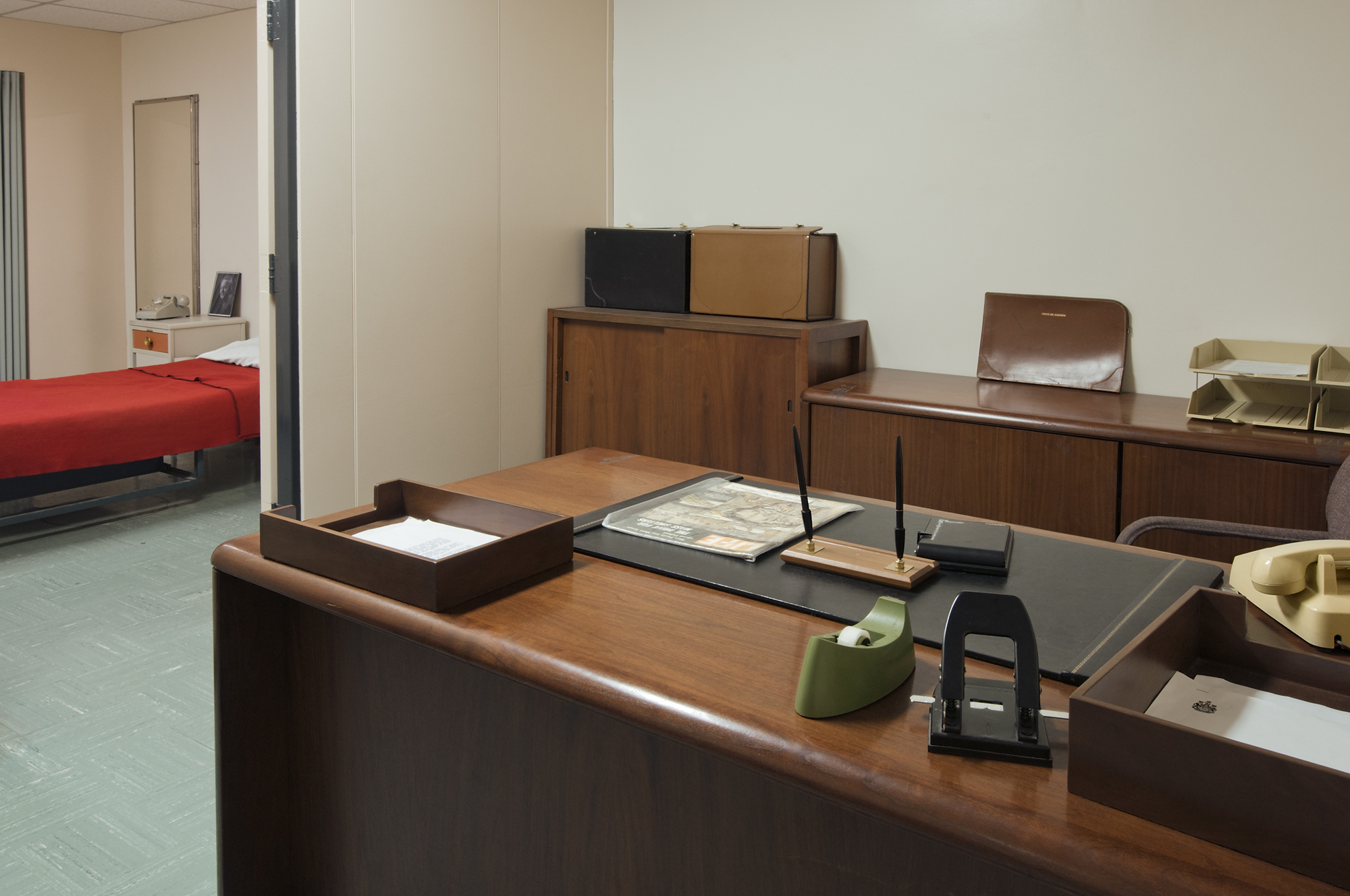
Prime Minister’s Suite, Level 300, The Diefenbunker, Ottawa 2010

© Leslie Hossack

The Prime Minister’s suite in the Diefenbunker consisted of three rooms: an office, a bedroom, and a bathroom. The single bed seen in this photograph is the original; no spouses were allowed into the bunker. The picture on the night stand is of Olive Diefenbaker, the PM’s wife. Prime Minister John Diefenbaker stated that he would not report to the bunker in the event of a nuclear attack because his wife was not allowed to go with him. In fact, he never entered the bunker although he ordered its construction.

The magazine on the desk is the January 12, 1962 edition of Life, with a cover story entitled The Drive for Mass Shelters. Earlier, the September 1961 issue published a letter from President Kennedy advising Americans to build fallout shelters for their families.

Exactly 50 years ago, in December 1961, Canada’s Central Emergency Government Headquarters, aka the Diefenbunker, became operational. During the Cold War, in the event of a nuclear attack, designated government officials would report to Canada’s flagship bunker in Carp. It contained over 300 rooms and was designed to shelter 535 individuals. None of the occupants were allowed to bring family members with them. Built secretly between 1959 and 1961 just outside of Ottawa, the Diefenbunker was nicknamed after Prime Minister John G. Diefenbaker.

The Diefenbunker is now Canada’s Cold War Museum. For more information please visit www.diefenbunker.ca

flagship bunker shelters 535 souls

Corridor, Level 400, The Diefenbunker, Ottawa 2010

© Leslie Hossack

In this photograph of the Diefenbunker, two black and white support columns are visible on the left hand side of the corridor. These columns are four feet in diameter, and there are 36 of them supporting the four-story bunker. In order to withstand the pressure caused by a nuclear blast, the columns flare out to 10 feet at the top and bottom of the structure.

The Diefenbunker measures 157 feet along each side, and it is approximately 57 feet high. The floor slabs are almost two feet thick, while the base and roof slabs are five feet. The walls are generally two and a half feet thick, but at the front of the bunker they measure up to four feet.

Exactly 50 years ago, in December 1961, Canada’s Central Emergency Government Headquarters, aka the Diefenbunker, became operational. During the Cold War, in the event of a nuclear attack, designated government officials would report to Canada’s flagship bunker in Carp. It contained over 300 rooms and was designed to shelter 535 individuals. None of the occupants were allowed to bring family members with them.

Built secretly between 1959 and 1961 just outside of Ottawa, the Diefenbunker was nicknamed after Prime Minister John G. Diefenbaker. This massive underground complex contained office spaces, sleeping quarters, broadcasting facilities, decontamination chambers, and a weather station to monitor wind patterns and take radioactive readings. Other rooms, including the kitchens, bathrooms, food and waste storage, hospital and morgue, were dedicated to simple human survival.

The Diefenbunker is now Canada’s Cold War Museum. For more information please visit www.diefenbunker.ca
out of bounds to all male personnel

Women’s Quarters, Level 300, The Diefenbunker, Ottawa 2010

© Leslie Hossack

In this photograph, the sign at the end of the corridor reads: OUT OF BOUNDS TO ALL MALE PERSONNEL – PAS D. ADMISSION AU PERSONNEL MASCULIN. The women’s quarters in the Diefenbunker were painted blue to clearly identify this area which houses seven bunk rooms and one communal washroom. The bunker support columns are painted with vertical black stripes to give the illusion of a higher ceiling, and the horizontal bands of colour on the tile floor are an attempt to make the corridor appear wider than it really is. To see more details, please click on the image.

Exactly 50 years ago, in December 1961, Canada’s Central Emergency Government Headquarters, aka the Diefenbunker, became operational. During the Cold War, in the event of a nuclear attack, designated government officials would report to the bunker. The only female military personnel in the bunker would have served in the medical centre. There were also non-military women present; they worked as secretarial and clerical staff.

Built secretly between 1959 and 1961 just outside of Ottawa, the Diefenbunker was nicknamed after Prime Minister John G. Diefenbaker. This massive underground complex contained office spaces, sleeping quarters, broadcasting facilities, decontamination chambers, and a weather station to monitor wind patterns and take radioactive readings. Other rooms, including the kitchens, bathrooms, food and waste storage, hospital and morgue, were dedicated to simple human survival.

The Diefenbunker is now Canada’s Cold War Museum. For more information please visit www.diefenbunker.ca

bunker boasts medical centre, confinement cell

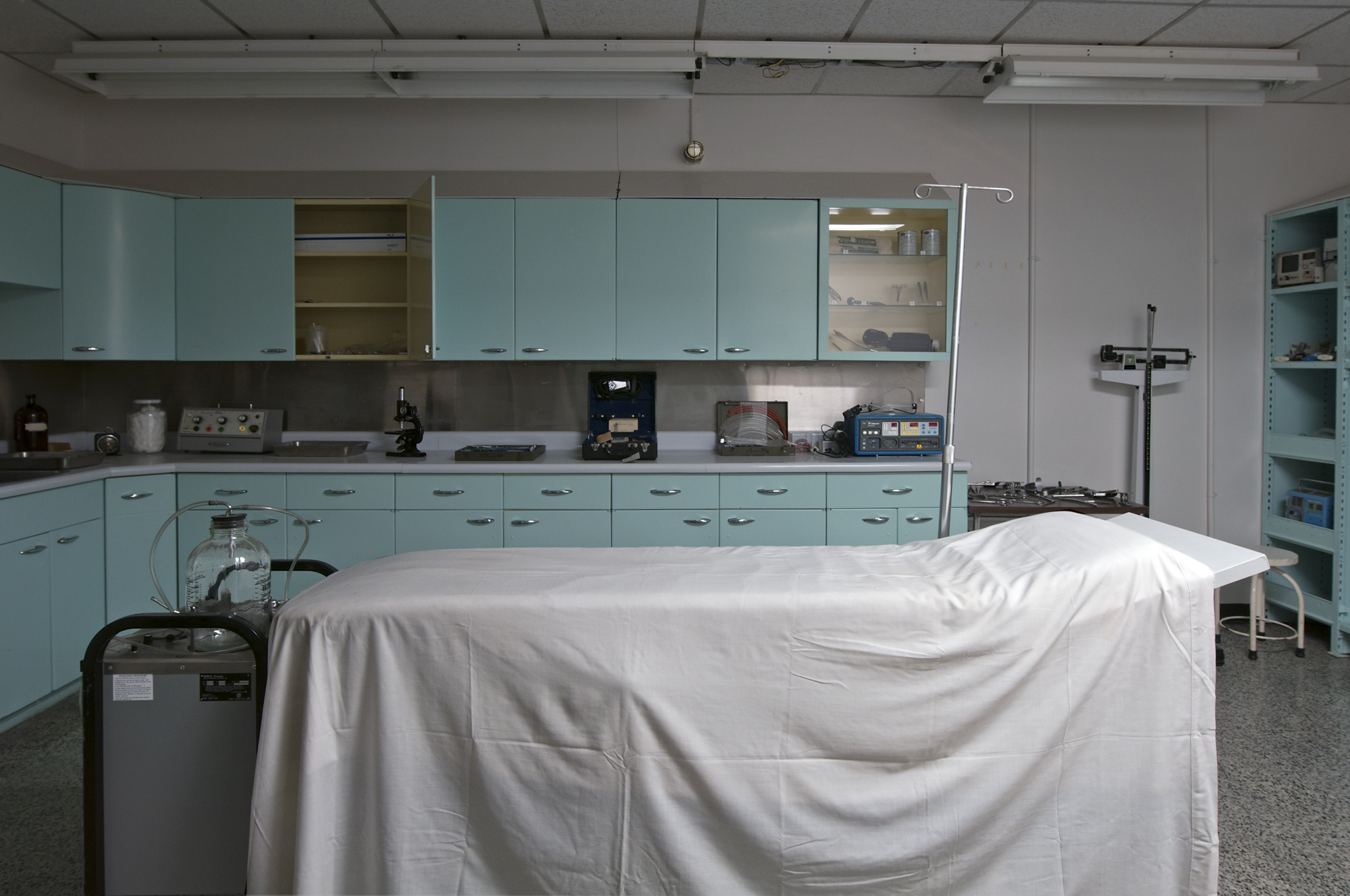
Recovery Room, Level 400, The Diefenbunker, Ottawa 2010

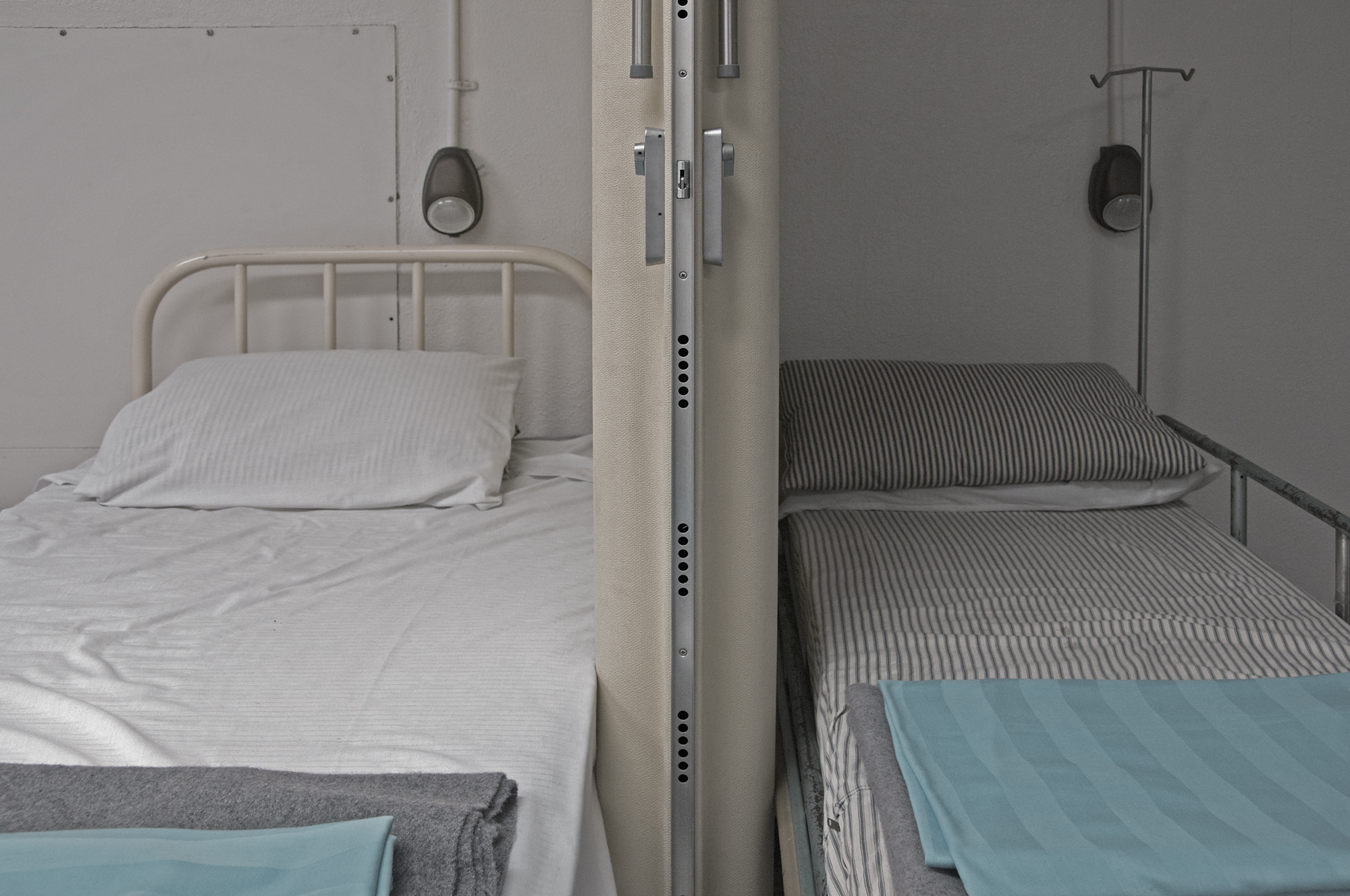
Hospital Bed, Level 400, The Diefenbunker, Ottawa 2010

© Leslie Hossack

Exactly 50 years ago, in December 1961, Canada’s Central Emergency Government Headquarters, aka the Diefenbunker, became operational. During the Cold War, in the event of a nuclear attack, designated government officials would report to the bunker.

In addition to the operating room shown in yesterday’s post, the medical centre in the bunker had a recovery room and a few other hospital beds, but space was at a premium. There was also a confinement cell for those who broke under the stress of isolation.

Because the bunker was built to shift in the event of a nuclear attack, the hospital beds in the top photograph were chained to the floor to prevent them from moving. As well, bunker lights were used to withstand the shock of a blast. Interestingly, the air pressure in the medical centre at the Diefenbunker was kept slightly lower than in the rest of the complex, to help prevent the spread of diseases to other parts of the building.

Built secretly between 1959 and 1961 just outside of Ottawa, the Diefenbunker was nicknamed after Prime Minister John G. Diefenbaker. This massive underground complex contained office spaces, sleeping quarters, broadcasting facilities, decontamination chambers, and a weather station to monitor wind patterns and take radioactive readings. Other rooms, including the kitchens, bathrooms, food and waste storage, hospital and morgue, were dedicated to simple human survival.

Please visit the Parks Canada site for more information about The Diefenbunker.

Diefenbunker dedicated to human survival

Operating Room, Level 400, The Diefenbunker, Ottawa 2010

© Leslie Hossack

Exactly 50 years ago, in December 1961, Canada’s Central Emergency Government Headquarters, aka the Diefenbunker, became operational. During the Cold War, in the event of a nuclear attack, designated government officials would report to the bunker.

The medical centre in the bunker was staffed by personnel from the Canadian National Defence Medical Centre in Ottawa. In addition to the examination room shown in yesterday’s post, the medical centre had a full operating room and recovery rooms. Please click on the picture above to see more details.

Built secretly between 1959 and 1961 just outside of Ottawa, the Diefenbunker was nicknamed after Prime Minister John G. Diefenbaker. This massive underground complex contained office spaces, sleeping quarters, broadcasting facilities and decontamination chambers.

On August 21st 1958, Prime Minister Diefenbaker ordered the construction of the shelter. The Diefenbunker was designed for 535 people, with enough supplies to survive for 30 days. Inside the bunker, a CBC radio station provided a vital link to the Canadian public. A weather studio was equipped to monitor wind patterns and take radioactive readings. Other rooms – kitchens, bathrooms, food and waste storage, a hospital and a morgue – were dedicated to simple human survival.

Please visit the Parks Canada site for more information about The Diefenbunker.

in event of nuclear attack, designated officials report to Diefenbunker

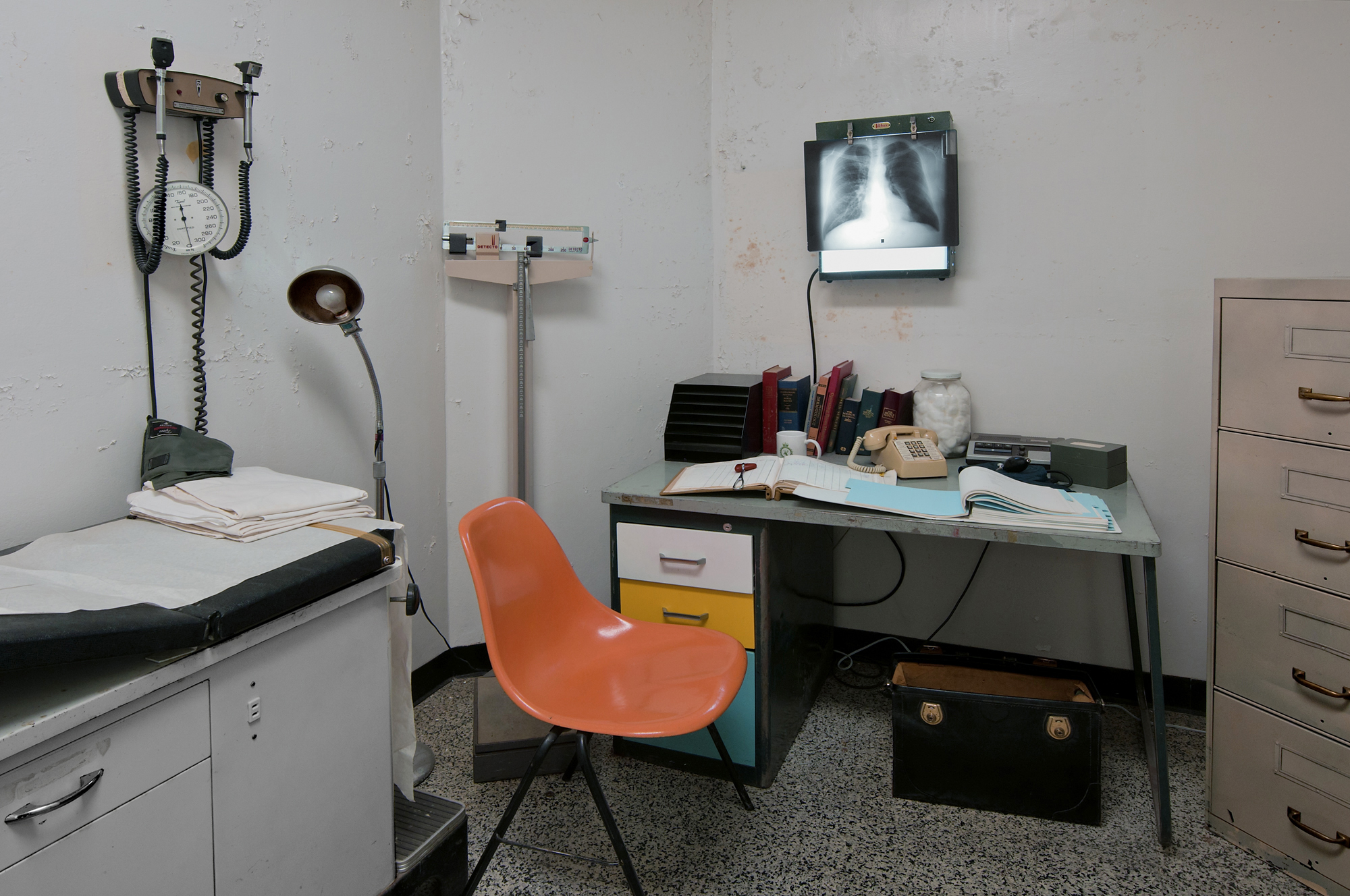
Examination Room, Medical Centre, Level 400, The Diefenbunker, Ottawa 2010

© Leslie Hossack

Exactly 50 years ago, in December 1961, Canada’s Central Emergency Government Headquarters, aka the Diefenbunker, became operational. During the Cold War, in the event of a nuclear attack, designated government officials would report to the bunker. Because they may have been exposed to radiation, they would first be directed to the decontamination area. Please see yesterday’s post for a photograph of the decontamination showers.

After leaving the decontamination chamber, officials entering the Deifenbunker would be checked out by medical staff before reporting for duty. The medical centre in the bunker was staffed by personnel from the Canadian National Defence Medical Centre.

Built secretly between 1959 and 1961 just outside of Ottawa, the Diefenbunker was nicknamed after Prime Minister John G. Diefenbaker. This massive underground complex contained office spaces, sleeping quarters, broadcasting facilities and decontamination chambers.

On August 21st 1958, Prime Minister Diefenbaker ordered the construction of the shelter. The Diefenbunker was designed for 535 people, with enough supplies to survive for 30 days. Inside the bunker, a CBC radio station provided a vital link to the Canadian public. A weather studio was equipped to monitor wind patterns and take radioactive readings. Other rooms – kitchens, bathrooms, food and waste storage, a hospital and a morgue – were dedicated to simple human survival. People entering the bunker would have had to go through a decontamination room with “radiac” equipment, showers and lead-lined clothing disposal bins.

Please visit the Parks Canada site for more information about The Diefenbunker.

officials directed to decontamination area

Shower, Decontamination Area, Level 400, The Diefenbunker, Ottawa 2010

© Leslie Hossack

Exactly 50 years ago, in December 1961, Canada’s Central Emergency Government Headquarters, aka the Diefenbunker, became operational. During the Cold War, in the event of a nuclear attack, designated government officials and staff would enter the bunker via the blast tunnel shown in yesterday’s post. Because they may have been exposed to radiation, they would first be directed to the decontamination area where they would be required to take a shower with their clothes on. After their wet contaminated clothes were removed and put in lead-lined containers, individuals needed to have a second shower before donning clean overalls and slippers, and proceeding to the medical centre.

Built secretly between 1959 and 1961 just outside of Ottawa, the Diefenbunker was nicknamed after Prime Minister John G. Diefenbaker. This massive underground complex contained office spaces, sleeping quarters, broadcasting facilities and decontamination chambers, such as the yellow shower area shown in the photograph above.

On August 21st 1958, Prime Minister Diefenbaker ordered the construction of the shelter. The Diefenbunker was designed for 535 people, with enough supplies to survive for 30 days. Inside the bunker, a CBC radio station provided a vital link to the Canadian public. A weather studio was equipped to monitor wind patterns and take radioactive readings. Other rooms – kitchens, bathrooms, food and waste storage, a hospital and a morgue – were dedicated to simple human survival. People entering the bunker would have had to go through a decontamination room with “radiac” equipment, showers and lead-lined clothing disposal bins.

Please visit the Parks Canada site for more information about The Diefenbunker.

Diefenbunker celebrates 50th anniversary

Blast Tunnel, The Diefenbunker, Ottawa 2010

© Leslie Hossack

Exactly 50 years ago, in December 1961, Canada’s Central Emergency Government Headquarters, aka the Diefenbunker, became operational. Today, Haute Vitrine launches a new series featuring photographs of Canada’s Cold War Museum, located in the Diefenbunker. Visitors enter by walking through the 378-foot-long blast tunnel seen in the photograph above. This tunnel is designed to allow the pressure wavefront caused by a nuclear blast to pass by the entrance doors of the bunker.

Built secretly between 1959 and 1961 just outside of Ottawa, the Diefenbunker was designed to protect government officials in the event of a nuclear attack. Nicknamed after Prime Minister John G. Diefenbaker, the Diefenbunker was a massive complex of office spaces, sleeping quarters, broadcasting facilities and decontamination chambers.

On August 21st 1958, Prime Minister Diefenbaker ordered the construction of the shelter at the height of the Cold War. The Central Emergency Government Headquarters was a four-storey underground shelter located west of Ottawa, near the village of Carp. Although its construction was to be kept secret, the size of the project forced Prime Minister Diefenbaker to acknowledge that the government was building a nuclear fallout shelter for the country’s leaders.

The Diefenbunker was designed for 535 people, with enough supplies to survive 30 days. The bunker entrance was located at a right angle midway down an open-ended tunnel. This design meant that an above-ground explosion would sweep through the tunnel without affecting the double airlock door at the front of the building. Shown in the photograph above is the view seen as you exit the bunker, turn left into the blast tunnel, and begin the climb back to the surface.

Please visit the Parks Canada site for more information about The Diefenbunker.

Hansel & Gretel illustrated by Arthur Rackham

The House in the Woods, Zehlendorf, Berlin 2010

photograph © Leslie Hossack

The house in the woods in this photograph is one of hundreds built by Hitler’s National Socialist regime for SS officers and their families. These houses are located in an idyllic forest along the shores of Krumme Lanke, on the west side of Berlin in Zehlendorf. Detached, semi-detached and terraced houses were allocated to SS officers according to rank.

The photograph above shows a typical example of Nazi residential architecture: tiny houses with steep tile roofs and shuttered windows scattered about in a natural setting. To see more details, please click on the picture.

File:Hansel-and-gretel-rackham.jpg

illustration by Arthur Rackham

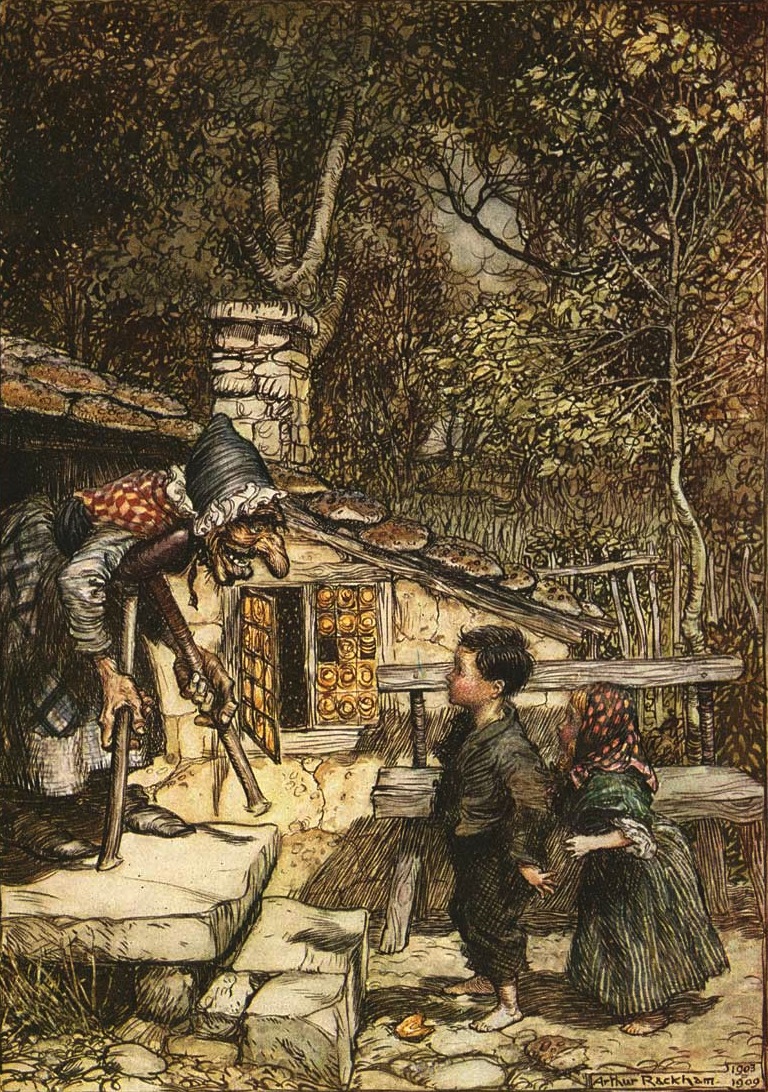
The woods in the image at the top of the page makes me think of the German fairy tale Hansel and Gretel, recorded by the Brothers Grimm and published in 1812. British artist Arthur Rackham became famous for his illustrations in the 1900 edition. Created to accompany Hansel and Gretel, the reproduction above is a well-known example of Rackham’s work.